
Table of Contents
- Cashback Apps vs Discounted Gift Cards: Which Saves More?
- Comparing the Payout: Cashback Rates vs Upfront Discounts
- How to Stack Cashback and Gift Cards for Maximum Savings
- Best Sites for Discounted Gift Cards and Cashback Apps
- Risks of Buying Gift Cards from Third-Party Sites
- The Hidden Costs: Taxes, Fees, and Opportunity Cost
- Which Strategy Wins for Your Shopping Habits?
- Final Verdict: Start Saving on Your Next Purchase
- Frequently Asked Questions
Last Updated: September 8, 2026
Every dollar you save at checkout feels like a raise. When you compare discounted gift cards vs cashback apps, you are asking which method puts more money back in your pocket for the least effort. Both cut your final bill, but they work through different mechanics, timelines, and risk profiles. The honest answer is that the “winner” depends on how you shop, where you shop, and whether you can tolerate the waiting game most cashback apps require.
The core tension: cashback apps reward you after the fact with a rebate, while discounted gift cards lower your price before you hit “pay.” A cashback app tracks your qualifying purchase through affiliate links and pays a percentage later. A discounted gift card is a prepaid card you buy below face value, giving you an upfront discount you control immediately.
Cashback Apps vs Discounted Gift Cards: Which Saves More?
Cashback apps and discounted gift cards both reduce spending but deliver savings through opposite timing models. Cashback apps provide a rebate after your purchase is verified, usually paid into a digital wallet or via PayPal, while discounted gift cards offer an upfront discount because you paid less than face value. The practical difference shapes which strategy suits your budget.
How Cashback Apps Work
Cashback apps function as a middleman between you and the retailer. You install a browser extension or open the app, click through their portal to the retailer’s site, and complete your purchase. The retailer pays the app an affiliate commission, and the app shares a slice with you as a rebate.
The payout model varies by platform. Some apps deposit cash when you reach a redemption threshold, while others let you transfer earnings anytime. Reward speed differs: some transactions post within days, but many require a return window to pass. A common mistake is assuming the cashback rate applies to everything in your cart, when merchant exclusions often apply to specific categories.
How Discounted Gift Cards Work
Discounted gift cards flip the timing. Instead of waiting for a rebate, you buy a gift card for less than face value and use it to pay. If you buy a $100 store card for $90, you have secured a 10% upfront discount, no waiting required.
The savings come from the secondary market. People sell unwanted gift cards at a loss to convert them into cash quickly, and platforms resell them at a markup that still leaves room for you to save. The discount depth varies by retailer and demand, but the model rewards patient shoppers who buy cards for stores they already frequent. The key difference from cashback is certainty: you know your exact savings before you spend a dime.
Comparing the Payout: Cashback Rates vs Upfront Discounts
Cashback rates typically range from 1% to 10% depending on the retailer and the app, while discounted gift cards often deliver 5% to 15% off face value (investopedia.com). The upfront discount usually wins on pure percentage, but cashback can stack with other promotions in ways that gift cards cannot.
| Method | When You Save | Typical Rate | Best For | Main Risk |
|---|---|---|---|---|
| Cashback Apps | After purchase | 1-10% | Online orders, new users | Rate changes, payout delays |
| Discounted Gift Cards | At checkout | 5-15% | Known retailers, big purchases | Card fraud, merchant refusal |
The comparison is not just about the headline number. Cashback rates fluctuate constantly and often require activation, while a gift card discount is locked in the moment you buy it. For a large purchase at a store you know you will use, the upfront gift card discount is harder to beat. For a frequent online shopper who remembers to click through portals, cashback adds up steadily over time.
How to Stack Cashback and Gift Cards for Maximum Savings
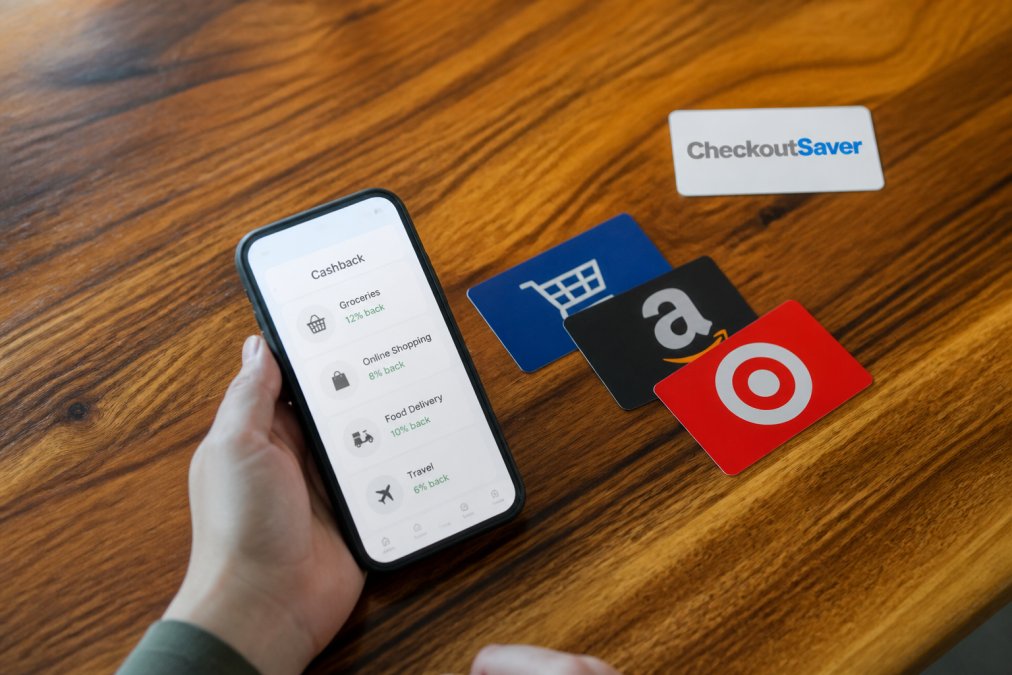
The real money is made when you combine both strategies. Stacking means using a discounted gift card to pay for a purchase that also earns cashback through a shopping portal. The gift card lowers the base price, and the cashback percentage applies to the reduced total, compounding your savings on a single transaction.
A practical sequence: buy a discounted gift card for the store you plan to use, activate your cashback app and click through its portal to that store’s website, then pay with the gift card at checkout. In one transaction, you capture the upfront discount and the rebate. Checkout Saver offers both discounted gift cards and cashback opportunities in one transparent platform.
The Mechanics That Make or Break a Stack
Stacking sounds simple, but the mechanics matter. The first rule is that cashback is calculated on the amount actually charged to your payment method. If you pay with a gift card, the cashback percentage applies to the gift card amount, not the original retail price. That is good news, your cashback is calculated on the already-discounted total. But it also means you need to check whether the portal excludes gift card payments entirely.
Some retailers’ affiliate programs explicitly exclude transactions paid with gift cards, even if the card was purchased from a third party. The cashback app has no way to know you used a gift card unless the retailer reports it, and some do report payment method to affiliate networks. The practical result is that a stack can fail silently: the cashback never posts, and you discover the problem weeks later.
How to Verify a Stack Will Work Before You Commit
The safest approach is to test the stack with a small purchase first. Buy a $10 gift card at a discount, then use it through your cashback portal on a small item. If the cashback posts, the stack works for that retailer. If not, you have lost only a few dollars instead of discovering the problem on a $200 purchase.
A second consideration is the order of operations. Some portals require you to click through their link immediately before checkout. If you click through, leave to buy a gift card, and return hours later, the tracking cookie may have expired. Most portals use a 24-hour cookie window, but some are shorter. The reliable sequence: buy the gift card first, then click through the portal, then complete the purchase in the same browsing session.
Stacking with Credit Card Rewards: The Third Layer
Most comparisons stop at two layers, but a third exists for shoppers who pay with a rewards credit card. If your card offers 2% cashback on all purchases, and you use it to buy a discounted gift card, you earn rewards on the gift card purchase itself. Then you earn cashback through the portal on the retail purchase, plus the upfront gift card discount. That is three layers of savings on a single transaction.
The catch is that some gift card platforms charge a convenience fee for credit card payments. A common pattern is a 3% fee, which wipes out the benefit of a 2% rewards card. Before you pay with a credit card, compare the fee against your card’s rewards rate. If the fee is lower, the stack works. If not, pay with a debit card or bank transfer to preserve the discount.
The best stacking opportunities appear during holiday sales, when retailers offer sitewide promotions that stack with both gift card discounts and elevated cashback rates. During these windows, a 10% gift card discount plus a 10% cashback rate plus a 20% sitewide sale can produce effective savings above 35% on a single purchase.
The Limitations and Exclusions You Need to Know
Every stack has limits. Cashback apps frequently exclude certain categories, electronics, gift cards, and clearance items are common exclusions. Gift card platforms often restrict which retailers are available, and the deepest discounts are usually for stores with low resale demand. Some retailers cap the number of gift cards you can use in a single transaction.
A final limitation is the return policy. If you buy an item with a discounted gift card and return it, the refund typically goes back to the gift card, not your original payment method. That means your savings are locked into that retailer’s ecosystem. Factor this into your decision before you stack on items you might return. discounted household goods.
Best Sites for Discounted Gift Cards and Cashback Apps
When choosing where to shop for savings, prioritize platforms that combine both tools. A single platform that offers discounted gift cards, cashback opportunities, and coupon trading reduces the friction of managing multiple logins and account balances.
Checkout Saver offers one-time use coupon trading, eliminating the frustration of buying a code that has already been used, and provides discounted gift cards. The no-hidden-code approach means the coupon you see is the coupon you get, and the platform functions as an independent small business rather than a faceless aggregator. For shoppers who want to buy and sell coupons and gift cards without committing to another loyalty program, the free plan covers the essentials.
Risks of Buying Gift Cards from Third-Party Sites
Buying gift cards from third-party sites carries real risks. The most common problem is purchasing a card with a zero balance because the original buyer spent the funds or the card was compromised before resale. Consumer protection on gift cards is limited, and many platforms treat the transaction as final once the card is delivered.
Financial security starts with choosing reputable platforms that verify card balances before listing them. A related risk is merchant exclusion: some retailers refuse to accept gift cards purchased from resale markets, particularly for high-value items. Before buying a discounted card, read the terms of both the platform and the retailer to confirm the card will be accepted. Platforms that offer buyer protection reduce the chance you lose money on a dead card.
The Security and Data Privacy Angle Most Comparisons Miss
Beyond the balance risk, there is a deeper concern most articles skip: the security and data privacy protocols of the platforms themselves. When you buy a discounted gift card, you are sharing payment details, email addresses, and sometimes bank or card information with a third-party marketplace. The question is what those platforms do with that data.
Most reputable platforms use standard encryption (TLS 1.2 or higher) to protect transactions, but encryption alone does not tell you how a company stores your data after the sale. A common pattern is retaining transaction records and personal information for accounting and fraud-prevention purposes, often for several years. Some platforms share data with marketing partners or analytics providers, meaning your shopping habits become part of a broader profile. The practical risk is not usually identity theft from a hack, it is the slow accumulation of your data across multiple services.
A more immediate concern is the payment method itself. When you buy a gift card from a secondary market, you are often paying a small business or individual seller. If that seller turns out to be fraudulent, your payment provider may offer chargeback protection, but the process is slow and not guaranteed. Platforms that act as intermediaries typically hold funds in escrow until the buyer confirms the card works, which reduces but does not eliminate the risk.
What to Look For in a Platform’s Security Posture
Before you commit to a discounted gift card platform, check for three signals. First, does it require two-factor authentication (2FA)? If not, a compromised password could let someone access your saved payment methods and purchase history. Second, does it publish a clear privacy policy stating what data it collects and whether it shares that data with third parties? Vague language like “we may share information with trusted partners” is a red flag. Third, does it offer buyer protection covering both balance fraud and merchant refusal? Some platforms only guarantee the balance at delivery, not whether the retailer will accept it later.
A card that works at the time of purchase can still be declined later if the retailer updates its fraud detection rules. Always keep your purchase receipt and the platform’s buyer protection terms accessible until the full card balance is spent.
The safest approach is to use platforms that act as a true intermediary rather than a peer-to-peer marketplace. Intermediary platforms verify card balances before listing, hold funds until delivery is confirmed, and offer a clear dispute process. Peer-to-peer marketplaces, while often cheaper, shift more risk onto the buyer.
The Opportunity Cost of Chasing Small Savings
There is also a hidden cost that rarely appears in comparisons: the time you spend managing these transactions. If you buy a $100 gift card for $92, you save $8. But if that purchase requires creating an account, verifying your identity, waiting for delivery, and troubleshooting a declined transaction, your effective hourly rate may be far below minimum wage. Most practitioners find that discounted gift cards only make sense for purchases above $50. For smaller purchases, the time cost often exceeds the discount.
This is why the best strategy is not to chase every discount but to concentrate your gift card purchases on large, planned expenses at retailers you use regularly. The security risks and time costs are the same whether you buy a $25 card or a $500 card, so the larger the purchase, the better your risk-adjusted return.
The Hidden Costs: Taxes, Fees, and Opportunity Cost
Cashback rewards may have tax implications that most shoppers overlook. The IRS generally treats cashback as a rebate or discount rather than income, but referral bonuses and sign-up incentives can be classified differently (irs.gov). If you earn substantial rewards through referral programs, those payments may count as taxable income, and you should consult guidance on IRS rules on rebates and taxable income to understand your obligations.
Opportunity cost also plays a role. Money tied up in a gift card for a store you rarely visit cannot be spent elsewhere. The discount only pays off if you actually use the card. Similarly, cashback that requires a high redemption threshold or a long waiting period has a hidden cost in delayed value. Fees on gift card resale markets can also eat into your savings.
Which Strategy Wins for Your Shopping Habits?
Your shopping habits determine the winner more than any generic comparison. If you make frequent, small online purchases and can reliably remember to click through a shopping portal, cashback apps reward consistency with steady rebates over time. If you make occasional large purchases at specific retailers, discounted gift cards deliver immediate, guaranteed savings that cashback cannot match.
Consider your tolerance for complexity. Cashback apps require activation, tracking, and patience for payouts. Gift cards require upfront capital and confidence that you will shop at that retailer. A hybrid approach works best for most households: use gift cards for planned big-ticket purchases and cashback for routine online orders.
Final Verdict: Start Saving on Your Next Purchase
The comparison between discounted gift cards and cashback apps does not produce a single winner because the right choice depends on your purchase size, shopping frequency, and patience for delayed rewards. What matters is that you start somewhere. Every purchase without a discount strategy is money left on the table.
Checkout Saver combines discounted gift cards, cashback opportunities, and one-time use coupon trading into a single platform. You can buy and sell coupons and gift cards, access exclusive deals, and keep more money in your pocket without juggling multiple apps or worrying about hidden codes. The free plan gives you the tools you need to start saving today.
Frequently Asked Questions
Can you stack discounted gift cards with cashback apps?
Yes, in most cases you can stack them. Buy a discounted gift card from a reputable site, then pay with that card through a cashback app or shopping portal. The discount lowers the face value you pay, and the cashback applies to the transaction total. Some retailers exclude gift card purchases from cashback eligibility, so always check the terms and conditions before you buy.
Which provides higher savings on retail purchases?
Discounted gift cards usually provide a larger upfront saving, often 5% to 15% off the face value. Cashback apps typically return 1% to 10% depending on the store and current promotions. The winning strategy combines both: use a discounted gift card for the guaranteed reduction, then layer cashback on top for an additional rebate on the final amount.
Are cashback apps worth it for everyday shopping?
Cashback apps are worth it for everyday shopping when you already plan to buy. The savings add up over time without changing your spending habits. Look for apps that offer browser extensions to automate offers at checkout. For groceries and routine purchases, even 2% back on every transaction compounds to a meaningful yearly rebate.
What are the risks of buying discounted gift cards online?
The main risks include buying a card with a zero or reduced balance, receiving a card that gets declined at checkout, or dealing with a merchant exclusion. Stick to established platforms that guarantee balances and offer buyer protection. Check the terms and conditions for fees, and avoid deals that look too good to be true, as they often are.
Get started with Checkout Saver and keep more of your money on your next purchase. Sign up free to access discounted gift cards, cashback opportunities, and verified one-time use coupons in one transparent platform.

