

Table of Contents
- Why Loyalty Programs Cost More Than They Save
- How to Find One-Time Use Coupons and Coupon Trading
- How to Use Discounted Gift Cards for Everyday Shopping
- Cashback Opportunities for Non-Loyalty Members
- Master Unit Pricing and Price Matching Without Apps
- Build Your Monthly Budget and Track Spending Without Programs
- Automate Savings and Reduce Recurring Bills
- Frequently Asked Questions
Last Updated: September 3, 2026
Why Loyalty Programs Cost More Than They Save
Loyalty programs promise rewards, but they extract a hidden price: your data. Every purchase tracked, every preference logged, every shopping pattern analyzed and sold to the highest bidder. Retailers use loyalty data to identify which customers will tolerate price increases, which ones respond to artificial scarcity, and which ones can be pushed toward higher-margin products. The discount you earn today often gets offset by strategic price inflation tomorrow.
You don’t need loyalty programs to save money. You can access deeper discounts through one-time coupons, negotiate directly with retailers, buy discounted gift cards at a fraction of face value, and use price matching without surrendering your consumer data. At Checkout Saver, we’ve invented new ways to save, and offer 10 money saving techniques for free. The seven strategies covered here are what smart shoppers use when they want control over their spending and their privacy.
How to Find One-Time Use Coupons and Coupon Trading
One-time use coupons deliver real discounts without the data surveillance of loyalty programs. Unlike loyalty offers tied to your account, these coupons work anonymously and often provide steeper savings because retailers aren’t tracking your redemption patterns.
Coupon trading platforms let you trade unused coupons with other shoppers who need different offers, eliminating the need to hunt through websites hoping codes still work.
Source coupons from multiple channels. Manufacturers send physical coupons in the mail, newspapers include coupon inserts, and store websites post digital coupons valid for one-time use. Many households receive coupons they’ll never use, these become tradeable assets.
Verify coupon validity before trading. Check the expiration date, redemption limits, and any restrictions. A coupon that requires you to buy two items when you only need one is less valuable than it appears.
Understand the trading mechanism. Legitimate coupon trading platforms verify that codes haven’t been redeemed before release. The platform holds the coupon until the buyer confirms it worked, protecting both parties.
Calculate actual savings. A coupon worth $2 off a $15 product is a 13% discount. A $5 coupon on a $12 item is a 42% discount. Compare the percentage savings across categories to prioritize which coupons are worth your effort.
The best coupons to trade are for premium products or specialty items. A coupon for organic baby food or specialty supplements attracts serious buyers willing to pay fair value for the code.
How to Use Discounted Gift Cards for Everyday Shopping
Discounted gift cards are the simplest way to cut your spending without loyalty programs. Retailers overproduce gift cards, and many go unredeemed or partially spent. Secondary marketplaces connect buyers who want discounts with sellers who need cash. You buy a $100 Target gift card for $85 and spend it exactly as you would have anyway. If you buy groceries, household items, and clothing at the same three retailers year-round, switching to discounted gift cards reduces your total spend by 10-15% (the FTC).
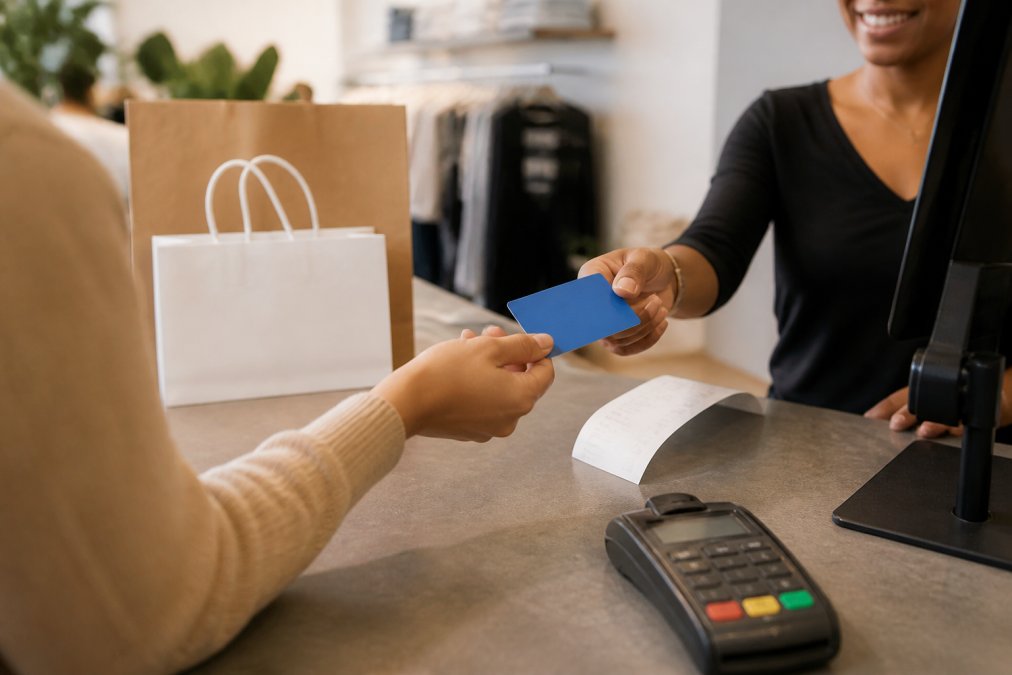
Identify retailers where you already spend money. List the stores you visit monthly: grocery chains, drugstores, department stores, online retailers. These are the candidates for gift card discounts.
Understand the discount tiers. Gift card discounts vary by retailer and denomination. A $50 card might sell at 8% off, while a $500 card sells at 12% off. Buy larger denominations when possible to maximize your savings percentage.
Verify authenticity before purchase. Legitimate platforms authenticate gift cards before listing them. They confirm the card balance, check for fraud flags, and guarantee the card will work at checkout.
Load cards into your digital wallet. Most retailers now accept digital gift cards in their mobile apps. This eliminates the risk of losing a physical card and makes redemption faster.
Stack discounts strategically. A discounted gift card is your baseline. Layer additional one-time coupons on top, use price matching when available, and shop during promotional periods. A $100 discounted card bought at 10% off, combined with a $10 coupon and a sale, can reduce your effective spend to $75.
Never buy discounted gift cards from unknown sellers or unverified platforms. A discount that seems too good to be true usually means the card is drained, fraudulent, or has restrictions that make it unusable.
Cashback Opportunities for Non-Loyalty Members
Cashback platforms offer rewards without requiring loyalty program enrollment. You make a purchase through their link or app, and they pay you a percentage of the transaction. The retailer pays the platform a commission; the platform shares that commission with you instead of keeping it. Unlike loyalty programs, cashback is transparent and immediate with no lock-in period or behavioral tracking beyond the transaction itself.
Choose cashback platforms strategically. Different platforms partner with different retailers. Check which retailers you use most, then pick the platform with the best rates for your actual spending pattern.
Understand the cashback mechanism. Most platforms work through affiliate links. You click the link, make your purchase, and the platform tracks the transaction. The retailer’s system confirms the sale, and the platform credits your account within 24-72 hours.
Avoid the false loyalty trap. Don’t change your shopping habits to chase higher cashback rates. If you’d normally buy the store brand but a platform offers 2% more for the name brand, stick with your original choice.
Combine cashback with discounted gift cards. Buy a discounted gift card, then use a cashback platform to make the purchase. A $100 card bought at 10% off, with 5% cashback, reduces your effective spend to $85.50 on $100 of goods.
Track your cashback earnings. Cashback accumulates slowly, but across a year of regular shopping, non-loyalty members can accumulate $200-400 in cashback without changing their behavior.
Master Unit Pricing and Price Matching Without Apps
Unit pricing is the most underutilized savings tool available. Instead of comparing the shelf price of two products, you compare the cost per unit, per ounce, per pound, per count. A bulk package that costs more in total might cost less per unit, making it the better deal. Price matching lets you buy from your preferred retailer at a competitor’s lower price without loyalty program enrollment.
Calculate unit prices manually. Divide the total price by the quantity. A 32-ounce bottle of detergent at $6.40 costs $0.20 per ounce (the FDA). A 64-ounce bottle at $10.88 costs $0.17 per ounce. The larger bottle is 15% cheaper per unit.
Compare across categories strategically. Focus unit pricing on staples you use regularly: flour, sugar, cooking oil, detergent, paper products. These are where bulk savings actually accumulate.
Use price matching without downloading apps. Carry a smartphone to the store. Search for competitor prices online while shopping, take a screenshot of the lower price, and show it to the cashier. Most retailers will match within 30 days of the competitor’s advertised price.
Know the price matching rules before you shop. Different retailers have different policies. Some match online prices, others don’t. Check the store’s website or ask customer service before your shopping trip.
Unit pricing reveals that the most expensive package isn’t always the worst deal, and the biggest package isn’t always the best. The math takes 10 seconds and saves 10-20% on staple purchases.
Build Your Monthly Budget and Track Spending Without Programs
A budget without loyalty program tracking is simpler and more honest. You’re tracking your actual spending and making deliberate choices about where your money goes.
Start by categorizing your regular expenses: groceries, household supplies, transportation, entertainment, utilities. Track actual spending for one month to establish a baseline. Don’t estimate, write down what you spent.
Use a simple spreadsheet or paper ledger. Create columns for date, category, item, and amount spent. At the end of each week, total each category. This takes 10 minutes and requires no app or account.
Identify discretionary spending patterns. After one month of tracking, you’ll see which categories have the most variation. These variable categories are where savings strategies have the most impact.
Set realistic spending targets by category. Target a 10-15% reduction in categories where you have the most control. For groceries, that’s achievable through unit pricing and discounted gift cards.
Track savings separately from spending. When you save $15 on groceries using a discounted gift card, record that as a separate line item. Over a year, small savings compound into hundreds of dollars.
Review monthly and adjust quarterly. At the end of each month, compare your actual spending to your targets. Quarterly reviews let you adjust for seasonal changes.
Automate Savings and Reduce Recurring Bills
Recurring bills are where most households waste money. You set up a subscription and forget about it, then years later you’re still paying for a service you stopped using. Automating your savings forces you to save before you spend, while reducing recurring bills directly increases your available cash.
Audit your recurring subscriptions. List every subscription you pay for: streaming services, software, apps, memberships, insurance. Check your credit card and bank statements for the past three months to catch subscriptions you forgot about. Many people discover $50-100 per month in unwanted recurring charges.
Cancel subscriptions you don’t use. If you haven’t used a service in two months, cancel it. You can always resubscribe later if you need it.
Negotiate recurring bills directly. Call your internet provider, insurance company, and phone carrier. Tell them you’re considering switching to a competitor and ask what discounts they can offer. Most companies will reduce your rate rather than lose you.
Switch to lower-cost providers. Compare insurance quotes annually, shop for internet providers every two years, and switch phone carriers if a competitor offers better rates. These switches take an hour but can save $30-100 per month.
Set up automatic transfers to savings. The day after you get paid, automatically transfer 5-10% of your paycheck to a high-yield savings account. You never see the money in your checking account, so you don’t miss it.
Use high-yield savings accounts for emergency funds. High-yield savings accounts currently offer 4-5% annual interest (fdic.gov). Moving $5,000 from a traditional account to a high-yield account earns you $200-250 per year in interest with zero effort.
Saving money without loyalty programs isn’t about deprivation, it’s about reclaiming control over your spending and your data. The strategies covered here work because they’re based on transparent value: a coupon you trade, a gift card you buy at discount, a price match you negotiate. You keep your money and your privacy.
Checkout Saver makes these strategies easier by connecting you with other shoppers trading coupons and offering access to discounted gift cards without the hidden fees or data tracking that loyalty programs demand. Sign up free and start applying these seven strategies to your actual spending today. Most users see savings within their first week of shopping.
=== FAQ ANSWERS (audit these too, same rules) ===
[1] Q: How can I save money without joining loyalty programs?
A: You can save money without loyalty programs by using coupon trading, buying discounted gift cards, comparing unit prices manually, and taking advantage of cashback opportunities for non-loyalty members. These methods eliminate data collection concerns while still lowering your costs. The key is combining multiple strategies: find one-time use coupons through trading platforms, purchase gift cards at a discount for stores you already shop at, and track your spending manually to identify areas where you can cut recurring expenses. Most households see meaningful savings within the first month of using these approaches consistently.
[2] Q: What is the difference between loyalty programs and coupon trading?
A: Loyalty programs require you to link your payment methods, email, and shopping history to a company’s database in exchange for discounts. Coupon trading lets you buy and sell one-time use coupons directly without sharing personal data or committing to any program. With coupon trading, you control which coupons you use and when, and you avoid the retail psychology tactics that loyalty programs use to encourage impulse purchases. You’re also not locked into a single retailer, you can trade coupons across multiple stores and brands.
[3] Q: How do I know if a discounted gift card I buy actually works?
A: Reputable coupon and gift card trading platforms verify cards before listing them and offer buyer protection if a card doesn’t work at checkout. Check the platform’s refund or replacement policy before purchasing. Always buy from established traders with positive ratings. Platforms like Checkout Saver provide transparent, no-hidden-code experiences and stand behind their transactions. Start with smaller purchases to build confidence, then scale up once you’ve had a positive experience with the platform and sellers.
[4] Q: Can I really save money without shopping refurbished or used items?
A: Yes. While buying refurbished or used goods is one savings strategy, you can achieve significant savings through unit price comparison, coupon trading, discounted gift cards, and cashback opportunities alone. Many households save 15-25% on groceries and everyday retail purchases using these methods without ever buying secondhand items. The most effective approach combines multiple strategies: use discounted gift cards for baseline savings, layer in one-time use coupons, and track your spending to cut unnecessary recurring expenses.
[5] Q: What are the best negotiation tactics if I don’t use loyalty programs?
A: Without loyalty programs, focus on price matching policies at major retailers, most stores will match competitors’ advertised prices without requiring membership. Compare unit prices by hand (dividing total price by quantity) to identify the best value, especially on bulk items. When buying high-ticket items, ask store managers directly about upcoming sales or clearance items. Build relationships with store staff who can alert you to markdowns. For online shopping, use coupon trading platforms to find one-time use codes, and check for cashback opportunities before checkout. These tactics work independently of any loyalty enrollment.
[6] Q: How much can I actually save by avoiding loyalty programs?
A: Savings vary based on your spending habits and which strategies you combine. Discounted gift cards alone typically save 5-15% on purchases. Coupon trading can add another 10-20% depending on available coupons. Cashback opportunities for non-loyalty members range from 1-5% per transaction. Combined, a household that shops strategically can reduce monthly retail and grocery spending by 20-35% without ever joining a single loyalty program. The cost-benefit analysis favors independence: you avoid data privacy concerns while keeping more cash in your pocket.
[7] Q: Is coupon trading safe, and how is it different from finding coupons myself on Google?
A: Coupon trading platforms provide a structured marketplace where traders verify and rate each other, creating accountability that random Google searches don’t offer. You’re buying from vetted sellers rather than risking expired or already-used codes. Trading also gives you access to exclusive one-time use coupons that aren’t publicly available online. The platform handles the transaction, so if a code doesn’t work, you have recourse. This is safer than clicking unknown links or trusting unverified coupon sources, and it builds a community of frugal shoppers who benefit from each other’s deals.
[8] Q: What’s the ‘cost of convenience’ and how does it affect my savings?
A: The cost of convenience is what you pay in higher prices or hidden fees when you prioritize speed and ease over savings. Loyalty programs exploit this by making discounts automatic, you pay slightly more per item but feel like you’re saving because the discount appears at checkout. Avoiding loyalty programs forces you to be intentional: you compare unit prices, hunt for coupons, and check gift card discounts before buying. This takes more time upfront but typically saves 20-35% versus convenience-driven shopping. Understanding this trade-off helps you make conscious spending decisions aligned with your financial goals.
Frequently Asked Questions
How can I save money without joining loyalty programs?
You can save money without loyalty programs by using coupon trading, buying discounted gift cards, comparing unit prices manually, and taking advantage of cashback opportunities for non-loyalty members. These methods eliminate data collection concerns while still lowering your costs. The key is combining multiple strategies: find one-time use coupons through trading platforms, purchase gift cards at a discount for stores you already shop at, and track your spending manually to identify areas where you can cut recurring expenses. Most households see meaningful savings within the first month of using these approaches consistently.
What is the difference between loyalty programs and coupon trading?
Loyalty programs require you to link your payment methods, email, and shopping history to a company’s database in exchange for discounts. Coupon trading lets you buy and sell one-time use coupons directly without sharing personal data or committing to any program. With coupon trading, you control which coupons you use and when, and you avoid the retail psychology tactics that loyalty programs use to encourage impulse purchases. You’re also not locked into a single retailer, you can trade coupons across multiple stores and brands.
How do I know if a discounted gift card I buy actually works?
Reputable coupon and gift card trading platforms verify cards before listing them and offer buyer protection if a card doesn’t work at checkout. Check the platform’s refund or replacement policy before purchasing. Always buy from established traders with positive ratings. Platforms like Checkout Saver provide transparent, no-hidden-code experiences and stand behind their transactions. Start with smaller purchases to build confidence, then scale up once you’ve had a positive experience with the platform and sellers.
Can I really save money without shopping refurbished or used items?
Yes. While buying refurbished or used goods is one savings strategy, you can achieve significant savings through unit price comparison, coupon trading, discounted gift cards, and cashback opportunities alone. Many households save 15-25% on groceries and everyday retail purchases using these methods without ever buying secondhand items. The most effective approach combines multiple strategies: use discounted gift cards for baseline savings, layer in one-time use coupons, and track your spending to cut unnecessary recurring expenses.
What are the best negotiation tactics if I don’t use loyalty programs?
Without loyalty programs, focus on price matching policies at major retailers, most stores will match competitors’ advertised prices without requiring membership. Compare unit prices by hand (dividing total price by quantity) to identify the best value, especially on bulk items. When buying high-ticket items, ask store managers directly about upcoming sales or clearance items. Build relationships with store staff who can alert you to markdowns. For online shopping, use coupon trading platforms to find one-time use codes, and check for cashback opportunities before checkout. These tactics work independently of any loyalty enrollment.
How much can I actually save by avoiding loyalty programs?
Savings vary based on your spending habits and which strategies you combine. Discounted gift cards alone typically save 5-15% on purchases. Coupon trading can add another 10-20% depending on available coupons. Cashback opportunities for non-loyalty members range from 1-5% per transaction. Combined, a household that shops strategically can reduce monthly retail and grocery spending by 20-35% without ever joining a single loyalty program. The cost-benefit analysis favors independence: you avoid data privacy concerns while keeping more cash in your pocket.
Is coupon trading safe, and how is it different from finding coupons myself on Google?
Coupon trading platforms provide a structured marketplace where traders verify and rate each other, creating accountability that random Google searches don’t offer. You’re buying from vetted sellers rather than risking expired or already-used codes. Trading also gives you access to exclusive one-time use coupons that aren’t publicly available online. The platform handles the transaction, so if a code doesn’t work, you have recourse. This is safer than clicking unknown links or trusting unverified coupon sources, and it builds a community of frugal shoppers who benefit from each other’s deals.
What’s the ‘cost of convenience’ and how does it affect my savings?
The cost of convenience is what you pay in higher prices or hidden fees when you prioritize speed and ease over savings. Loyalty programs exploit this by making discounts automatic, you pay slightly more per item but feel like you’re saving because the discount appears at checkout. Avoiding loyalty programs forces you to be intentional: you compare unit prices, hunt for coupons, and check gift card discounts before buying. This takes more time upfront but typically saves 20-35% versus convenience-driven shopping. Understanding this trade-off helps you make conscious spending decisions aligned with your financial goals.
This article was written using GrandRanker