

Table of Contents
- Why You Might Want Cashback Without Linking Accounts
- How Cashback Programs Work: Card-Linked vs. Non-Linked Options
- Getting Cashback via Digital Gift Cards
- Manual Receipt Scanning: Earn Without Account Integration
- Privacy-Focused Cashback Apps and Platforms
- How to Redeem Cashback Without a Bank Account
- Maximizing Your Earnings: Security and Tax Considerations
- Conclusion
- Frequently Asked Questions
Last Updated: September 2, 2026
Why You Might Want Cashback Without Linking Accounts
Many shoppers want rewards but hesitate to grant third-party apps access to their bank credentials. Linking accounts to automated cashback platforms means sharing login information, transaction data, and financial history with services you may not fully trust. Data breaches happen. Companies get acquired and change privacy policies. Your financial data becomes more valuable, and more exposed, the more places it lives.
The good news: you don’t need to link accounts to access meaningful cashback. Multiple methods exist that let you earn rewards while keeping your financial data private. Some rely on manual receipt submission. Others use gift card intermediaries. A few use browser extensions that never touch your bank login.
How Cashback Programs Work: Card-Linked vs. Non-Linked Options
Cashback programs operate on a simple principle: retailers and credit card networks pay a commission when you make a purchase. The program captures that commission and shares it with you.
Card-linked cashback connects directly to your debit or credit card. When you swipe that card at a participating merchant, the system automatically detects the transaction and credits your account. This approach is seamless, but it requires you to authenticate your account, often through your bank’s login credentials or third-party services like Plaid. This grants the cashback app permission to view your transaction history and monitor your spending.
Non-linked cashback methods separate reward tracking from your banking credentials. You manually submit proof of purchase, typically a receipt photo or digital receipt from the merchant. The program verifies the purchase and credits your account. No login sharing. No transaction monitoring.
A third option exists: digital gift card intermediaries. You buy discounted gift cards through a secondary marketplace, then use those cards to shop. The discount IS your cashback. No account linking required, and no third party monitors your transactions.
The best non-linked method for you depends on your shopping frequency and tolerance for manual work. High-volume shoppers find manual receipt submission tedious. Occasional shoppers find it manageable. Gift card buyers benefit most if they shop at the same retailers repeatedly.
Getting Cashback via Digital Gift Cards
Digital gift cards offer one of the simplest cashback methods: buy the card at a discount, use it to shop, and pocket the difference. This approach requires no account linking, no receipt uploads, and no third-party access to your financial data.
A retailer’s gift card typically sells for face value: $50 buys a $50 card. But secondary marketplaces often list them at a discount. You might find a $100 Target gift card selling for $95. You purchase it, use it for your regular shopping, and effectively earn $5 in cashback without any integration with your bank account.
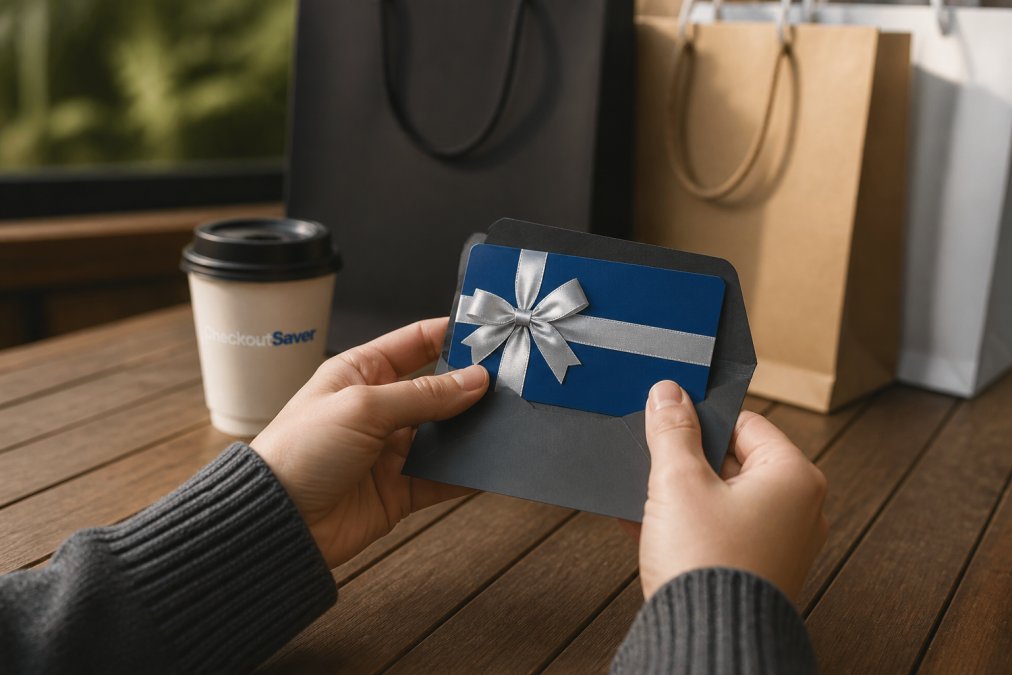
Most digital gift card platforms email you a code immediately after purchase. You redeem that code at checkout, either in-store or online. The balance deducts from your purchase total. Your transaction history stays between you and the retailer.
This method works best if you already shop at specific retailers regularly. A consistent 3-5% discount on every purchase adds up (the FTC). Over a year of $500 monthly spending, that’s $180-300 in cashback.
The limitation: gift card discounts vary by retailer and season. Popular retailers with stable demand (Amazon, Target, Walmart) maintain consistent discounts. Niche retailers may not have active secondary markets. Checkout Saver offers discounted gift cards, providing a way to compare discounts across various retailers.
Verify the seller’s reputation before purchasing. Stick with established marketplaces that verify sellers and offer buyer protection.
Manual Receipt Scanning: Earn Without Account Integration
Manual receipt submission is the oldest non-linked cashback method. You make a purchase, photograph the receipt, upload it to the app, and the program credits your account. No account linking. No transaction monitoring.
Apps using this model typically partner with specific retailers or product categories. You shop normally, keep your receipt, then submit proof within a set timeframe, usually 30-90 days. The app verifies the purchase and credits your account.
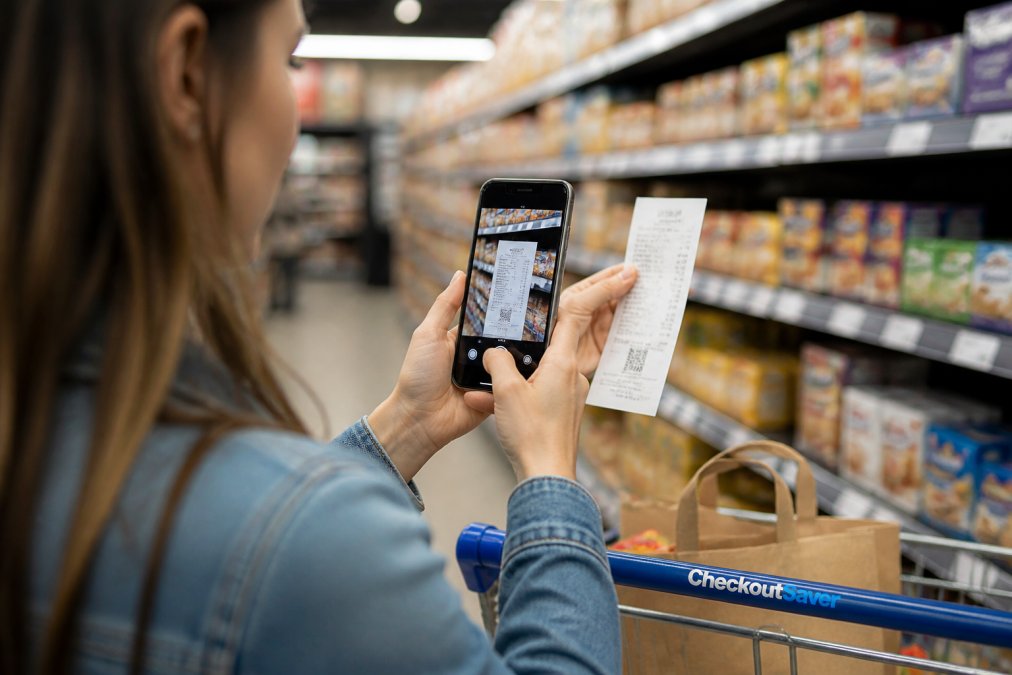
The process takes roughly two minutes per receipt: photograph it clearly, ensure the date and total are legible, upload through the app. Most apps have built-in image recognition that auto-fills transaction details. You control exactly what financial data you share, just the receipt, nothing more.
This method works particularly well for grocery shopping and household goods. A household spending $150 weekly on groceries can submit four receipts monthly, accumulating cashback without any account integration.
Earnings typically range from 1-5% depending on the product category and retailer (peer-reviewed research). Unlike card-linked programs that reward every purchase automatically, manual systems only credit purchases you actually submit.
Privacy-Focused Cashback Apps and Platforms
Several platforms have built their entire model around privacy: no account linking, no transaction monitoring, no data selling. These apps use either receipt scanning, shopping portal links, or browser extensions that operate at the merchant level rather than the banking level. avoid fake online retailers.
Receipt-scanning apps represent the most privacy-forward approach. You control the entire submission process. The app sees only what you choose to share: a photograph of your receipt. No login required. No ongoing data access.
Shopping portal cashback works differently. You click a link from the app to visit a retailer’s website. That click tags your session. When you complete a purchase, the retailer reports the transaction back through the portal, and the app credits your account. Your bank account stays completely separate.
Browser extensions that operate at the merchant level monitor your browser activity, not your financial accounts. When you complete a purchase at a tracked retailer, the extension captures the transaction and credits your account. You never authenticate through your bank.
The trade-off with privacy-focused apps: they typically offer lower cashback rates than card-linked programs. You might earn 1-3% through a privacy app versus 2-5% through a card-linked system.
Privacy-focused platforms work best for users who value data control over maximum earnings. If you shop occasionally and prefer to keep your financial information compartmentalized, the lower earnings rate is worth the privacy benefit.
How to Redeem Cashback Without a Bank Account
If you don’t have a traditional bank account or want to keep your cashback earnings separate from your main banking relationship, several redemption paths exist.
Gift card payouts let you convert cashback directly into spending power. Instead of receiving a check or bank transfer, you request your earnings as a gift card to a retailer of your choice.
PayPal and digital wallet transfers offer another route. Many cashback platforms partner with PayPal to let users transfer earnings directly to their PayPal account. From there, you can spend through PayPal’s debit card or keep the balance in your PayPal wallet.
Check payments are slower but reliable. If you accumulate enough cashback, typically a $20-50 minimum, you can request a physical check mailed to your address.
Store credit is the simplest option if you shop primarily at one or two retailers. Request your cashback as store credit instead of a payout.
The key insight: redemption methods are separate from earning methods. You can earn cashback through manual receipt submission or gift card discounts, then redeem through whatever method suits your financial situation.
Maximizing Your Earnings: Security and Tax Considerations
Earning cashback without linking accounts introduces different security considerations than traditional card-linked programs.
Receipt submission security starts with what you photograph. A receipt typically shows your purchase total, the date, and the merchant name. Most legitimate apps encrypt receipt data and delete images after verification, but read the privacy policy before uploading.
Digital gift card security requires vigilance. Purchase only from established marketplaces with buyer protection policies. Verify seller ratings. Stick with platforms that guarantee card validity and offer refunds if a card doesn’t work.
Tax implications of cashback earnings surprise many people. The IRS generally treats cashback as a discount on your purchase, not taxable income (irs.gov). If you spend $100 and earn $5 cashback, you’ve effectively paid $95. However, if you receive cashback as a bonus unrelated to a purchase, a sign-up bonus, for example, that may be taxable. Keep records of how you earned cashback.
Never assume cashback is automatically tax-free. The characterization depends on how you earned it. Purchase-linked cashback is typically non-taxable. Bonuses, referral rewards, and promotional credits may be taxable. When in doubt, ask a tax advisor.
| Cashback Method | Privacy Level | Earning Potential | Time Investment | Best For |
|---|---|---|---|---|
| Digital gift cards | Highest | 3-8% | Low | Frequent shoppers at same retailers |
| Manual receipt scanning | Highest | 1-5% | Medium | Occasional shoppers, grocery focus |
| Shopping portals | High | 2-6% | Low | Online shopping, diverse retailers |
| Privacy-first browser extensions | High | 1-4% | Low | Regular online shoppers |
| Card-linked (traditional) | Low | 2-5% | None | Maximum earnings, willing to link |
Conclusion
Getting cashback without linking personal accounts is entirely feasible. Digital gift cards offer the simplest approach with the lowest friction. Manual receipt scanning provides maximum privacy if you’re willing to invest a few minutes per purchase. Shopping portals and privacy-focused extensions split the difference, offering reasonable earnings with strong privacy protection.
The choice depends on your priorities. If you shop frequently at the same retailers, digital gift cards compound savings with minimal effort. If you value privacy above earnings, manual receipt submission or browser extensions suit you better. If you want moderate earnings with low friction, shopping portals work well.
Checkout Saver brings these options together in one place. Our platform lets you buy discounted gift cards, trade coupons with other shoppers, and access cashback opportunities, all without requiring account linking or financial data sharing. Sign up free and explore which method fits your shopping style.
Frequently Asked Questions
Q: Is it possible to earn cashback rewards without connecting a bank account?
A: Yes. Manual receipt submission, digital gift card purchases, and cashback opportunities all let you earn cashback without bank account linking. These methods prioritize financial privacy while still providing real cashback earnings. Gift card-based cashback, for example, lets you buy discounted cards and earn rewards at checkout without sharing account credentials. Receipt scanning apps verify purchases through photo uploads instead of transaction monitoring, keeping your banking data private.
Q: Are there privacy risks associated with linking bank accounts to cashback apps?
A: Linking bank accounts grants third-party access to your transaction history and account credentials, which increases your exposure to data breaches and unauthorized access. While established platforms use security protocols to protect financial data, the risk exists whenever you share banking information. Non-linked methods like manual receipt submission and digital wallet transactions eliminate this exposure entirely, letting you earn rewards while maintaining complete financial privacy.
Q: How do I redeem cashback without a bank account?
A: Redemption methods for non-linked cashback include gift card payouts, digital wallet transfers, and check mailing. Digital wallets like PayPal or Apple Pay accept direct transfers. Some platforms also offer merchandise rewards instead of cash. Check your chosen platform’s payout options before earning to ensure the redemption method matches your needs.
Q: What’s the difference between manual receipt scanning and automated account linking?
A: Automated account linking monitors all your transactions automatically, requiring you to share banking data and credentials. Manual receipt scanning lets you choose which purchases to submit, keeping your transaction history private. You photograph receipts and upload them for verification instead of granting third-party access. This method takes slightly more effort but gives you complete control over what data you share and which purchases earn rewards.
Ready to take control of your savings without compromising your privacy? Checkout Saver makes it simple to earn cashback through multiple methods, gift cards, receipt scanning, and coupon trading, without linking your bank accounts. Start earning today with no hidden codes, no account integration required, and complete transparency about where your money goes.
This article was written using GrandRanker