

Table of Contents
- Why Target Grocery Runs Deserve a Cashback Strategy
- How Target Grocery Purchases Are Categorized
- Best Cashback Apps for Groceries at Target
- Stacking Coupons and Cashback at Target
- Target RedCard Benefits for Everyday Savings
- Common Mistakes That Kill Your Target Grocery Cashback
- Your Step-by-Step Cashback Routine for Target Runs
- Conclusion
- Frequently Asked Questions
Last Updated: September 4, 2026
Getting cash back on Target grocery runs is one of the most underrated ways to trim your monthly food budget. Most shoppers swipe their RedCard or a generic rewards card and stop there, leaving real money on the table through category bonuses, rebate apps, and gift card discounts. Below, we’ll show you exactly how to structure your routine so every trip earns more.
Why Target Grocery Runs Deserve a Cashback Strategy
Grocery spending is one of the largest flexible line items in a household budget, and Target is a primary destination for many because it combines pantry staples with household goods. A single transaction can span multiple purchase categories, complicating how rewards are calculated. A deliberate cashback strategy turns this complexity into an advantage.
The core principle is simple: treat each Target run as a three-layer savings event, payment method, rebate or coupon platform, and loyalty or gift card discount. Most guides focus on only one layer, but the real gains come from layering them without violating the fine print.
How Target Grocery Purchases Are Categorized
Target grocery purchases do not always code as groceries to your credit card issuer, and understanding this distinction is the foundation of any cashback strategy. Many issuers classify Target as a discount store or mass merchandiser rather than a supermarket, so your standard grocery bonus category may not apply. This is why you need a card that rewards general spending or offers a flat rate.
Merchant Category Code Nuances
The merchant category code (MCC) is a four-digit number assigned to merchants that tells your card issuer what type of business processed the transaction. Target typically operates under MCC 5310 (discount department stores) or 5411 (grocery stores) depending on the specific location and how the transaction is routed (investopedia.com). The critical nuance is that Target stores with a full grocery section may still process under 5310, while Target.com orders often route through a different entity entirely.
Most major issuers, including Chase, Capital One, and American Express, exclude MCC 5310 from grocery bonus categories (nerdwallet.com). However, some cards like the Amex Blue Cash Preferred explicitly list Target as excluded from their 6% grocery rate, while others like the Citi Custom Cash may include it depending on how the merchant is coded in their system. The only way to know for certain is to check your card’s benefits terms or make a small test purchase and review the transaction category in your online account.
Target’s own payment processing can vary by store, meaning two shoppers with the same card can earn different rates at different Target locations. The practical workaround is to use a flat-rate cashback card (2% or higher) as your baseline, then layer on rebate apps and gift card discounts that don’t depend on MCC classification.
In-Store vs. Online vs. BOPIS Purchases
Where you complete the transaction changes how your purchase is coded and which rebates are available. In-store purchases require you to present physical coupons or scan rebate apps before checkout, while online orders let you apply digital coupon codes and browser extensions more easily. Buy Online, Pick Up In-Store (BOPIS) sits in the middle, often unlocking online-only promotional offers while still letting you avoid shipping fees, but it may disqualify you from in-store-only rebate apps.
BOPIS transactions are processed as online orders through Target.com’s payment gateway. This means they may trigger online shopping categories on cards that offer bonus rewards for e-commerce purchases, but they also bypass the in-store terminal where some rebate apps like Ibotta require you to scan a barcode before payment. For example, a card offering 3% on online retail would earn that rate on a BOPIS order, while an in-store purchase would only earn the base 1%.
Target Circle offers also interact with each purchase method. Some deals are marked “online only” and cannot be applied in-store, while others are “in-store only” and disappear if you switch to BOPIS. The Target app shows which offers apply to your chosen fulfillment method, but you must check before finalizing. A practical strategy is to split your list: use BOPIS for items with online-only Circle offers and rebate apps that accept digital receipts, then make a separate in-store trip for items with manufacturer coupons that require physical scanning.
| Purchase Method | MCC Coding | Best for Cashback | Key Limitation |
|---|---|---|---|
| In-Store | Typically 5310 (discount store) | Rebate apps with in-store offers | Requires manual scanning before checkout |
| Online | Varies by fulfillment center | Digital coupon codes and extensions | Shipping fees may apply without minimums |
| BOPIS | Processed as online transaction | Online promo offers with no shipping | In-store rebate apps often excluded |
Before committing to a BOPIS order, check whether your rebate apps accept digital receipts from Target. Apps like Fetch and Checkout 51 accept email receipts, but others like Ibotta require a physical receipt photo within 7 days. Knowing this in advance prevents lost earnings.
Best Cashback Apps for Groceries at Target
The best cashback apps for groceries at Target are those that offer retailer-specific rebates or general shopping rewards that do not depend on grocery MCC classification. Generic grocery apps that partner with supermarkets frequently exclude Target, so focus on platforms with explicit Target partnerships.
When evaluating apps, pay attention to how you receive earnings, some pay via PayPal, others issue gift cards, and a few offer statement credits, each with different minimum redemption thresholds. Use one app for percentage-based cashback on the total order and a second for specific item rebates, then redeem earnings monthly to avoid letting small balances sit idle.
Stacking Coupons and Cashback at Target
Stacking coupons and cashback at Target is the single most effective way to increase your savings rate on a single transaction. Target allows one manufacturer coupon and one Target Circle offer per item, and you can combine those with a RedCard discount and a rebate app in most cases.
A reliable stacking sequence is: apply Target Circle offers first, then manufacturer coupons, then pay with a RedCard for the 5% discount, and finally submit the receipt to a rebate app. The order matters because percentage-based discounts apply to the reduced price, and some rebate apps require the pre-discount total to trigger the offer. Keep item-level discounts reasonable, as rebate apps may flag transactions where heavy coupon use drops the subtotal below a threshold.
Target RedCard Benefits for Everyday Savings
Target RedCard benefits are the backbone of everyday savings at Target, delivering an automatic 5% discount on nearly every purchase, including groceries, with no annual fee. This discount applies instantly at checkout whether you use the debit, credit, or reloadable version, making it the most reliable baseline layer of your cashback strategy. The RedCard also extends free shipping on most online orders.
The RedCard discount stacks with manufacturer coupons and Target Circle offers, but it does not combine with some third-party gift card discounts. If you buy a discounted Target gift card from a resale platform and then pay with your RedCard, the discount is typically forfeited because the system applies one discount method per transaction. Whether the RedCard’s consistent 5% beats a one-time gift card discount depends on the gift card’s discount rate and whether you can use it online.
Common Mistakes That Kill Your Target Grocery Cashback
The most common mistake is assuming your grocery rewards card earns its bonus rate at Target when the merchant category code classifies it as a discount store. This single error costs shoppers the difference between a 4% grocery rate and a 1% base rate on every transaction. Another frequent error is ignoring the distinction between in-store and online purchase methods, which can disqualify you from certain rebate apps or promotional offers.
Skipping the receipt submission step is also costly, since many rebate apps require a photo or digital link within a specific window after purchase. A final mistake is overvaluing small item rebates at the expense of larger percentage-based discounts. Reviewing your transaction history monthly to confirm which categories and apps actually paid out will reveal where your routine is leaking value.
Your Step-by-Step Cashback Routine for Target Runs
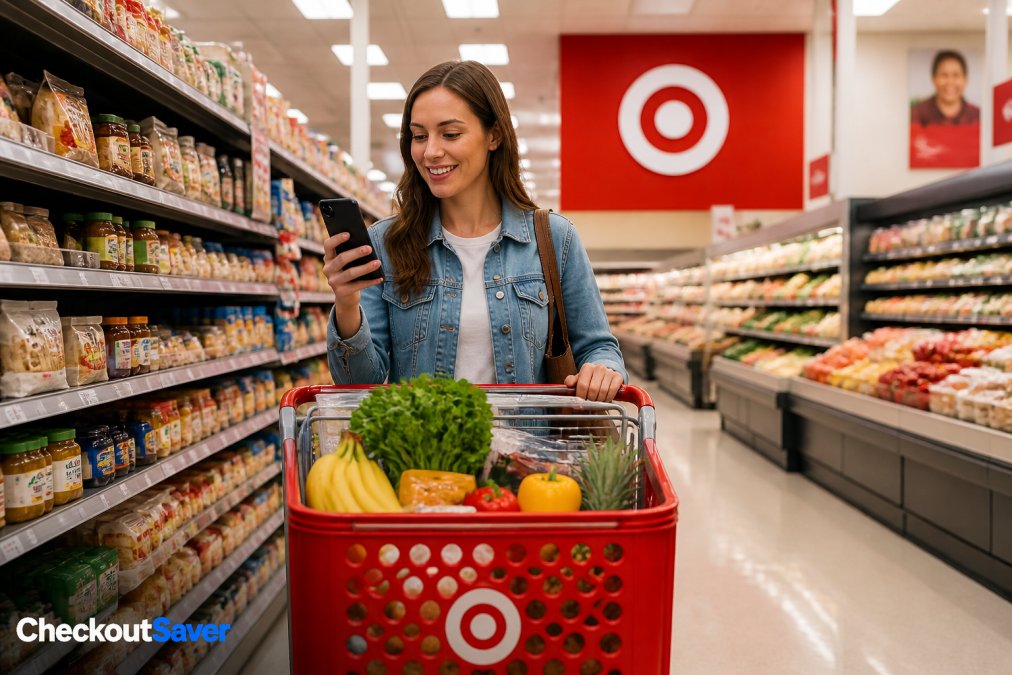
Establishing a repeatable routine takes about ten minutes per trip and ensures you capture every available layer of savings without scrambling at the register. The routine below works for both in-store and online orders, with minor adjustments noted for each method.
-
Check your rebate apps for Target-specific offers before you leave, and clip any item-level rebates for products on your list. [Time: 3 minutes]
- Ibotta typically offers 5-10 Target-specific rebates weekly, with payouts ranging from $0.25 to $5 per item.
- Fetch Rewards awards points (roughly 2,500 points = $2.50) for any Target receipt, regardless of item-level offers.
- Checkout 51 runs periodic Target promotions that pay a flat percentage (usually 2-5%) on your entire receipt.
- Set a reminder to check these apps every Tuesday morning, which is when most rebate platforms refresh their weekly offers.
-
Load Target Circle offers in the app, sorting by items you actually plan to buy rather than browsing the full catalog. [Time: 2 minutes]
- Target Circle offers are typically 5-15% off specific items, and they stack with manufacturer coupons.
- The app shows you a running total of your Circle savings before checkout, so verify the math matches your expectations.
- Some Circle offers are “spend $50, get $10” promotions that apply to your entire order, not just one item. These are worth prioritizing if you’re close to the threshold.
-
Apply any manufacturer coupons you have, either digitally through the Target app or physically at checkout, and verify they match the items in your cart. [Time: 2 minutes]
- Target’s policy allows one manufacturer coupon and one Target Circle offer per item, so a $2 manufacturer coupon plus a 15% Circle discount on the same item is legitimate.
- Digital manufacturer coupons from sites like Coupons.com can be loaded directly to your Target account and auto-apply at checkout.
- Physical coupons require you to hand them to the cashier before payment; you cannot apply them after the transaction is complete.
-
Pay with your RedCard to secure the automatic 5% discount, and confirm the discount appears on your receipt before leaving the store. [Time: 1 minute]
- The 5% RedCard discount applies to the pre-tax total after all coupons and Circle offers are applied.
- If you’re using a discounted Target gift card from a resale platform, you cannot combine it with the RedCard discount in the same transaction. Choose whichever gives you the better effective rate.
- For online orders, verify your RedCard is linked to your Target.com profile before checkout; the discount auto-applies but only if the card is on file.
-
Submit your receipt to your rebate apps within the required window, either by photographing it or linking your Target account digitally. [Time: 2 minutes]
- Ibotta requires receipt submission within 7 days of purchase; after that window, the offers expire (ibotta.com).
- Fetch Rewards accepts email receipts from Target.com and BOPIS orders, but in-store receipts must be photographed within 14 days.
- Checkout 51 has a 7-day submission window and requires the receipt to show the store name, date, and itemized purchases clearly.
- If an app rejects your receipt, you typically have 48 hours to appeal with a clearer photo or additional documentation.
The routine works because each step targets a different savings layer, and none of the steps conflict when executed in this order. For online orders, replace the physical coupon step with digital coupon codes and confirm your RedCard is linked to your Target.com profile before checkout.
Rebate apps can flag accounts that submit receipts with heavy coupon usage where the subtotal drops below $5. If you’re using multiple manufacturer coupons on a single transaction, keep at least one non-couponed item in your cart to avoid triggering fraud detection algorithms.
A realistic monthly return from this routine on a $200 Target grocery budget is $10 from RedCard (5%), $4-8 from Target Circle offers, $3-6 from rebate apps, and $2-4 from manufacturer coupons. That’s $19-28 per month, or $228-336 annually, before considering any credit card rewards on the payment method itself.
Conclusion
Building a cashback routine for Target grocery runs is less about finding a magic card and more about consistent execution across several savings layers. Most shoppers leave value behind because they rely on a single method or misunderstand how Target’s merchant category code interacts with their rewards card.
Checkout Saver helps you push those savings further by offering discounted gift cards and a transparent marketplace for one-time use coupons, so you can lower your Target spend before you even walk through the doors. Pairing our platform with the routine above means you are buying gift cards at a discount, stacking coupons on top, and then earning cashback on the reduced total. Sign up free and start keeping more of your grocery budget in your pocket.
Frequently Asked Questions
How do I get cashback on my Target grocery purchases?
You can get cashback on Target grocery purchases by combining multiple strategies. First, use a cashback app like Ibotta or Fetch before you shop. Second, pay with a Target RedCard to get 5% off the total. Third, use discounted Target gift cards from a platform like Checkout Saver to pay at checkout. Stacking these methods on one transaction maximizes your total savings on every grocery run.
Does Target offer cashback at the register?
No, Target does not offer cash back at the register when you make a purchase with a debit card, unlike many grocery stores. Target’s savings come through the Target Circle loyalty program and the RedCard discount. To get cashback on your grocery runs, you need to use third-party apps and payment methods that reward your spending.
Can I stack coupons and cashback at Target?
Yes, stacking coupons and cashback at Target is allowed and is the best way to maximize savings. You can combine a manufacturer coupon with a Target Circle offer on the same item. You can also use a cashback app like Ibotta for additional rebates, and pay with a RedCard for 5% off. Checkout Saver also offers one-time-use coupons that can be combined with other offers.
This article was written using GrandRanker