
Table of Contents
- The Real Math: Cash Back vs Discounts at Checkout
- Reward Stacking Strategies That Actually Work
- Best Cash Back Apps for Retail Shoppers
- Cash Back vs Discount Math: A Side-by-Side Comparison
- Algorithmic Deal Aggregation vs Manual Stacking
- Hidden Costs and Fees That Eat Your Savings
- Conclusion: Choosing Your Savings Strategy
- Frequently Asked Questions
Last Updated: September 20, 2026
The Real Math: Cash Back vs Discounts at Checkout
Cash back is a rewards structure that returns a percentage of your spending to you after a purchase, while a discount reduces what you pay upfront. That timing difference matters more than most shoppers realize. This guide from Checkout Saver breaks down when each approach actually leaves you with more money.
Here is the core tension: a discount saves you money immediately at the register. Cash back arrives later, sometimes weeks after the transaction clears.
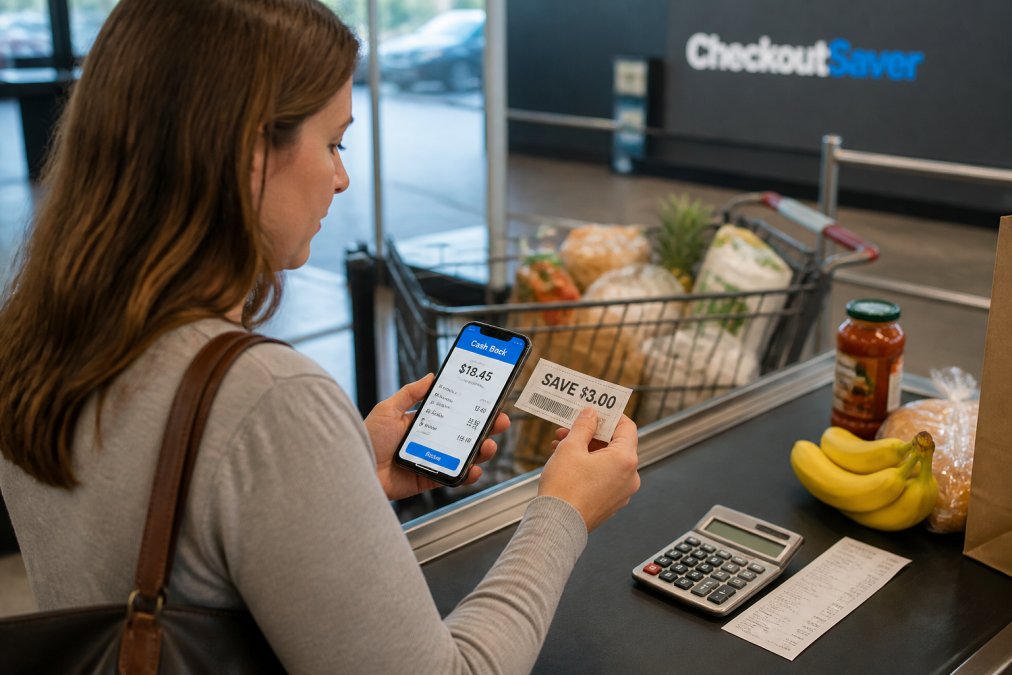
Why a 5% Discount Usually Beats 5% Cash Back
A discount lowers the taxable amount at checkout. Cash back does not.
When you apply a discount, you pay less sales tax because tax is calculated on the reduced price. Cash back rewards arrive after tax has already been collected on the full amount. For a shopper in a state with sales tax, that difference compounds across every purchase.
There is also the behavioral factor. Many shoppers treat cash back balances as “found money” and spend them casually. A discount, by contrast, delivers savings you cannot accidentally fritter away.
Tax Implications of Cash Back Rewards
The IRS generally treats cash back from credit card rewards and rebates as a reduction of purchase price, not taxable income. According to IRS guidance on credit card rewards and rebates, rebates and discounts are not reported as income because they simply lower what you paid.
But there is a catch. If you earn cash back through a referral bonus or a sign-up incentive with no purchase required, that money may be taxable. Interest earned on a rewards balance can also be reportable. Most shoppers never hit these thresholds, but it pays to know the line.
Cash back tied to a purchase is generally not taxable. Cash back earned without spending, like referral bonuses, may be. Keep records if you earn significant rewards this way.
Reward Stacking Strategies That Actually Work
Reward stacking is the practice of combining multiple savings methods on a single purchase to maximize your total return. The most effective stacks follow a specific order, because each layer changes the base that the next layer applies to.
- Start with a discounted gift card. Buy a gift card below face value, then use it to pay for your purchase. A card bought at a 5% discount effectively pre-loads a 5% discount before any other layer runs.
- Apply a coupon or promo code at checkout before payment. Coupons usually reduce the pre-tax subtotal, which also lowers the sales tax you owe.
- Pay with a rewards credit card that earns cash back on the category. Card rewards apply to whatever amount you actually charge.
- Route the purchase through a cash back portal when one is available. Portal payouts are typically calculated on the post-coupon, post-tax order total, so they stack on top rather than replacing the earlier layers.
Stacking works because each layer operates independently. A discounted gift card lowers your out-of-pocket cost, a coupon cuts the price further, and your credit card rewards apply to whatever remains. The order matters: applying a coupon before a gift card preserves the tax reduction, while reversing the order can leave tax calculated on the higher subtotal.
The mistake most shoppers make is stopping at one layer.
The Break-Even Point of Annual Fees
Rewards credit cards with annual fees only make sense past a certain spending threshold. The formula is simple:
Break-even spending = Annual fee ÷ Effective rewards rate
Three practical checks before paying any annual fee:
- Category match. If the bonus rate applies to groceries and gas but you spend most of your budget on rent and dining, the effective rate collapses.
- Credits you will actually use. Statement credits for streaming, travel, or rideshare only count if you already pay for those services.
- Downgrade option. Most issuers let you product-change to a no-fee version of the same card, preserving your account age and rewards balance.
Divide the annual fee by the rate advantage over your best no-fee card, not by the headline rate. That number is your real break-even spending threshold.
Stacking Order: A Worked Example
Take a $200 purchase in a state with 7% sales tax.
- Buy a $200 gift card for $190 (5% discount).
- Apply a $20 coupon at checkout, dropping the subtotal to $180.
- Tax of 7% adds $12.60, for a $192.60 charge.
- Pay with the discounted gift card, leaving $2.60 on a rewards card earning 2%.
- Route through a portal paying 3% on the $192.60 order.
Best Cash Back Apps for Retail Shoppers
The best cash back app depends on where you shop and how much effort you want to invest. Some apps focus on grocery rebates, others on online retail, and a few combine coupon trading with cash back in one place.
If you are testing a new cash back platform, start with one purchase you were already going to make. That way you learn how the redemption process works without risking a large transaction.
Cash Back vs Discount Math: A Side-by-Side Comparison
The table below shows how the same purchase plays out under three common savings approaches. The scenario uses a $100 item in a state with 7% sales tax.
| Approach | Price Paid | Tax Paid | Total Cost | Money Back | Net Cost |
|---|---|---|---|---|---|
| No savings | $100.00 | $7.00 | $107.00 | $0.00 | $107.00 |
| 5% discount | $95.00 | $6.65 | $101.65 | $0.00 | $101.65 |
| 5% cash back | $100.00 | $7.00 | $107.00 | $5.00 | $102.00 |
| Stacked (discount + gift card + cash back) | $90.00 | $6.30 | $96.30 | $4.50 | $91.80 |
Algorithmic Deal Aggregation vs Manual Stacking
Algorithmic deal aggregation uses software to scan prices, coupons, and cash back rates across retailers automatically. Manual stacking requires you to hunt for each layer yourself. The two approaches fail in different ways, and knowing which failure mode costs you more is the real decision.
The hybrid workflow that most practitioners land on:
- Let the extension or aggregator handle coupon discovery and cash back rate comparison, that is pure lookup work with no judgment required.
- Before checkout, check whether a discounted gift card exists for that merchant. This is the layer software cannot see.
- Confirm the rewards card category bonus applies to the merchant code, not just the store name.
- Complete the purchase through the portal first, then apply the gift card at payment, reversing this order can void the portal credit.
If a portal payout and a coupon both apply, screenshot the order confirmation and the portal click-through timestamp. Disputes over tracking failures are common, and documentation is the only thing that resolves them.
Hidden Costs and Fees That Eat Your Savings
Hidden costs are the quiet killer of cash back value. A reward that looks generous on the surface can shrink once fees and delays are factored in.
Watch for these:
- Redemption minimums. Some programs hold your balance until you hit a threshold, which means small savings never reach your pocket.
- Expiration windows. Points or cash back that expire before you redeem them are worth nothing.
- Gift card resale fees. When you sell a gift card, the platform takes a cut. That fee directly reduces your net savings.
- Deferred payout timing. Cash back that arrives in 90 days is worth less than a discount today, especially if you needed the money sooner.
- Category exclusions. Many rewards programs exclude the categories where you spend the most.
Never buy a discounted gift card from a source that does not clearly state its fees before purchase. If the resale fee is hidden until after the sale, you may net far less than expected.
Conclusion: Choosing Your Savings Strategy
The smartest shoppers do not pick between cash back and discounts. They stack both, in the right order, on purchases they were already going to make.
Sign up free and start stacking your savings today.
Frequently Asked Questions
Is it better to get a discount at checkout or wait for a cash back rebate?
An instant discount reduces what you pay upfront, so you save immediately and avoid waiting. Cash back arrives later, often 30 to 90 days after purchase, and may carry redemption minimums. For the same percentage, a discount delivers slightly more net savings because you are not financing the full price in the meantime. If the cash back rate is meaningfully higher, the delayed reward can win, but run the math first.
Can you combine cash back with instant discount codes?
Often yes, but it depends on the platform. Many cash back apps exclude orders paid with coupon codes that are not listed on their site, and some card issuers void rewards on discounted purchases. Read the terms before stacking. A safer approach is to use a discounted gift card for the base payment, then apply a store coupon at checkout, then let any eligible cash back post separately.
What are the hidden fees associated with cash back platforms?
Common fees include inactivity charges after 6 to 12 months, payout minimums that delay redemption, and reduced rates on gift card payouts versus bank transfers. Some platforms also claw back rewards if you return an item. Checkout Saver keeps its model transparent with no hidden codes, so what you see at checkout is what you get. Always read the payout terms before committing to any platform.
How does deal aggregation change the way I shop?
Deal aggregation pulls coupons, cash back rates, and gift card discounts into one place so you stop hunting across five tabs. Instead of manually checking each retailer, you see the combined net price before you buy. This shifts your focus from chasing individual codes to comparing total savings. The trade-off is that aggregated rates change daily, so verify the final price at checkout before confirming your order.
The gap between a casual coupon clipper and a serious saver comes down to method, not effort. Checkout Saver gives you the tools to stack discounts, trade coupons, and earn cash back without hidden codes or locked-in loyalty programs. Get started with Checkout Saver and keep more of every dollar you spend.

