Cashback is usually paid out as a direct deposit or ACH transfer, a PayPal or Venmo transfer, a gift card, a paper check, or a statement credit. Which one you get, and when you can actually withdraw it, depends on the provider’s minimum payout threshold and whether your purchase has cleared its verification window. Processing speed and tax treatment also shift depending on the method you choose.
TL;DR:
- Most payout methods, including bank transfers, PayPal, and gift cards, typically clear within a few days, while checks can take up to three weeks and carry higher risks of delays or loss.
- Cashback becomes withdrawable only after it passes the provider’s minimum payout threshold and the purchase verification process confirms the transaction is final, which can take from 30 to 90 days depending on the retailer.
- Cashback earned from routine purchases is generally not taxable income, but sign-up bonuses, referral rewards, and business-related payouts often are, requiring detailed record-keeping for tax reporting.
- Errors in account details and pending merchant return or dispute holds are the main causes of payout delays or failures, and supporting documentation speed support resolution.
- Combining cashback with discounted gift cards and exclusive coupons can significantly increase total savings beyond just earning cashback on a single purchase.
Table of Contents
- 1. Common cashback payout methods explained
- 2. Minimum payout thresholds and how long funds take to clear
- 3. How cashback rewards are taxed and reported
- 4. Why payouts get delayed, reversed, or fail
- 5. How to choose the best payout method for your priorities
- 6. Step-by-step cash-out checklist for your next payout
- 7. A publisher’s view on realizing more from every payout
- Turn every purchase into layered savings
- FAQ
- Sources
1. Common cashback payout methods explained
Every cashback program routes money to you through one of a handful of channels, and each one comes with its own speed, cost, and fine print.
Bank transfer and ACH is the closest thing to a default for established cashback apps. You link a checking account, the provider verifies the routing and account numbers, and funds typically land within 1 to 5 business days once a payout is approved. The most common point of failure is a typo in your bank details: a mismatched account number usually bounces the transfer back to the provider rather than landing in the wrong account, which adds days to the wait while the system retries or flags the error for support.
PayPal and Venmo transfers split into two speeds. A standard transfer often takes one to three business days, while many apps and some card issuers now offer an instant transfer for a small fee, usually a percentage of the amount sent. You need a verified PayPal or Venmo account tied to your identity, and some programs require that account to have been active for a minimum stretch of time before they will pay out to it.
Gift cards and merchant credit show up when a provider wants to control costs or when you choose them for a bonus rate. Delivery is almost always instant by email, though a few merchant promotions still mail physical cards, which adds shipping time and a small risk of a lost or delayed card.
Paper checks are the slowest common option, typically taking one to three weeks between request and mailbox. Beyond the wait, checks carry a practical risk: a lost or stolen check means contacting support, waiting for a stop-payment, and requesting a reissue, which can push total payout time past a month. Checks also raise a tax wrinkle covered in the next section: a check that was mailed and available to you can count as received for tax purposes even if it sits in your mailbox unopened.
Statement credit works differently from the other four because it is usually a card issuer benefit rather than a third-party app payout. Instead of moving money to an external account, the issuer reduces your next statement balance by the reward amount. According to American Express, some card issuers allow redemption as a statement credit, direct deposit, or mailed check, and a number of these redemption paths carry no minimum threshold at all, a flexibility that third-party cashback apps rarely match.
- Bank/ACH: 1 to 5 business days, free, most reliable for larger amounts.
- PayPal/Venmo: instant to 3 business days, sometimes a fee for instant transfer.
- Gift cards: usually instant by email, sometimes a bonus rate for choosing this option.
- Paper check: 1 to 3 weeks, slowest, carries lost-mail risk.
- Statement credit: tied to card issuers, often no minimum, reduces your balance directly.
2. Minimum payout thresholds and how long funds take to clear
Most cashback apps will not let you withdraw a single cent until your confirmed balance crosses a minimum threshold, a policy that exists mainly to keep transaction costs manageable for the provider. Thresholds vary widely by program and by payout method within the same program: a bank transfer might require a higher minimum than a gift card redemption from the same app.
Card issuers behave differently. As American Express notes, some issuers let you redeem rewards with no minimum at all through statement credits or direct deposits, because the liability sits on the issuer’s own books rather than depending on a third-party advertiser paying a commission. Third-party cashback apps, by contrast, often wait for the merchant to pay the commission that funds your reward before releasing it, which is the real reason behind both their thresholds and their verification windows.
That verification window is where most of the confusion happens. A purchase typically shows up in your account as pending before it becomes confirmed, and only confirmed cashback counts toward your withdrawable balance. The gap between the two exists because merchants need time to confirm the order was not returned, canceled, or disputed. MoneyLion’s help documentation warns that pending cashback should never be treated as available cash, since a later return or chargeback can reverse it entirely.
Typical processing examples:
- A $25 online purchase might sit pending for 30 to 60 days before confirming, a window largely dictated by the merchant’s own return policy.
- Once confirmed, a bank transfer payout often completes within a week.
- A gift card redemption from the same confirmed balance can land in your inbox within minutes.
The CFPB has flagged redemption reliability as a recurring consumer problem. According to the CFPB’s 2024 circular on rewards programs, program devaluations and broken redemption procedures are common sources of complaints, and the agency places the responsibility for transparent, working redemption systems on the program operator, not the consumer.
- Confirm your provider’s specific minimum threshold before you count on a payout date.
- Treat any pending balance as provisional until it flips to confirmed.
- Expect gift card and statement credit redemptions to clear faster than bank or check payouts.
3. How cashback rewards are taxed and reported
For most everyday shoppers, cashback earned from ordinary purchases is not taxable income, because the Internal Revenue Service generally treats it as a rebate or discount on what you paid rather than as income you earned. This holds whether you take the reward as cash, a statement credit, or another form tied directly to a purchase.
The exceptions matter, though, and they trip people up every year:
- Sign-up bonuses that do not require a qualifying purchase, such as a flat cash bonus for opening an account, are generally treated as taxable income rather than a purchase rebate.
- Referral and affiliate payouts, including bonuses for referring a friend to a cashback app, are typically taxable because they are not tied to your own spending.
- Business-use rewards earned on a business credit card can affect your deductible expenses, since the IRS views the rebate as reducing the cost of the item you expensed.
- Constructive receipt rules can make a mailed check taxable in the year it arrived in your mailbox, even if you never cashed it that year. IRS Publication 525 explains that income is counted once it is made available to you, not once you actually deposit it, which matters most for payouts issued in late December.
An IRS memorandum on credit card reward liabilities further explains how issuers account for cash-redeemable rewards as fixed liabilities once a cardholder has the right to redeem them, reinforcing that the rebate framing applies specifically to redemptions tied to your own purchases rather than to bonuses with no spending requirement.
Keep a simple record as you go: screenshots of your confirmed balances, payout confirmation emails, and the dates checks arrive. None of this requires special software, just a folder you actually check before tax season. If you earn meaningful referral income, run a business card through a cashback program, or receive a late-December payout close to a reporting threshold, a conversation with a tax professional is worth the hour. The rules above cover the common cases, not every edge case your specific situation might create.
4. Why payouts get delayed, reversed, or fail
Most payout problems trace back to one of three causes, and all three are fixable once you know what you are looking at.
Account detail errors are the most common and most avoidable. A single wrong digit in a routing or account number usually causes the transfer to bounce back to the provider rather than reaching a stranger’s account, but the bounce itself can add several business days while the system reroutes the funds or flags the mismatch for manual review.
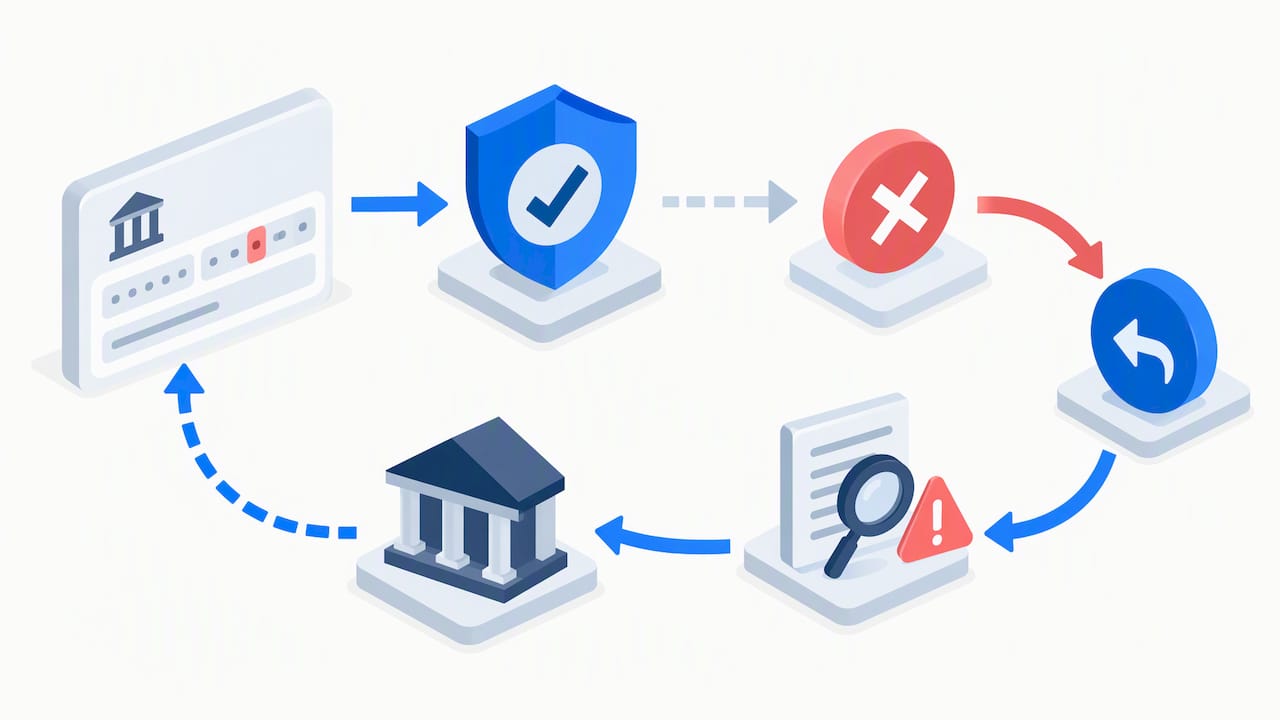
Pending holds from returns or disputes happen when a purchase you made is returned, partially refunded, or disputed through a chargeback. Retailers typically need their own return window, often 30 to 90 days depending on the store’s policy, to confirm a sale is final before they pay the commission that funds your cashback. Until that confirmation happens, your reward sits pending, and a return during that window usually voids the cashback tied to it entirely.
Platform-side holds cover identity verification, fraud screening, and policy restrictions. Apps that pay real money are required to verify who they are paying, so a new account, an unusually large payout request, or a flagged pattern of activity can trigger a request for identification or proof of purchase before funds release.
- Double-check the bank account or payment details on file before requesting any payout.
- Save a screenshot of your confirmed balance and the payout confirmation screen the moment you request it.
- If a payout is late, gather your order receipt, the retailer’s confirmation email, and the app’s transaction ID before contacting support.
- Submit that evidence directly to support rather than waiting for the issue to resolve itself, since most holds require a human review once flagged.
- If support cannot resolve the issue within their stated window, ask explicitly what escalation path exists and get a reference number for the conversation.
Pro Tip: Screenshot your redemption confirmation and reference number the moment you request a payout. It is the single most useful piece of evidence if a transfer gets stuck.
5. How to choose the best payout method for your priorities
The right payout method depends on what you are actually optimizing for: speed, cost, or total value.
- If you need cash immediately, an instant PayPal or Venmo transfer beats a bank transfer or check, even with a small fee attached.
- If you want to avoid any fees at all, a standard bank transfer or a no-minimum statement credit typically costs nothing.
- If you are trying to maximize total value rather than speed, a gift card redemption sometimes carries a bonus rate over straight cash, and pairing that card with a discounted gift card purchase can stretch the value further.
- If account security is your main concern, a direct deposit to a bank you already monitor closely is generally easier to track than a mailed check that can be lost or intercepted.
| Priority | Best method | Why |
|---|---|---|
| Fastest cash | Instant PayPal/Venmo transfer | Often available within minutes, for a small fee |
| Lowest cost | Bank/ACH or statement credit | Typically free, no transfer fee |
| Highest realized value | Gift card redemption | Bonus rates sometimes apply over cash |
| Lowest risk of loss | Direct deposit | No physical check to lose or delay |
Before redeeming anything, ask the provider three questions: what is the minimum threshold for this specific method, how long does verification typically take after a purchase, and does choosing a gift card or statement credit change the payout amount. The answers shape which method actually serves your situation, and Checkout Saver’s cashback page walks through how returns, cancellations, and chargebacks affect eligibility before you commit to a payout choice.
6. Step-by-step cash-out checklist for your next payout
Running through the same sequence every time you redeem cashback cuts down on delays and keeps you from chasing support tickets over avoidable mistakes.
Preparation
- Confirm your identity verification is complete and up to date, since an expired or incomplete verification is a common reason payouts stall before they start.
- Check your account’s confirmed balance, not just the total balance shown on the dashboard, since pending amounts are not yet withdrawable.
- Compare that confirmed balance against the minimum threshold for the payout method you want, since some methods allow smaller withdrawals than others.
- Verify your bank details, PayPal email, or mailing address are current, especially if you have switched banks or moved recently.
Execution
- Submit the payout request through the app or issuer portal, selecting the method that matches your priority from the decision framework above.
- Take a screenshot of the confirmation screen immediately, including any transaction or reference number shown.
- Note the expected arrival window the provider gives you, and set a calendar reminder for one day past that window rather than checking daily.
- If the method is a gift card, check your email (including spam folders) right away, since delivery is often instant and easy to miss.
If it fails
- Once the expected window passes without the funds arriving, pull together your confirmation screenshot, the original purchase receipt, and any retailer confirmation email tied to the cashback.
- Contact support with that evidence attached rather than a general description of the problem, since specific reference numbers speed up resolution.
- Ask support directly whether the hold is due to an account detail mismatch, a pending retailer verification, or a fraud or compliance review, since each has a different typical resolution time.
- If the response does not resolve things within the timeframe support quotes, request escalation and keep the reference number for that conversation as well.
Following this sequence does not guarantee an instant payout, but it removes the two most common causes of delay before they happen: incomplete account details and missing evidence when something does go wrong.
7. A publisher’s view on realizing more from every payout
We built our platform around the idea that cashback is only half the savings equation. Alongside cashback rewards, discount gift cards and one-time-use coupons are offered through a marketplace where shoppers can also sell coupons they are not using. Our difference from much of the industry is straightforward: coupon codes are not hidden behind paywalls, and cashback rates are structured to be among the highest available by keeping overhead low.
The practical value shows up when you combine methods instead of picking just one. A cashback rate earned on a purchase is one layer of savings, but paying for that purchase with a gift card bought below face value adds a second layer on top of it, and stacking an exclusive one-time-use coupon on the same order adds a third.
What you should expect from any payout option on our platform is the same transparency we apply to our coupon listings: clear terms on how cashback accrues, how returns or cancellations affect it, and no surprise devaluation of a reward you already earned. Our cashback page walks through exactly how purchase verification and eligibility work before you redeem.
Turn every purchase into layered savings
Most cashback programs stop at a single percentage back on a single purchase. We built our marketplace to stack savings instead: cashback at thousands of stores, discount gift cards you can buy below face value, and exclusive one-time-use coupons you will not find paywalled elsewhere.

If you pay with cryptocurrency, our crypto gift card checkout extends that discount further before you even apply a coupon or earn your cashback rate. The combination is the point: a gift card bought below face value, a one-time-use coupon applied at checkout, and cashback earned on top of both. Before your next purchase, compare what a single cashback rate gets you against what a discounted gift card paired with cashback can add, and browse cashback rates across all stores to see where the combination works best for what you are already buying.
FAQ
How do I get money from cashback?
You request a payout through the app or card issuer once your confirmed balance meets the minimum threshold, choosing a method such as bank transfer, PayPal, gift card, or check. Processing then takes anywhere from minutes, for a gift card, to a few weeks, for a mailed check.
Can cashback be transferred to a bank account?
Yes, most cashback apps and many card issuers offer a direct deposit or ACH transfer option once your reward balance is confirmed and above the program’s minimum threshold. Transfers typically complete within one to five business days after you submit the request.
What is the best way to earn cash back?
There is no single best method since it depends on whether you prioritize speed, low fees, or total value. Combining a cashback rate with a discounted gift card purchase and a one-time-use coupon on the same order tends to produce a higher effective return than relying on cashback alone.
Does cashback pay real money?
Yes, cashback programs pay real money through methods like bank transfers, PayPal or Venmo, checks, or gift cards, though the amount only becomes withdrawable once the purchase is confirmed rather than pending. According to the IRS, cashback earned on ordinary purchases is generally treated as a rebate rather than taxable income, which is part of why it functions like real savings rather than earned wages.
Why is my cashback still pending?
A pending status usually means the retailer has not yet confirmed your purchase is final, a process that can take 30 to 90 days depending on the store’s return policy. MoneyLion’s support documentation notes that pending rewards can be reversed entirely if the purchase is later returned or disputed.
— Justin
Sources
- Internal Revenue Service
- American Express — How reward dollars work
- CFPB circular on rewards program protections
Recommended
- Sell Gift Cards for Cash – Get Up to 85%
- Gift Card App – Buy, Sell & Save
- Buy Discount Gift Cards With Crypto