Yes, you can earn cashback when you book flights, hotels, and packages, and the fastest routes are cashback portals, travel credit cards, OTA site promotions, and discounted gift cards. Combining a few of these, when the rules allow it, adds up to real savings. Just watch two things before you rely on it: refund timing on canceled flights and payment methods that scammers favor.
TL;DR:
- Cashback portals depend on cookies and referral codes, so completing the entire booking in one session without interruptions is crucial for tracking.
- Combining portal cashback with travel rewards credit cards and discounted gift cards can maximize overall savings, but each must be managed carefully to avoid canceling tracking or incurring fees.
- Automatic airline refunds due to flight cancellations can reverse pending cashback, so keeping evidence like confirmation screenshots is essential for resolution.
- Side discounts like gift cards and coupons provide immediate price cuts that stack with cashback offers, but sellers must have clear terms and reputations to avoid scams.
- Most travel cashback payments take 60 to 90 days, and delays often occur after trip completion and cancellation windows close, making prompt claim filing important.
Table of Contents
- Which channels actually pay you cashback on travel
- How cashback tracking and payouts actually work
- A tactical checklist for maximizing cashback on every booking
- Pitfalls, scams, and refund rules that affect your cashback
- Evidence and expert notes behind this guide
- What travel booking cashback actually costs you in fees
- How long cashback payments typically take to arrive
- Best practices for stacking cashback across multiple trips
- What I’ve learned stacking travel cashback myself
- Getting more from every booking with Checkout Saver
- Sources
- FAQ
Which channels actually pay you cashback on travel
Cashback portals sit between you and a travel merchant. You click through the portal’s link, book as usual, and the portal earns a commission that it shares with you once the sale is confirmed. This is the most common way travelers earn cashback on hotels and flights, and it costs you nothing extra since the commission comes out of what the merchant would have paid in marketing anyway.
OTAs and marketplace sites sometimes run their own cashback or loyalty credit programs, separate from portal commissions, while airlines and hotels occasionally run direct promotions during shoulder seasons. Travel credit cards work differently: some pay flat cash back on travel purchases, others award points redeemable for future trips, and the right choice depends on whether you value flexibility or a straightforward statement credit.
Discounted gift cards and one-time-use coupons offer a different angle entirely. Rather than earning cashback after the fact, you lower what you pay at checkout, which functions like cashback but lands immediately instead of weeks later.
- Cashback portals: commission-based, paid after the trip completes.
- Travel credit cards: cash back or points, earned at the moment of purchase.
- OTA and direct promotions: seasonal, merchant-specific, and inconsistent.
- Gift cards and coupons: reduce the price you pay up front.
Rates vary widely by merchant, season, and portal, so treat any advertised percentage as a starting point rather than a guarantee.
How cashback tracking and payouts actually work
Cashback tracking relies on a cookie or referral code planted the moment you click through from the portal. If anything interrupts that click, an ad blocker, a browser extension, a coupon pop-up, or even switching from your phone to a laptop mid-booking, the merchant’s site never registers where the sale came from, and no commission gets recorded.
- Click the portal’s link first, before opening any other tab or app related to the booking.
- Disable ad blockers and privacy extensions for that browsing session.
- Complete the entire purchase in one sitting, on one device, without navigating away.
- Save a screenshot of the portal’s confirmation page and your booking receipt.
Most portals confirm tracked clicks within a day or two, but actual cashback typically stays “pending” until the trip is completed and any cancellation window has passed, sometimes 60 to 90 days for travel purchases. If your cashback never shows up, gather your order ID, the confirmation screenshot, and the booking email, then file a missing cashback claim through the portal’s support form within its stated window.
Pro Tip: Open the portal link in a fresh incognito window with extensions off, then complete the booking without touching another tab.
A tactical checklist for maximizing cashback on every booking
Before you commit to any flight, hotel, or package, run through a short sequence that protects your tracking and stacks every discount available.
- Compare the same booking across two or three cashback portals since rates differ by merchant.
- Sign into the portal account you’ll use for tracking before clicking through.
- Confirm you’re on the merchant’s actual site, not a lookalike, by checking the URL bar.
- Choose your payment method before checkout, not during it.
- Apply any promo code or OTA member discount first, then let cashback track on the discounted total.
Payment method matters more than most travelers realize. A travel rewards credit card layered on top of portal cashback often produces the strongest combined return, since the card earns points or cash back independently of the portal’s commission. A dedicated cashback card can work too, though some cards exclude travel purchases from bonus categories, so check the terms first. Gift cards purchased below face value function as a third lever: you pay less for the same booking, and that discount stacks on top of whatever the portal and card already earn.
- Portal cashback plus a travel rewards card: two independent streams from one purchase.
- Promo code applied before portal tracking: often reduces the qualifying total, which can lower cashback slightly but still nets more savings overall.
- Discounted gift card used at checkout: an immediate price cut, not dependent on tracking.
Say a hotel booking costs $400. None of those numbers guarantee anything, since rates shift constantly, but the mechanics of stacking are consistent: each lever works independently, so losing one doesn’t cancel the others.
Verify any gift card or coupon seller has a track record and clear terms before buying, and never stack so many codes that a merchant’s system flags and cancels the order.
Pitfalls, scams, and refund rules that affect your cashback
Travel scams tend to share the same warning signs regardless of how the deal is dressed up. The FTC warns that offers requiring payment by wire transfer, gift card, or cryptocurrency are a common pattern in travel fraud, and the agency advises typing a known company’s URL directly rather than clicking a paid ad that might lead to an impersonator site.
- Treat any request to pay by wire transfer or cryptocurrency for a “too good to be true” fare as a red flag.
- Verify mandatory fees, like resort fees, before assuming a listed price is final.
- Screenshot every confirmation page in case a dispute becomes necessary later.
Refunds complicate cashback in a specific way. Under the DOT’s automatic refund rule, airlines must issue cash refunds without you requesting one when a flight is canceled or significantly changed, and that refund has to arrive in your original payment form within seven business days for credit card purchases or 20 calendar days for other methods.
A significant flight change or cancellation now triggers an automatic refund within seven business days for credit card payments, which matters because a reversed booking usually means the cashback portal reverses its commission too. Keep your confirmation records so you can reconcile any discrepancy with the portal’s support team.
Evidence and expert notes behind this guide
The recommendations here rest on a few verified rules rather than guesswork. The DOT’s final refunds rule requires airlines to refund canceled or significantly changed flights automatically, in the original payment form, without forcing travelers to request a voucher instead. The FTC’s travel scam guidance flags wire transfers, gift cards, and cryptocurrency as common payment methods scammers request, and recommends sticking to payment methods with dispute protections.
Price protection is a related but separate concept. Google Flights ran a price guarantee pilot that refunded the difference through Google Pay when an eligible fare dropped more than $5 before the first flight, a useful comparison for understanding how price protection works independently of cashback tracking.
- DOT: automatic refunds, original payment form, strict timelines.
- FTC: avoid wire transfers, gift cards, and crypto for unfamiliar travel offers.
- Google Flights: a price-drop refund model distinct from portal cashback.
- Checkout Saver: operates a marketplace for discounted gift cards and coupons, reviewed here for its relevance to travel cost reduction.
What travel booking cashback actually costs you in fees
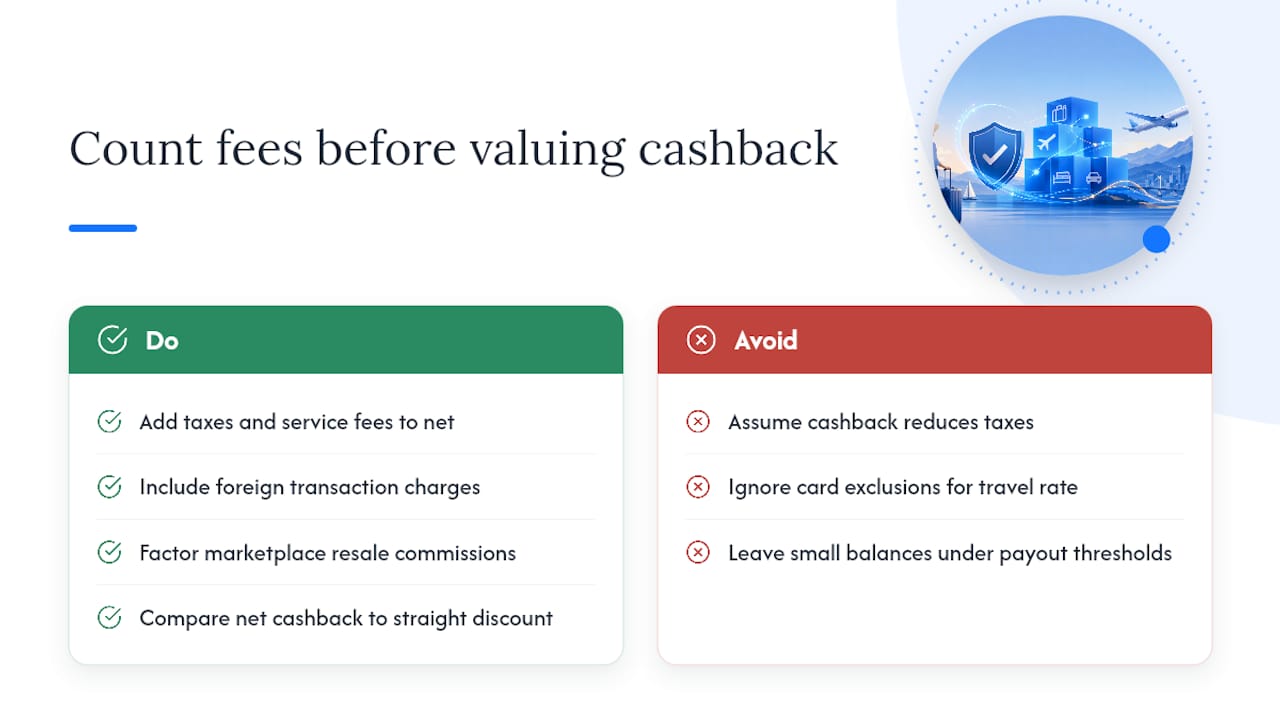
Cashback itself rarely carries a direct fee, but the surrounding purchase often does. Airline and hotel taxes apply to the full booking price regardless of any cashback you’ll eventually receive, so a $20 cashback payout doesn’t reduce the taxable total at checkout. Some cashback portals also apply minimum payout thresholds, meaning smaller commissions sit in your account until you accumulate enough to withdraw.
Gift cards carry their own cost structure. Buying a gift card below face value saves money up front, but marketplaces that let you resell unused cards typically take a cut. Checkout Saver, for example, applies a flat 15% take when you sell a gift card back through its platform, which is worth factoring in if you’re buying cards with resale in mind rather than pure spending.
Credit card travel purchases can also trigger foreign transaction fees on international bookings, which erode any cashback earned on that same purchase. Check your card’s terms before assuming the whole booking qualifies for a stated cashback rate; some cards exclude airline fees, seat upgrades, or third-party booking sites from their travel category.
The practical rule: add up taxes, service fees, foreign transaction charges, and any marketplace commission before comparing the net cashback against a straightforward discounted price. A booking with a smaller upfront price and no cashback can sometimes beat a higher-priced booking with cashback attached, once fees are counted.
How long cashback payments typically take to arrive
Cashback rarely pays out immediately, and the delay is built into how portals verify a sale. Most portals mark a booking “pending” the moment tracking confirms your click, but that status doesn’t convert to payable cashback until the trip itself is completed and any cancellation window has closed. For flights and hotels, that pending period commonly runs 60 to 90 days, since travel bookings carry longer cancellation and dispute windows than typical retail purchases.
Once a booking clears pending status, most portals batch payouts on a set schedule, often monthly, and some require you to hit a minimum balance before a payment triggers. If your booking gets canceled or significantly changed and you receive an automatic refund under the DOT rule, expect the portal to reverse the pending cashback rather than pay it out, since the underlying sale no longer exists.
Direct airline or hotel promotions sometimes move faster, crediting an account or statement within a few weeks rather than months, though this varies by program and isn’t something to count on universally. Gift card and coupon savings, by contrast, apply the moment you use them at checkout, so there’s no waiting period at all, which is part of why pairing an immediate discount with a slower-paying cashback channel makes sense for travelers who want at least part of their savings locked in right away.
If a payout window passes without payment appearing, that’s the point to file a missing cashback claim with your saved documentation rather than waiting indefinitely.
Best practices for stacking cashback across multiple trips
Consistency matters more than any single big win. Travelers who track cashback across several trips a year tend to do better than those who only chase it occasionally, mainly because they’ve already learned which portals and cards perform best for their typical bookings.
Keep a simple record of which portal, card, or gift card you used for each trip, along with the cashback rate at the time and the payout date once it arrives. This makes two things easier: spotting which channels consistently deliver and catching a missing payout before the claim window closes.
Rotate between portals when rates shift. A portal offering 8% on hotel bookings one month might drop to 3% the next, so checking two or three options before each booking, rather than defaulting to the same one out of habit, adds up over a year of travel.
Time larger purchases, like a package deal or a multi-night hotel stay, around boosted cashback campaigns when portals run limited-time rate increases. These campaigns tend to cluster around holiday booking seasons and can meaningfully raise the payout on a purchase you were making anyway.
Finally, treat gift cards and coupons as a complement to cashback rather than a replacement. Buying a discounted gift card for a hotel chain you already use regularly locks in savings immediately, while the cashback layer on top continues to accumulate across every trip you book with that same combination.
What I’ve learned stacking travel cashback myself
On a recent hotel booking, I ran the portal click first, paid with a travel rewards card, and used a discounted gift card for part of the total. Between the three, the effective savings landed somewhere around 12 to 15%, though the cashback portion took weeks to clear.
Stacking works best on bigger bookings. On a $60 one-night stay, the extra effort barely moves the needle.
Pro Tip: I always screenshot the portal confirmation before opening the merchant’s site, since that single habit has resolved every missing cashback dispute I’ve filed.
— Justin
Getting more from every booking with Checkout Saver
Cashback portals and travel cards get you part of the way, but Discounted gift cards purchased with cryptocurrency, often below face value, plus exclusive one-time-use coupons can stack on top of cashback offers, adding extra savings to your travel bookings.
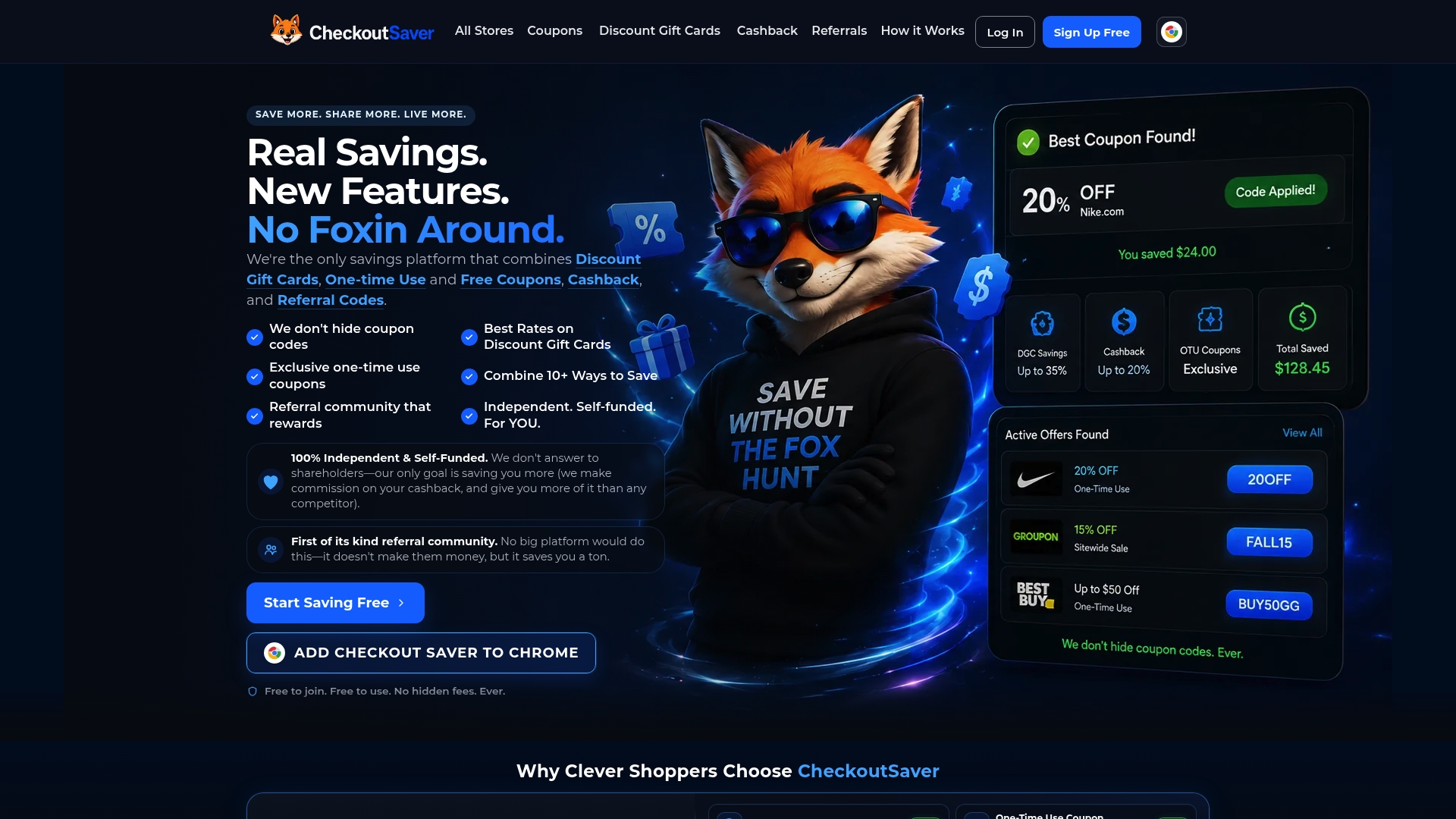
Fold it into the checklist from earlier: book your flight or hotel through your cashback portal as usual, then pay with a gift card purchased at a discount rather than paying full price straight from your card. The saving is immediate instead of waiting on a pending cashback payout.
- Browse discounted gift cards for hotel chains and travel brands you already use.
- Check one-time-use coupons for additional savings on a specific booking.
- Consider selling unused cards back through a marketplace if your travel plans change.
Start with the gift card marketplace before your next booking and see how much the upfront discount adds to whatever cashback you’re already earning.
Sources
- U.S. DOT refunds final rule — U.S. Department of Transportation
- How to avoid travel website scams — FTC (2025)
- Google Flights adds automatic flight price guarantee — Forbes
FAQ
Can you really get cashback on flight bookings?
Yes, cashback portals, some travel credit cards, and occasional airline promotions all pay cashback on flights, though the rate and payout timing vary by merchant and program. Stacking a portal with a travel rewards card on the same booking is common and usually increases the total return.
How long does travel cashback usually take to pay out?
Most portals hold travel cashback as “pending” until the trip is completed and the cancellation window closes, commonly 60 to 90 days. Payment then follows the portal’s regular payout schedule, which is often monthly.
What happens to cashback if my flight gets canceled?
Under the DOT’s automatic refund rule, airlines must refund canceled or significantly changed flights automatically in your original payment form, and that refund typically causes the portal to reverse any pending cashback tied to that booking. Keep your confirmation records so you can resolve any discrepancy with the portal directly.
Are travel cashback and gift card sites safe to use?
They can be, but the FTC warns that requests to pay by wire transfer, gift card, or cryptocurrency for unfamiliar travel deals are common scam signals. Stick to established portals and marketplaces, verify merchant identity before paying, and use payment methods with dispute protections whenever possible.
Can I combine gift cards, coupons, and cashback on the same booking?
Generally yes: a discounted gift card lowers what you pay at checkout, a coupon can reduce the total further, and portal cashback tracks on top of that discounted price. The combination won’t always multiply cleanly since some merchants cap how many discounts apply per order, so check the terms before assuming every layer stacks without limit.