The safest way to resell a gift card is through a verified or escrow-style channel, never a private classified deal, and only after you have documented the balance and receipt yourself. Expect to accept less than face value in exchange for speed and protection. Chasing a slightly higher offer from an unverified buyer is rarely worth the risk of losing the whole balance.
TL;DR:
- Verifying the card balance through the issuer’s official site or phone is essential before listing, as third-party checks are unreliable.
- Using escrow or verified marketplaces reduces fraud risk, though they typically pay less than private sales or kiosks, which offer faster cash at lower rates.
- Keeping receipts, screenshots, and documentation protects your payout if a dispute arises, especially when releasing PINs only after payment confirmation.
- Payout rates vary by retailer demand and platform fees; bundling smaller balances and listing ahead of shopping seasons can maximize profit.
- Reselling income is taxable, and you must keep records to comply with IRS and CFPB regulations, regardless of whether a Form 1099-K is issued.
Table of Contents
- Your pre-listing checklist before you sell a gift card
- How to spot and avoid gift card scams
- How to verify a card’s balance before you list it
- Where to sell: marketplaces, kiosks, and peer sales compared
- Pricing your card and getting the highest payout
- What you owe the IRS and what federal rules protect you
- A step-by-step workflow from listing to closing the sale
- What years of watching gift card sales taught me
- Why the safest sellers are also the most profitable ones
- A straightforward way to sell your gift cards
- Where to check the rules and report a problem
- Sources
- FAQ
Your pre-listing checklist before you sell a gift card
Rushing to list a card is how sellers get scammed or under-price a card that was worth more. A few minutes of prep protects your payout and your evidence trail if something goes wrong.
- Verify the current balance directly through the issuer’s website or phone line, never a third-party checker you found through a listing.
- Save a screenshot or confirmation text of that balance check with a timestamp.
- Photograph the front and back of the card along with the original activation receipt.
- Keep the PIN covered until a sale is confirmed; note whether the buyer’s platform needs a partial or full PIN reveal.
- Read the issuer’s terms for expiration dates, dormancy fees, and any transfer restrictions.
- Set a price based on the card’s balance size and how in demand that retailer is.
- Test the waters with a small or partial-balance card before listing your highest-value card.
Pro Tip: List your least valuable card first as a test run. It tells you how a platform or buyer actually behaves before you risk your best balance.
How to spot and avoid gift card scams
Gift cards are a favorite tool for scammers precisely because a code, once shared, is nearly impossible to reverse. The Federal Trade Commission treats any request for a card number and PIN as payment as a scam in progress, not a legitimate transaction.
- Never share the full card number or PIN until payment has cleared and is confirmed on your end.
- Avoid one-on-one classified deals with no escrow or verified balance check built in.
- Watch for urgency (“send it now or I’ll cancel”) and buyers who spoof a familiar name or business.
- Confirm buyer contact details independently, outside the messaging app they first reached you on.
- Report suspected scams to the FTC and to the card issuer immediately, and keep every screenshot.
One of the most effective safeguards is simply keeping activation receipts and screenshots, since that proof is often what lets an issuer intervene on an unauthorized use.
How to verify a card’s balance before you list it
Verification is not optional. It is the single step that separates a documented, defensible sale from a dispute you cannot win.
- Check the balance through the issuer’s own site or phone system, such as Checkout Saver’s balance checker, rather than an unfamiliar third-party tool.
- For network-branded cards, use the retailer’s dedicated lookup, similar to how an Apple Gift Card or Walmart gift card balance is checked directly through the brand.
- Photograph the activation receipt and the card itself, keeping the PIN hidden until the sale closes.
- Contact issuer support if you need to freeze a card or confirm a balance discrepancy before listing it.
- Keep a simple log, even a basic spreadsheet, noting the balance, date checked, and where you sold it.
Where to sell: marketplaces, kiosks, and peer sales compared
Your channel choice is really a trade-off between speed, payout, and risk. None of the four common options wins on every measure.
- Escrow or verified marketplaces hold payment until both sides confirm the transaction, offering dispute resolution and moderate payouts. Consumer advocates recommend these over unverified listings because verified-balance platforms materially reduce fraud risk.
- Kiosks and instant-exchange machines are the fastest option, converting a card to cash on the spot, but they typically pay a lower percentage of face value in exchange for that speed.
- Peer-to-peer or private sales can net a higher price since there is no middleman, but they carry the highest risk of nonpayment or a reversed transaction.
- Trade-in swaps for store credit make sense when the effective value, including any bonus the retailer adds, beats a cash offer.
Third-party resale channels overall pay less than face value, and payout rates shift depending on the retailer and how restricted the card is.
Pricing your card and getting the highest payout
Payout offers vary widely by retailer, and less-popular retailer cards typically net lower offers than cards from high-demand chains.
- Research a few offers for your specific retailer before accepting the first one; demand shifts by brand and by season.
- Bundle several small balances into one listing instead of selling them piecemeal, since many buyers pay a premium for a single larger card.
- Consider trading toward retail credit instead of cash when the store adds a bonus that beats the cash offer.
- List ahead of major shopping seasons, when demand for popular retailer cards tends to rise.
- Factor in payout method fees and how long a platform takes to actually release your funds, not just the quoted rate.
Pro Tip: Compare the net amount after fees and wait time, not the headline percentage. A slightly lower rate that pays out same-day can beat a higher rate that takes a week.
What you owe the IRS and what federal rules protect you
Money from reselling gift cards is taxable income, whether or not you receive a form for it.
- The IRS confirms that resale receipts are reportable income, regardless of whether a Form 1099-K is issued for the transaction.
- Federal rules under the CFPB’s gift card guidance require most cards to carry expirations no shorter than five years and bar inactivity fees during the first 12 months.
- Read the issuer’s own terms, since state-level protections can add further limits on fees or expiration.
- Keep receipts and a transaction log both for tax reporting and to support a fraud claim if one arises.
A step-by-step workflow from listing to closing the sale
Following the same sequence every time keeps you from releasing a code before you should.
- Verify the balance and photograph the card and receipt before you list anything.
- Choose your channel, whether an escrow marketplace, a kiosk, or a trade-in program, and write clear terms in your listing.
- Wait for confirmed payment or escrow clearance before handing over the PIN or activation code.
- Save every message and screenshot as the transaction closes, including the final confirmation.
- If something goes wrong, contact the issuer right away and report the incident to the FTC while your evidence is fresh.
What years of watching gift card sales taught me
Verification and escrow beat chasing a marginally higher offer nearly every time. A peer sale can work when you already know the buyer or the platform enforces a hold, but skip it for anyone you cannot verify.
The most common mistakes I see are releasing a PIN before payment clears, not saving a receipt, and never reading the issuer’s expiration terms until a card is already worthless.
Protect the paper trail first. The payout only matters if you actually collect it.
— Justin
Why the safest sellers are also the most profitable ones
Most advice on this topic treats safety and payout as competing goals, telling you to accept a lower offer for security.
The overrated tactic is haggling hard for an extra few dollars from an unverified private buyer. The underrated one is documentation: a saved receipt and balance screenshot do more to protect your money than any negotiating skill.
If you take one thing from this, prioritize verification and evidence before you ever think about price. The sellers who get burned are almost never the ones who accepted a slightly lower offer. They’re the ones who skipped the balance check or handed over a PIN too early.
A straightforward way to sell your gift cards
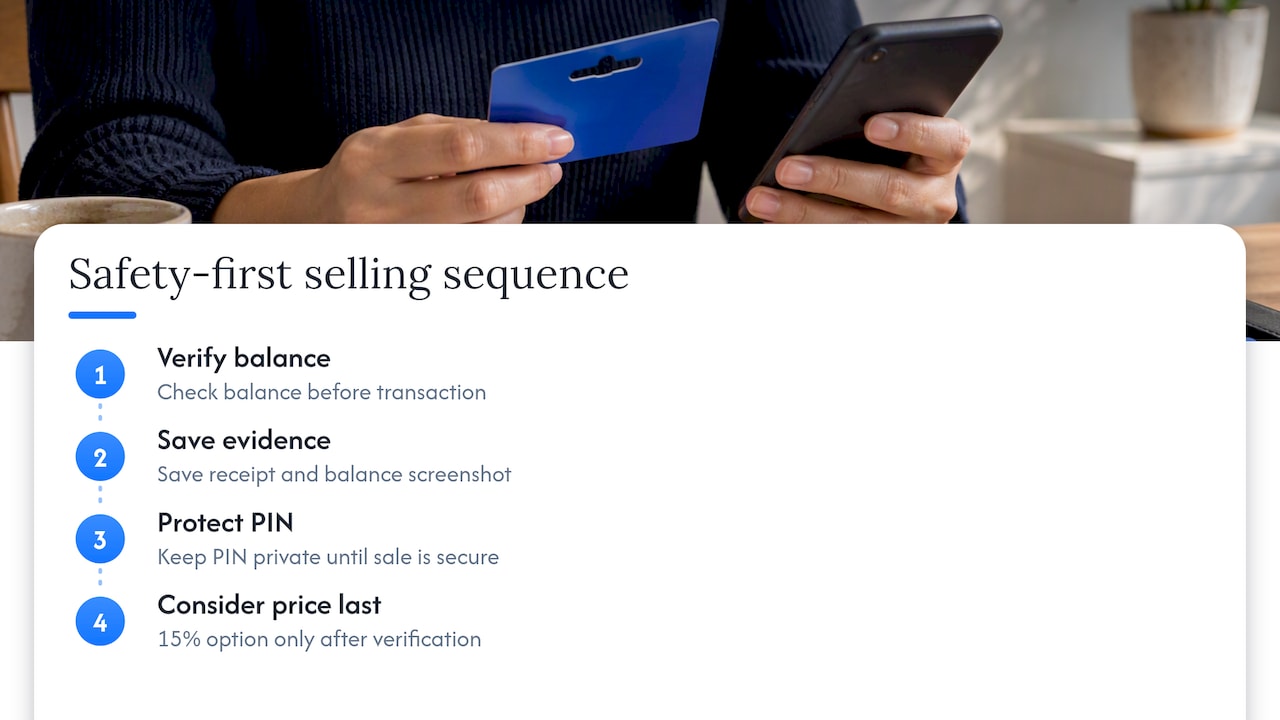
If you would rather skip private listings and kiosk discounts altogether, Checkout Saver runs a marketplace built specifically for buying and selling gift cards, with an emphasis on transparency over hidden terms.

- Sell a card directly through Checkout Saver’s sell gift cards page, where a flat 15% take replaces guesswork about fees.
- Buyers on the platform can pay with cryptocurrency, and the marketplace highlights higher cashback potential by keeping overhead low.
- If you would rather buy discounted cards instead of selling, browsing gift cards purchasable with crypto shows the same marketplace from the other side.
Check your card’s eligibility and list it in a few minutes through the sell gift cards page.
Where to check the rules and report a problem
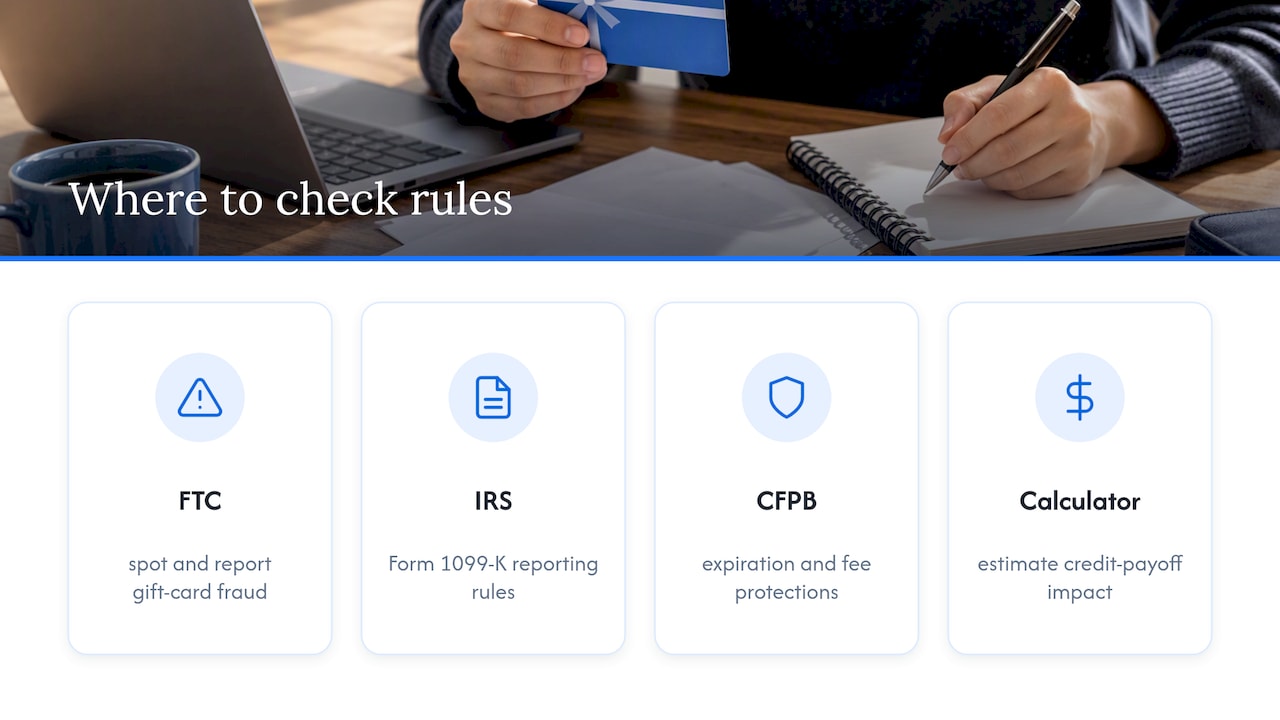
For verification and legal grounding beyond this article, the FTC’s gift card scam guidance covers how to spot and report fraud. The IRS page on Form 1099-K explains reporting obligations for resale income, and the CFPB’s gift card guidance details expiration and fee protections. If you are weighing whether converting a card to cash affects short-term debt plans, a credit card payoff calculator can help you see the impact.
Sources
- Avoiding and reporting gift card scams | Consumer Advice (FTC)
- What to do with Form 1099-K | IRS
- Giving or receiving gift cards? Know the terms and avoid surprises | CFPB
- How To Sell Unwanted Gift Cards for Cash | CNBC Select
FAQ
How do gift card resellers make money?
Resellers profit from the spread between what they pay or accept for a card and what they resell it for, often buying at a discount and reselling closer to face value. Margins vary by retailer demand and by how much a platform charges in fees, so payout rates differ widely by merchant.
How do I get gift cards to resell?
Common sources include unwanted gifts, rewards from cashback or referral programs, and cards bought at a discount specifically to resell at a higher price. Buying from a verified marketplace reduces the risk of reselling a card that turns out to have an already-drained balance.
How can I resell a gift card?
Verify the balance directly through the issuer, document the card and receipt, then list it on a verified marketplace or trade-in program rather than a private classified ad. Confirm payment or escrow clearance before releasing the PIN, and keep every screenshot in case a dispute comes up.
Who pays the highest for gift cards?
Payout percentages depend on the specific retailer and how in demand its cards are, so no single buyer consistently pays the most across every card. Comparing a few verified marketplaces for your specific retailer, rather than assuming one platform always wins, gets you closer to the best available offer.
Recommended
- Sell Gift Cards for Cash – Get Up to 85%
- Gift Card App – Buy, Sell & Save
- 5 Sens Cashback: Earn 15% | Checkout Saver