A discount lowers the price you pay at checkout. Cashback returns part of your money after the purchase, often days or weeks later. Choose a discount when you want immediate, guaranteed savings; choose cashback when you expect to shop again and can tolerate a delay, since the right pick depends on your audience, the seller’s margins, and how much friction stands between you and your money.
TL;DR:
- Cashback programs often involve delays of 30 to 90 days, require meeting minimum payout thresholds, and can be impacted by tracking errors or returns.
- Discounts provide immediate, guaranteed savings but can harm brand perception if used excessively or too frequently.
- For repetitive shopping, a trusted cashback setup can yield higher value over time compared to one-time discounts.
- Combining discounts, cashback, and stored-value bonuses can produce cumulative savings of up to 35 percent on a single purchase.
- Running small pilots to compare actual redemption and repeat purchase rates of discounts versus cashback helps determine the best approach for specific audiences.
Table of Contents
- How discounts and cashback actually work
- Which saves shoppers more in practice
- The eight factors marketers should weigh before choosing
- Payout timing, stacking rules, and redemption friction
- The trust and regulatory issues worth watching
- A decision checklist for shoppers and marketers
- How Checkout Saver combines both models
- Why I push for pilots over guesswork
- Start stacking your own savings
- Sources
- FAQ
How discounts and cashback actually work
A discount reduces the price before you pay: a coupon code, a sitewide sale, or a markdown all cut the number on the receipt instantly. Cashback works differently. You pay full price, then a portion comes back later as a statement credit, a bank deposit, or platform balance, once the transaction clears and any return window closes.
- Discount codes and sitewide sales apply instantly at checkout with no waiting period.
- Cashback portals and card rewards track your purchase, wait for merchant confirmation, then release funds on a schedule, often 30 to 90 days out.
- Stored-value bonuses, like bonus credit on a gift card purchase, sit somewhere in between: the value exists immediately but may only be usable on a future purchase.
Picture two identical $100 purchases. A 10% discount means you pay $90 today, full stop. Same percentage, very different timing and certainty.
Which saves shoppers more in practice
Discounts win on simplicity: what you see at checkout is what you keep, with no tracking, no waiting, and no risk of forfeiture. Cashback can pay out more in raw terms but only if you actually collect it, and several things work against that.
- Pending periods delay access to funds for weeks or months after purchase.
- Minimum payout thresholds can trap small balances indefinitely if you do not keep shopping through the same program.
- Account and tracking errors sometimes mean a purchase never gets credited at all.
To estimate real expected value, multiply the cashback rate by your honest odds of actually redeeming it. Complaints about rewards programs, including buried conditions and unexpected devaluation, have drawn scrutiny from the Consumer Financial Protection Bureau, a reminder that the advertised rate and the realized rate are not always the same thing.
Flat-rate cashback tends to be the most forgiving version of this bet: one analysis of cash-back credit cards argues that simple, predictable cashback often beats complicated travel-rewards optimization for most people, precisely because there is less to track and fewer ways to lose value.
The eight factors marketers should weigh before choosing
Discounts and cashback pull different levers on the same business, and the right choice depends on more than which one feels more generous.
- Audience price sensitivity: price-driven shoppers respond faster to a visible discount than a delayed reward.
- Product margin: thin-margin goods tolerate a discount poorly but can often absorb a smaller cashback percentage spread over time.
- Brand positioning: frequent discounting can train shoppers to wait for a sale, while cashback preserves the impression of full price.
- Cash flow needs: a discount hits revenue immediately; cashback defers the cost and sometimes never gets fully claimed.
- Campaign timeframe: discounts clear inventory fast; cashback plays a longer retention game.
- Behavioral intent: cashback functions as what researchers call a “cash forward,” a delayed reward shown to increase the odds and size of a customer’s next purchase.
- Operational readiness: cashback requires reliable tracking of order ID, customer ID, and payout timing; a broken pipeline creates the very complaints regulators watch for.
- Competitive norms: in categories where cash-back cards and programs are now common, a discount-only strategy can look outdated by comparison.
Pro Tip: Track return on ad spend for the campaign’s first 30 days, then track lifetime value for the following 90, since a discount and a cashback offer can look identical on day one and very different by day 90.
Payout timing, stacking rules, and redemption friction
Cashback rarely lands instantly. Most programs hold funds through a pending period while they wait for the merchant to confirm the order was not returned or canceled, then release payment on a set schedule.
- Typical cashback windows run from immediate confirmation to several months, depending on the merchant’s own return policy.
- Stacking often works in your favor: a coupon code, a discounted gift card, and a cashback offer can frequently be combined on the same order, though individual merchants sometimes block cashback when another discount code is used.
- Common friction points include minimum payout thresholds, portal tracking errors, and cashback that silently voids after a return.
Ticket and event purchases illustrate the timing issue well: cashback on concert and sports tickets often will not confirm until after the event date has passed, since refund risk stays open until then. Reading the fine print on payout timing before you buy avoids most surprises.
The trust and regulatory issues worth watching
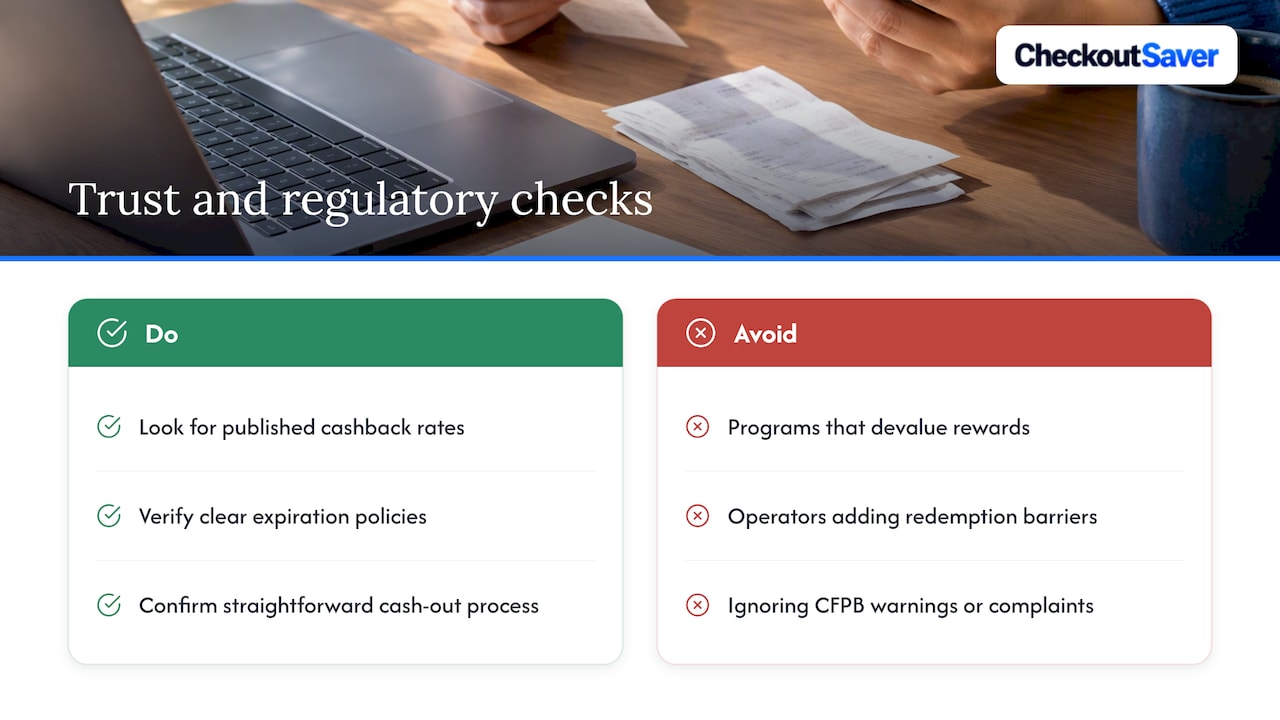
Reward programs are not without risk to the people using them. The CFPB has warned that rewards operators can devalue rewards or add redemption barriers in ways that cross into unfair or deceptive territory, and rising complaint volume around rewards programs backs that concern up.
Part of the incentive runs the other way, too. One working paper on prepaid balances found that a substantial share of prepaid value goes unused after a year, a pattern called breakage that becomes pure profit for the issuer. It is a useful reminder that an unredeemed cashback balance or an expired gift card credit is not a loss for everyone involved.
Shoppers should look for published cashback rates, clear expiration policies, and a straightforward cash-out process before trusting a program with their money.
A decision checklist for shoppers and marketers
The choice gets easier once you separate your own situation from the general advice.
- If you need the savings now or doubt you will redeem later, take the discount: it is certain and immediate.
- If you shop the same retailer repeatedly and trust the payout process, cashback can add up to more over time.
- If you are running a campaign to clear inventory fast, a discount drives quicker conversion.
- If you are trying to build repeat purchase behavior, cashback’s delayed reward is built for that job.
Marketers can score a campaign fit with three quick questions: is the audience price-sensitive enough to act on a visible discount, does the margin support a cashback percentage without eroding profit, and is the tracking system reliable enough to honor every reward it promises. A weak answer to any of the three usually points toward the discount instead.
Pro Tip: Run a small pilot of each offer type with matched audiences before committing spend, then compare redemption rates and 90-day repeat purchase rates, not just first-week conversion.
How Checkout Saver combines both models
Checkout Saver runs a hybrid version of this playbook instead of picking one side. The platform sells discounted gift cards, including options purchasable with cryptocurrency, alongside one-time-use coupons and cashback rewards across thousands of stores.
- A shopper might buy a discounted gift card, apply a one-time-use coupon on top, and still earn a published cashback rate on the same purchase.
- Stacking these three layers can produce combined savings of up to 35% or more, by some accounts.
- Before committing, confirm the published cashback rate, the coupon’s terms, and any fees tied to the specific gift card or coupon.
Individual merchant cashback rates are listed on the coupon catalog and cashback pages for shoppers who want to check numbers before buying.
Why I push for pilots over guesswork
Pick a metric before you pick an incentive type. Run a small test of a discount against a cashback offer with the same audience, then watch redemption rates and repeat purchases over the following quarter, not just the first week’s conversion number. Devaluation and friction show up in complaints and drop-off long before they show up in a revenue report.
— Justin
Start stacking your own savings
Checkout Saver sells discounted gift cards, including crypto payment options, one-time-use coupons, and published cashback rates across thousands of stores, built so a single purchase can combine all three.
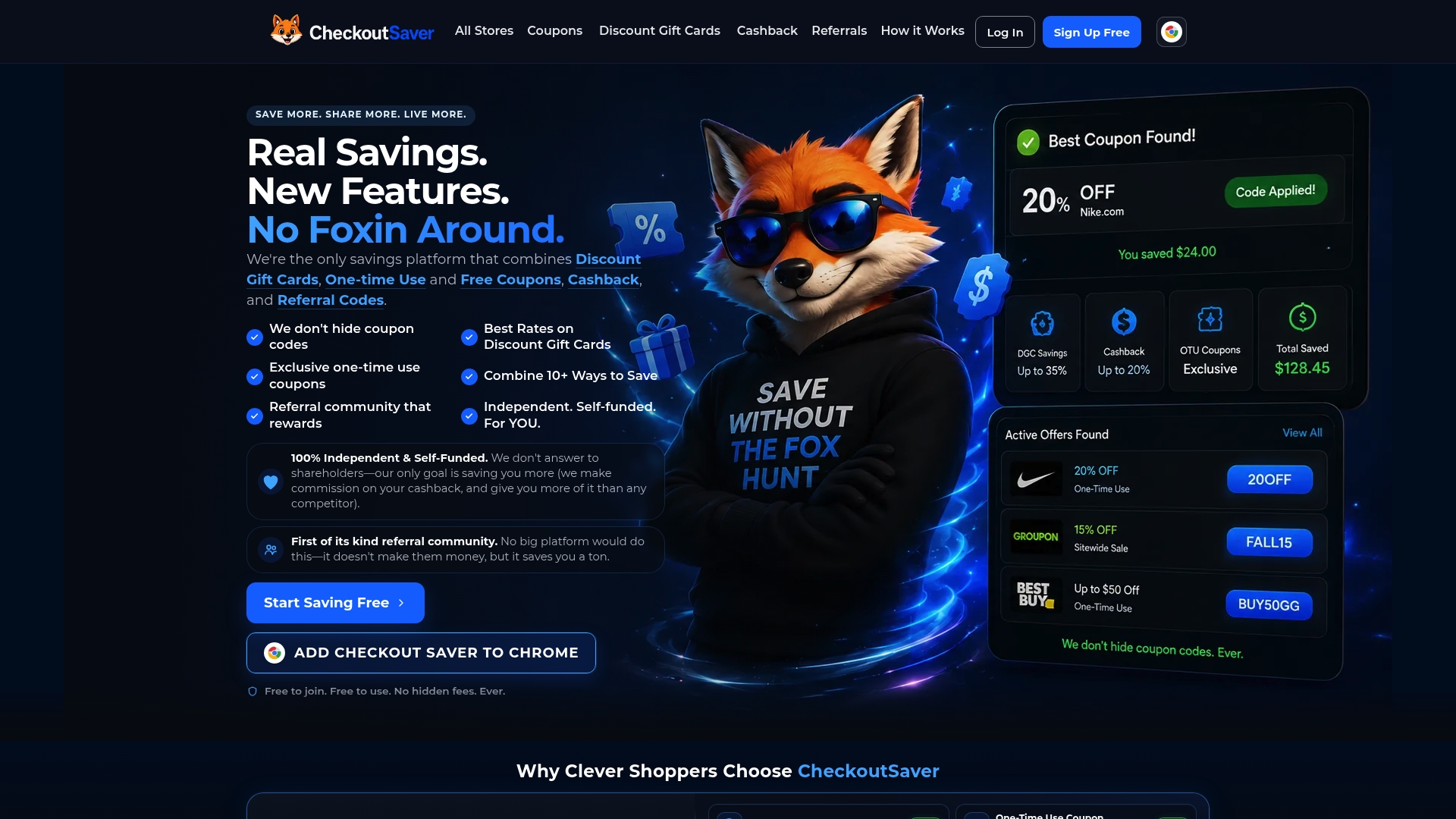
Browse discount gift cards or check a store’s cashback rate to see what stacked savings look like on your next order.
Sources
- Consumer Financial Protection Circular 2024-07: Design, marketing, and administration of credit card rewards programs
- Cashback Is Cash Forward: Delaying a Discount to Entice Future Spending
- Prepaid consumption and merchant breakage (NBER working paper)
- This might be controversial — but cash-back cards beat travel for most people (The Motley Fool)
FAQ
Is cashback technically a discount?
Not quite: a discount reduces the price you pay at checkout, while cashback returns money after you have already paid full price. Both lower your net cost, but they differ in timing and certainty.
What is the downside to cashback?
The main downside is delay and conditionality: funds are often held through a pending period, subject to minimum payout thresholds, and can be forfeited if a tracking error occurs. The CFPB has flagged devaluation and redemption barriers as recurring complaints in rewards programs generally.
Why do places not do cash back anymore?
Some merchants have scaled back cashback because tracking and payout infrastructure is costly to run correctly, and unredeemed balances create administrative overhead even when they also generate breakage profit. Others have simply shifted toward instant discounts, which are simpler to administer and guarantee the customer sees the savings.
Is cashback just free money?
Not exactly: cashback is a delayed portion of your own spending returned to you, not a bonus unrelated to your purchase, and part of it depends on you actually completing the redemption steps. Research on cashback as a “cash forward” mechanism shows it is also designed to encourage you to spend again before you see the reward.