In most cases in the United States, cashback you earn by making purchases is not taxable. Only rewards paid without a purchase requirement, such as no-spend sign-up bonuses, referral payments, and prizes, are typically treated as taxable income. The purchase-tied cashback and points you redeem after buying something are generally rebates, not earnings. Keep your promotional terms and statements on hand, since the sections below explain the forms, business rules, and edge cases that decide which category your rewards fall into.
TL;DR:
- Rewards earned through purchase-tied cashback generally are not taxable because they are considered price adjustments rather than income.
- No-spend bonuses, referral payments, and prizes are subject to income tax, as they are viewed as compensation for services or winnings, not rebates.
- Tax forms such as 1099-INT typically report interest-based rewards, while 1099-MISC or 1099-NEC cover bonuses and referral payments, requiring proper reporting.
- Maintaining detailed records of promotional terms, receipts, and reward classifications prevents errors and ensures compliance during tax filing.
- Strategies like manufactured spending or rewards unrelated to genuine purchases may be subject to IRS scrutiny and could be treated as taxable income.
Table of Contents
- Why Purchase-Tied Cashback Is Usually Tax-Free
- When Rewards Are Taxable: No-Spend Bonuses, Referrals, and Prizes
- Information Reporting: 1099-INT, 1099-MISC, and What to Report on Your Return
- How Cashback Affects Business Expenses and Asset Basis
- Recordkeeping, Missing 1099s, and Practical Filing Steps
- Edge Cases and Risks: Manufactured Spending and Unusual Rulings
- What This Means for Checkout Saver Shoppers
- Earn Purchase-Tied Cashback With Clear Terms
- FAQ
- Sources
Why Purchase-Tied Cashback Is Usually Tax-Free
The IRS has never published a sweeping rule that says “cashback is tax-free.” Instead, the treatment comes from a much older concept: the rebate doctrine. When a seller returns part of what you paid, that return is an adjustment to the price you paid, not new income landing in your pocket.
This goes back to Revenue Ruling 76-96, which the IRS has applied repeatedly in private letter rulings involving credit card and purchase rewards. The agency’s position, confirmed in a 2009 private letter ruling, is that a rebate paid by the same party you paid the purchase price to counts as a price adjustment and is not includible in gross income. If you buy a $50 item and get $2 back because you used a particular card, the IRS views your real cost as $48, not $50 with $2 of extra income tacked on.
A related 2007 private letter ruling extended this logic to promotional payments tied to purchases, finding that they are generally not includible in a recipient’s gross income and that the payor often has no information-reporting duty under Internal Revenue Code §6041 for those payments. That second point matters: if a reward is not includible in income, the business paying it has no obligation to send you a 1099 for it in the first place.
Consumer-facing tax guides agree with this reading. According to Credit Karma, credit card cash back earned from spending is generally not taxable because the IRS treats it as a reduction in purchase price rather than new earnings. The dividing line consumer guides use is simple: did you have to spend money to get it?
That rebate logic covers most of the everyday scenarios people worry about:
- Standard cashback on purchases: A 2% cashback credit card statement credit reduces your effective cost on everything you bought, so it is not taxable.
- Spend-required sign-up bonuses: A bonus that requires you to spend, say, $4,000 within three months is still tied to purchases, so it generally keeps rebate treatment even though it is large and one-time.
- Airline miles and points earned through purchases: Miles redeemed after spending function the same way as cashback statement credits and are not treated as income.
- Retailer and marketplace cashback: Cashback paid for buying a gift card or completing a purchase through a shopping portal follows the same purchase-price-adjustment logic.
The common thread in every one of these examples is a transaction. Money or value changed hands because you bought something, and the reward reduced your net cost of that purchase. Once a reward is disconnected from any purchase, the rebate doctrine no longer applies, which is exactly where the next category of rewards starts.
When Rewards Are Taxable: No-Spend Bonuses, Referrals, and Prizes
The IRS and most practitioners draw one clean line: rewards earned because you spent money are usually rebates, while rewards earned without spending are usually income. The hard part is recognizing which bucket a specific reward belongs to, especially when issuers market everything as a “bonus.”
No-spend account-opening bonuses are the clearest example. A bank that pays you $200 just for opening a checking account and maintaining a minimum balance for 90 days, with no purchase requirement attached, is paying you for opening an account, not rebating a purchase. That payment is ordinary income. Referral bonuses work the same way: when a card issuer or shopping platform pays you for successfully referring a friend, the payment is compensation for the referral, not a price adjustment on anything you bought.
Prizes and sweepstakes winnings fall into this category too. If you win a drawing tied to a cashback or rewards program, that prize is taxable as ordinary income regardless of whether you spent anything to enter, because a prize is compensation for winning, not a rebate on a transaction.
A few practical patterns show up across these taxable categories and types of rewards:
- Bank account bonuses are typically reported as interest income on Form 1099-INT when the bank treats the bonus as a form of interest paid for opening or funding an account.
- Referral payments and other non-spend bonuses are commonly reported on Form 1099-MISC or 1099-NEC when they total enough to trigger an issuer’s reporting threshold.
- Prizes and sweepstakes winnings are generally reported as miscellaneous income, and the payor may issue a 1099-MISC depending on the amount.
According to LegalClarity, issuers may report taxable promotional payments on these 1099 forms, but the absence of a 1099 does not eliminate your obligation to report the income. That point trips up a lot of taxpayers who assume that no form means no tax owed. The reporting threshold determines whether the payor must send you paperwork, not whether the income is taxable. If you earned $550 in referral bonuses and your bank never sends a 1099 because it fell under its internal threshold, you still owe tax on that $550.
This is also where TaxBandits notes that bank account sign-up bonuses are generally taxed as interest income and reported on 1099-INT when the payment qualifies, reinforcing that the form type usually tracks the nature of the payment rather than an arbitrary label from the bank.
Information Reporting: 1099-INT, 1099-MISC, and What to Report on Your Return
Once you know a reward is taxable, the next question is which form documents it and where it lands on your tax return. The two forms you will encounter most often serve different purposes.
Form 1099-INT reports interest income, and banks use it when a reward is functionally a payment for opening or maintaining an account, such as the $200 checking account bonus described earlier. Form 1099-MISC (or, in some cases, 1099-NEC) reports other types of income, including referral bonuses, certain prizes, and miscellaneous payments that are not interest and not wages.
Here is how to work through a taxable reward when it is time to file:
- Check your mail and account documents for any 1099 forms from banks, card issuers, or shopping platforms, since these list the exact amount the payor reported to the IRS.
- Match each form to the right line on Form 1040. Interest from a 1099-INT is reported as taxable interest; miscellaneous income from a 1099-MISC generally flows to Schedule 1 as additional income.
- Add up taxable rewards you received without a 1099. Rocket Mortgage’s Quicken Loans tax guide notes that even when a reporting threshold changes or a form never arrives, you still owe tax on rewards that qualify as income, so estimate the total from your own records.
- Report the estimated amount on the same line you would use if a 1099 had arrived, keeping your supporting documentation in case the IRS later asks for it.
- Keep a copy of every 1099 and your own estimate worksheet with your tax records for at least three years in case of an inquiry.
Reporting thresholds for 1099 forms have shifted in recent years and can continue to change by filing year, so verify the current threshold before assuming a small reward is exempt from reporting. The threshold affects only whether the payor must send you a form. It never changes whether the underlying payment is taxable income.
How Cashback Affects Business Expenses and Asset Basis
Cashback rules get more complicated once a purchase is a business expense rather than a personal one. The rebate logic still applies, but instead of simply making the item “cheaper” for personal budgeting purposes, it directly changes the number you are allowed to deduct or depreciate.
If you run a Schedule C business and buy $1,000 of office supplies on a card that pays 2% cashback, you receive $20 back. The correct treatment is to deduct $980 as your supply expense, not the full $1,000, because the $20 is a reduction in what you actually paid rather than separate income. IRS guidance on rebates and purchase price adjustments supports treating these rewards as reductions to either the deductible expense or the asset’s basis, depending on what was purchased.
The basis side of this matters even more for bigger purchases. If you buy a $5,000 piece of equipment for your business and earn $100 cashback on the purchase, your depreciable basis is $4,900, not $5,000. That smaller basis slightly reduces your depreciation deductions over the life of the asset, and it also affects your gain or loss calculation if you sell the equipment later.
A few habits keep this clean for small-business filers:
- Net out cashback against the specific expense or asset it came from, rather than lumping all rewards into one general “rebate income” bucket.
- Keep the purchase receipt and the cashback statement together so you can show the net cost if the IRS ever asks.
- Apply the same treatment consistently year over year, since switching methods midstream creates headaches at audit time.
Enforcement on small-dollar business rewards is uncommon in practice, but the rule exists for a logical reason: it keeps your deductions matched to what you actually spent, which is the same principle that makes personal cashback non-taxable in the first place.
Recordkeeping, Missing 1099s, and Practical Filing Steps
Good recordkeeping is what separates a quick, confident tax filing from a stressful one if the IRS ever asks a question about a reward you received. The goal is simple: know which rewards were purchase-tied and which were not, before tax season arrives, not after.
Start by saving the fine print every time you accept a bonus or sign up for a new card or account. The terms usually spell out whether a minimum spend is required, which is the detail that determines tax treatment. Keep issuer emails, account statements, and screenshots of promotional terms in one folder, digital or physical, so you are not hunting for them in April.
Follow these steps as rewards come in throughout the year:
- Log every reward over a token amount in a simple spreadsheet, noting the source, the amount, and whether a purchase was required.
- Flag no-spend bonuses, referral payments, and prizes separately from purchase-tied cashback as you log them.
- If tax season arrives and no 1099 has shown up for a taxable reward, estimate the amount from your own records and report it anyway.
- If a 1099 arrives after you have already filed, file Form 1040-X to amend your return and include the newly reported income.
- Keep every form and your spreadsheet together for at least three years in case of a later IRS inquiry.
Pro Tip: Keep two columns in your rewards spreadsheet, one for purchase-tied cashback and one for no-spend bonuses or referral payments, so you can see your taxable total at a glance instead of reconstructing it in March.
This kind of simple tracking also protects you against the most common mistake taxpayers make with rewards: assuming that the absence of a form means the absence of a tax obligation. LegalClarity and other consumer tax guides are consistent on this point, and a spreadsheet you update as rewards arrive is far easier than trying to reconstruct a year of bonuses from memory.
Edge Cases and Risks: Manufactured Spending and Unusual Rulings
Most cashback questions resolve cleanly once you ask whether a purchase was required. A smaller set of situations sit in gray territory, and they are worth understanding before you try anything creative with rewards.
Manufactured spending describes strategies where someone buys a cash-equivalent product, such as a money order or prepaid debit card, purely to generate rewards points, then converts that product back into cash with little or no real consumption taking place. Because the “purchase” exists only to trigger a reward rather than to buy something of genuine value, this kind of transaction sits outside the rebate doctrine’s original reasoning.
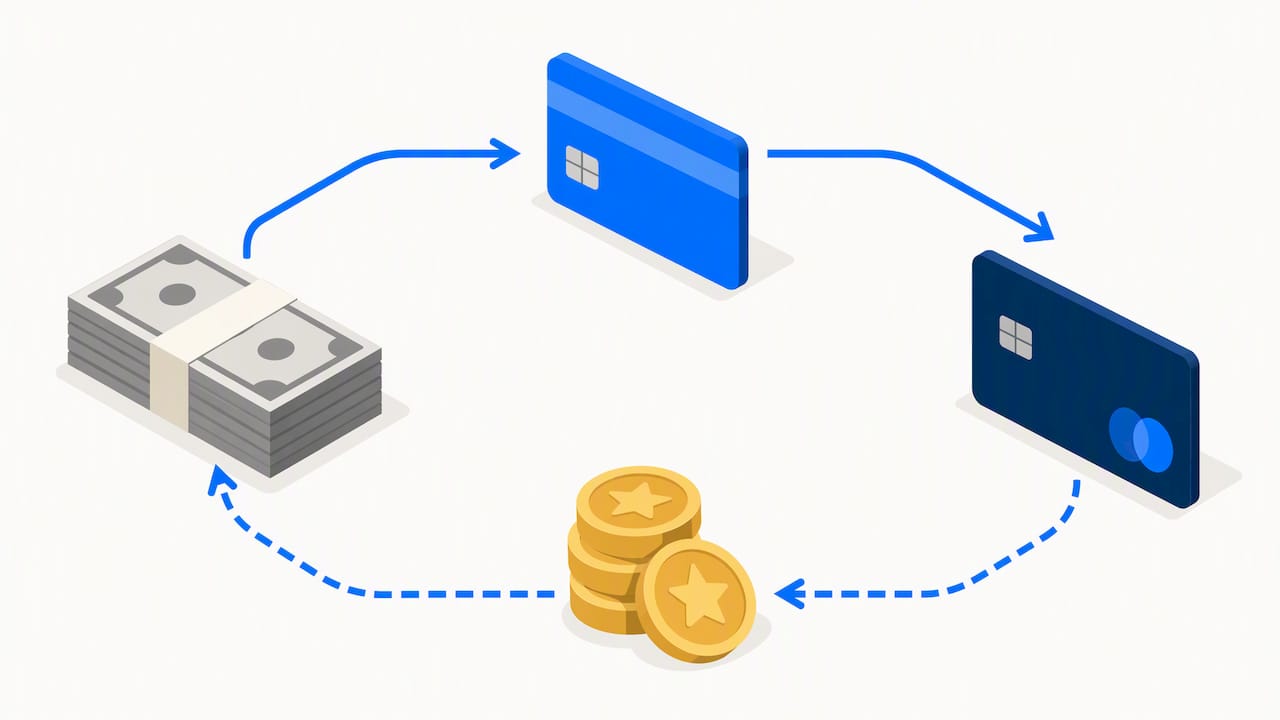
An analysis from the Oxford Law Faculty’s business law blog discusses cases, including the Anikeev matter, where courts and analysts examined reward strategies built around non-purchase or manufactured transactions and found grounds to treat the resulting rewards as taxable income rather than rebates. The common thread in these cases is that the rewards were not tied to an ordinary, arm’s-length purchase of goods or services, which is the exact condition that normally keeps cashback out of gross income.
A few red flags are worth watching for:
- Buying cash-equivalent instruments solely to earn points, with no intention of using the underlying product.
- Converting rewards into cash through unusual channels rather than redeeming them as statement credits or account credits.
- Reward structures that pay out regardless of whether a genuine purchase occurred.
If you are running an aggressive rewards strategy that resembles any of these patterns, a conversation with a tax professional before filing is worth far more than guessing.
What This Means for Checkout Saver Shoppers
The pattern across every IRS ruling and tax guide here points to one practical rule: tie your rewards to a real purchase, and they are almost always safe from income tax. Disconnect them from a purchase, and they usually are not.
When you earn cashback by buying something, whether that is through everyday shopping or purchasing a discounted gift card, that reward behaves like the rebates the IRS has addressed for decades. Referral payments and other no-spend incentives sit in a different category and deserve their own line in your records. I’d keep the two separate from day one rather than sorting them out later.
None of this replaces a conversation with a tax professional once your situation gets complicated, whether that is a large referral payout, a business purchase, or a reward structure you do not fully understand. Read the offer terms closely, save your records, and ask when in doubt.
— Justin
Earn Purchase-Tied Cashback With Clear Terms
We built our platform around the kind of cashback that keeps things simple at tax time: cashback and savings tied directly to a purchase you make, with offer terms you can actually see.

Browsing our cashback offers shows you exactly what each store pays and what you need to buy to earn it, which is the same information you would want on hand if you ever needed to explain a reward to the IRS. If you want to stack savings further, our discounted gift cards let you buy below face value, including with cryptocurrency, and every purchase gives you a receipt to keep with your records.
A few things worth knowing as you shop with us:
- Purchase-tied cashback and gift card discounts follow the same rebate-style treatment described throughout this article.
- Our referral program pays you for successful referrals, which is a no-spend incentive you should track separately for tax purposes.
- Saving your offer terms and purchase receipts takes a few seconds and can save you a headache later.
Check our current discount gift cards to see how much you can save on your next purchase, and talk to a tax professional if any of your rewards involve referral payments or other non-spend bonuses.
This article is general information, not a substitute for advice from a qualified financial advisor. Consult a qualified financial professional about your own circumstances before acting on anything here.
FAQ
Does cashback count as taxable income?
Cashback you earn by making a purchase is generally not taxable because the IRS treats it as a reduction in the price you paid rather than new income, based on the rebate doctrine applied in IRS private letter rulings. Cashback or bonuses paid without a purchase requirement, like account sign-up bonuses or referral payments, are usually taxable.
Are cash back rewards taxable income?
Purchase-tied cash back rewards are typically treated as a rebate on the purchase price and are not taxable, a position supported by Credit Karma’s tax guidance and longstanding IRS rulings. Rewards that do not require spending, such as referral bonuses or prizes, are generally taxable as ordinary income.
Do I get taxed if I get paid in cash?
Being paid in cash does not change whether a payment is taxable. If the payment is a rebate tied to a purchase, it is generally not taxable regardless of the form it takes, but if it is a no-spend bonus, referral payment, or prize, it is taxable income and must be reported even if you never receive a 1099 for it.
What is the downside of cashback?
The main downside is confusion over which rewards are taxable, since no-spend bonuses, referral payments, and prizes are treated differently from purchase-tied cashback and can trigger an unexpected tax bill if you forget to report them. Keeping clear records of each reward’s terms as you earn it is the simplest way to avoid that surprise.
Sources
- IRS private letter ruling PLR-141607-09 (excerpt) — IRS
- Is credit card cash back taxable? — Credit Karma
- Is cash back taxable when rewards are income? — LegalClarity
- Cash-back rewards taxable gross income? — Oxford Law Faculty blog