Crypto price risk is primarily high volatility amplified by thin liquidity and leverage, and the single best protection is a set of concrete controls: position sizing, dollar-cost averaging, and strict custody hygiene. The CFTC, the SEC, and Investor.gov all flag these same risks. The checklist below turns their warnings into steps you can take this week.
TL;DR:
- Crypto price volatility often exceeds 100% annualized for altcoins, with daily ranges frequently reaching 5% to 10 percent, increasing rapid price swings.
- Thin and fragmented liquidity across multiple exchanges can cause sharp declines with large sell orders, especially in 24/7 trading environments without circuit breakers.
- Using leverage or holding stablecoins without rigorous reserves can trigger cascading losses or de-pegs, especially during market stress or platform insolvencies.
- Monitoring order book depth, bid-ask spreads, and implied volatility indices provides early signs of potential sharp moves in crypto markets.
- Implementing position sizing based on measured volatility, dollar-cost averaging, and separate custody from trading limits risk exposure and supports discipline.
Table of Contents
- Why Crypto Prices Move So Much: Volatility, Liquidity, and Market Structure
- Other Price-Related Threats: Leverage, Derivatives, Stablecoins, and Contagion
- How to Measure and Monitor Crypto Price Risk
- Proven Risk-Management Strategies for Crypto Investors
- A Practical Checklist: What to Do Next to Reduce Crypto Price Risk
- Regulatory and Investor-Protection Context
- Living with Crypto Volatility Without Losing Discipline
- Alternative Option: Converting Crypto Into Discounted Retail Value
- FAQ
- Sources
Why Crypto Prices Move So Much: Volatility, Liquidity, and Market Structure
Two coins can carry wildly different risk profiles even when both are “crypto.” Realized volatility measures how much a price actually swung over a past period, while implied volatility (derived from options pricing) reflects what the market expects it to swing in the future. Bitcoin and Ether tend to show lower realized volatility than smaller altcoins, but both run far hotter than stocks or bonds.
Realized 30-day volatility for many altcoins often exceeds 100% annualized, and daily price ranges for smaller coins frequently reach 5% to 10% or more, according to Kraken’s volatility research. That single figure explains why an altcoin can double or halve in a matter of weeks while a blue-chip stock rarely moves that much in a year.
Liquidity compounds the problem. When an order book is thin, a single large sell order (a “whale” dump) can push the price down several percentage points before buyers step back in. Unlike a stock exchange with a single consolidated order book, crypto trades across dozens of fragmented venues, so liquidity for the same asset can look deep on one exchange and shallow on another.
A few structural factors stack on top of that:
- Crypto markets trade 24/7 with no circuit breakers or overnight pauses to let information settle.
- Retail sentiment, amplified by social media, can shift demand faster than in traditional markets.
- Fragmented liquidity across exchanges means the “real” price can diverge briefly between venues.
Volatility itself is not purely bad. It creates upside, but Kraken notes it is also the main driver of retail losses when paired with weak risk controls like panic selling.
Other Price-Related Threats: Leverage, Derivatives, Stablecoins, and Contagion
Volatility is the baseline risk. Leverage and interconnection turn ordinary price swings into cascading losses.
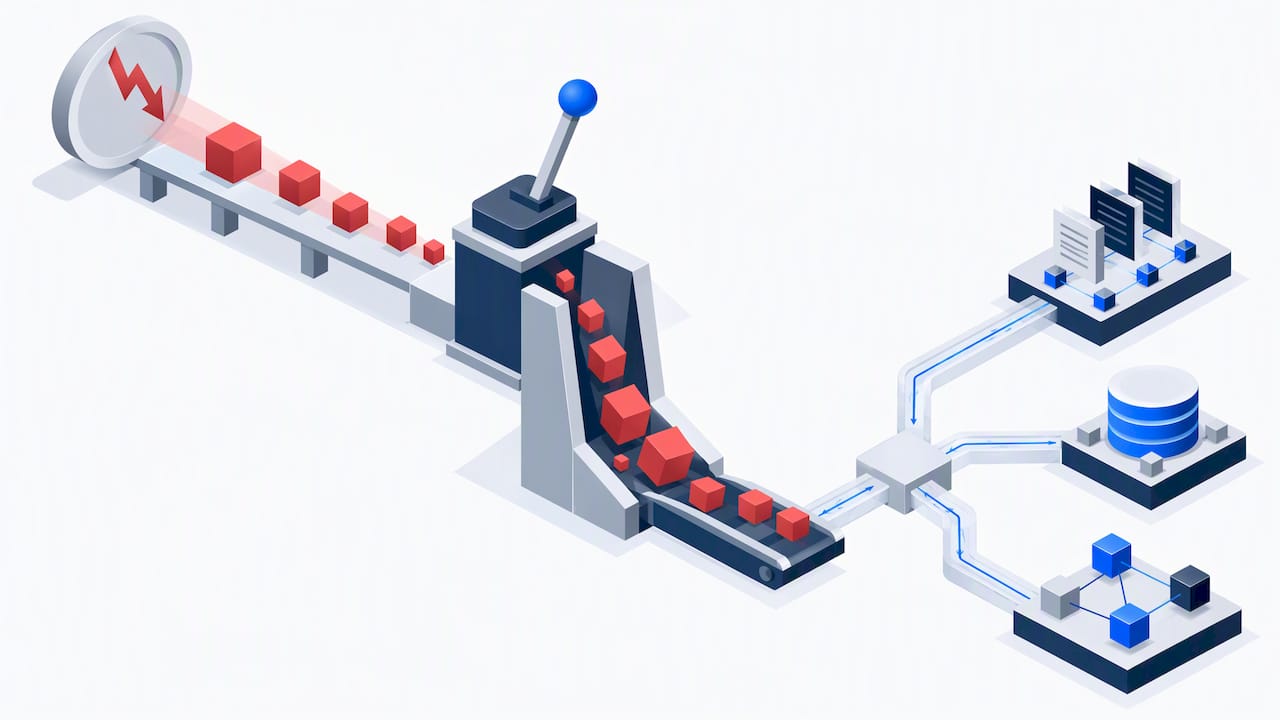
Margin trading lets you borrow to amplify a position, but a drop that would be a paper loss in a cash account can trigger a forced liquidation when you are leveraged. One liquidation often pushes the price down further, triggering the next cluster of margin calls, a chain reaction traders call a liquidation cascade. Leveraged products built around bitcoin face a related but different issue: SEC filings for leveraged bitcoin funds warn that daily rebalancing means returns over periods longer than a day can diverge sharply from the stated multiple because of compounding during high volatility.
Stablecoins carry their own version of this risk. A stablecoin is designed to hold a fixed value, usually $1, but that peg depends on the quality of its reserves. The TerraUSD collapse in May 2022 showed how fast a de-peg can spread: it contributed to platform failures and a broad decline across crypto prices, an effect SEC filings describe as contagion risk.
- Exchange hacks and platform insolvency can lock up or erase holdings with no guaranteed recovery.
- Leveraged ETFs and similar products are built for short-term use, not buy-and-hold.
- A single stablecoin de-peg can ripple into unrelated tokens within hours.
How to Measure and Monitor Crypto Price Risk
You do not need a trading desk to track the indicators that matter. Realized volatility, the actual historical price swing over a set window (commonly 30 days), is visible on most charting tools and tells you how rough recent price action has been. Implied volatility, pulled from options pricing, reflects what the market expects going forward; a rising implied volatility reading often signals that traders expect a large move before it happens.
Liquidity deserves its own check, separate from volatility. Before placing a sizable order, look at:
- Order book depth: how much volume sits near the current price before it moves meaningfully.
- Bid-ask spread: a wide spread signals thin liquidity and higher slippage risk.
- 24-hour trading volume relative to market capitalization: low volume against a large market cap suggests you could struggle to exit quickly.
Free exchange charts cover most of this, and options-based volatility indices (sometimes called DVOL-style indicators) track market-wide stress. Retail sentiment tools built for traditional markets, like the sentiment indicators used by equity traders, translate reasonably well to spotting crowd-driven crypto moves, since both rely on reading herd behavior rather than fundamentals.
Pro Tip: Check liquidity and volatility together, not separately: a calm price with thinning order-book depth is often the early warning sign of a sharp move, not the all-clear signal it looks like.
Proven Risk-Management Strategies for Crypto Investors
None of these strategies eliminate crypto price risk. Together, they keep a bad week from becoming a ruined portfolio.
- Size positions to your volatility, not just your conviction. The classic 1% to 2% per-trade rule from traditional trading translates to crypto as capping any single altcoin position well below that for your total portfolio, given how much wider the price swings run.
- Default to dollar-cost averaging for speculative holdings. Investor.gov’s resilience guidance specifically names periodic investing as a way to reduce the odds of buying at a peak and to manage emotional reactions to big swings.
- Set stop-losses wide enough to survive normal noise. A stop placed too close to the current price in a volatile asset gets triggered by ordinary daily movement, not by an actual trend change; size the distance to the asset’s typical daily range, not a round number.
- Treat futures and options as tactical tools, not holdings. They can hedge a position you plan to keep, but leveraged and volatility-linked products are built around daily objectives, and the SEC’s own filings warn that holding them for weeks or months can produce results nobody expected from the sticker-rate multiple.
- Diversify beyond crypto, and within it. Spreading exposure across asset classes, and across more and less liquid coins, limits how much one bad liquidity event can cost you.
- Separate custody from convenience. Keeping assets on an exchange is convenient for trading but exposes you to platform risk; a hardware wallet moves custody into your own hands at the cost of some convenience, and most serious holders split the difference by keeping trading capital on-exchange and long-term holdings in self-custody.
Pro Tip: Test a small withdrawal from any platform you plan to rely on before you need to move real money. A delayed or failed test withdrawal is the clearest early warning of platform trouble.
A Practical Checklist: What to Do Next to Reduce Crypto Price Risk
Start with the controls that cost you nothing but attention, then layer in the rest over the following weeks.
- In the next 24 to 72 hours: confirm custody status for each holding, enable two-factor authentication everywhere, and set a target position size with a stop-loss or a withdrawal plan in writing.
- Over the next few weeks: set a DCA schedule, rebalance back to your target allocation, and test a small withdrawal from every platform you use.
- Pause and get professional advice if you notice withdrawal delays, unusual liquidity gaps, or a platform going quiet on communication.
| Timeframe | Action | Why it matters |
|---|---|---|
| 24 to 72 hours | Check custody, enable 2FA, set stop-loss | Limits immediate loss and theft exposure |
| 2 to 4 weeks | Set DCA, rebalance, test withdrawal | Confirms access and smooths entry price |
| Ongoing | Watch for delays or liquidity gaps | Early sign of platform insolvency risk |
Regulatory and Investor-Protection Context
U.S. regulators are consistent on this point. The CFTC’s digital asset risk guidance names volatility, liquidity risk, and counterparty risk as core dangers, and warns that many tokens are unregulated and speculative.
- Investor.gov cautions that buying digital assets for appreciation is speculative, and platforms may offer no guarantee of recovery after a hack, insolvency, or fraud.
- Both agencies point to the same practical response: verify a platform’s registration and custody practices before depositing funds, since protections common in traditional finance often do not apply.
Living with Crypto Volatility Without Losing Discipline
The hardest part of managing crypto price risk is not finding the right indicator. Volatility is a permanent feature of this asset class, not a phase to wait out, and no one reliably times it.
What separates investors who survive a crash from those who do not is usually a repeatable process set up in advance: position sizes decided before the panic, not during it.
— Justin
Alternative Option: Converting Crypto Into Discounted Retail Value
One underused way to reduce exposure to crypto price risk is converting part of a volatile holding into something that will not swing in value overnight. We let you buy discount gift cards with crypto, turning tokens you’re holding into fixed, known retail value instead of leaving all of it exposed to the next price move.

- We accept crypto purchases for discounted gift cards from thousands of stores, locking in retail value at a price below face value.
- We offer one-time-use coupons alongside cashback rewards, which can stack with gift card discounts for combined savings of up to 35% or more.
- We do not hide coupon codes behind a paywall, so the savings you see are the savings you get.
If you want to explore this as part of your own risk management, start with our gift cards with Bitcoin page and see what a below-face-value purchase looks like before you commit.
This article is general information, not a substitute for advice from a qualified financial advisor. Consult a qualified financial professional about your own circumstances before acting on anything here.
FAQ
How low will Bitcoin crash in 2026?
No one can forecast a specific price floor, and any number claiming to is a guess dressed up as analysis. What’s predictable is the mechanism: thin liquidity and leveraged positions can turn an ordinary drop into a sharper one, which is why regulators treat volatility as a core, ongoing risk rather than a one-time event.
Is XRP a millionaire maker?
Any individual token’s future price is speculative, and no regulator or credible source endorses a specific outcome for a specific coin.
What would $1,000 in Bitcoin 10 years ago be worth today?
This depends entirely on the exact purchase date and sale date, since bitcoin’s price history includes multiple multi-year bull and bear cycles. Rather than relying on a single headline number, check a reputable historical price chart for the specific dates you have in mind.
What is the 1% rule in crypto?
In crypto, many investors apply an even tighter version given how much wider the price swings run, since a single volatile position can otherwise dominate an entire portfolio’s risk.
Sources
- Crypto market volatility (Kraken Learn)
- Digital Asset Risks (CFTC)
- Investor
- SEC filing: leveraged bitcoin fund risks
Recommended
- Buy Discount Gift Cards With Crypto
- Buy Gift Cards with USDC
- Buy Gift Cards with Bitcoin | Discounted BTC Checkout
- Buy Discount Gift Cards from All Stores