Yes, most retailers allow some form of coupon stacking, but the typical limit is one manufacturer coupon plus one store coupon per item. Exceptions apply to BOGO deals, clearance items, and identical coupons used more than a handful of times per household. Before you check out, pull up the merchant’s written policy so you know exactly what combinations are allowed.
TL;DR:
- Target accepts one manufacturer coupon, one category offer, and one item offer per item, but caps identical coupons at four per household daily.
- CVS adds ExtraBucks separately; Publix allows a manufacturer coupon with either a store or competitor coupon, while Kohl’s applies dollar discounts before percentage offers.
- On a $100 purchase, applying $10 off before 20% off yields $72, versus $70 when the percentage discount comes first.
- Manufacturer coupons may leave the taxable amount unchanged in some states, while store coupons often reduce it; verify local rules for large purchases.
- Online checkouts may silently reject a second manual code, so inspect applied discounts before paying and confirm the store allows gift cards or single use coupons as separate layers.
Table of Contents
- What Coupon Stacking Means and the Types You’ll Run Into
- Common Retailer Rules and Real Examples From Major Stores
- How Coupon Application Order and Tax Rules Change Your Savings
- Stacking Online vs In-Store: How to Enter Multiple Codes Correctly
- Step-by-Step Checklist to Maximize Stacking Responsibly
- Expert Perspective: Where Third-Party Platforms Fit Into Stacking
- How Checkout Saver Helps You Combine Verified Coupons and Gift Cards
- FAQ
- Sources
What Coupon Stacking Means and the Types You’ll Run Into
Coupon stacking means combining two or more discounts on the same purchase, usually one coupon per discount category rather than piling on endless codes. The practice is legal and common, but every retailer sets its own ceiling on how many discounts a single item or transaction can absorb.
Shoppers typically encounter these discount types:
- Manufacturer coupon: funded by the product’s maker, redeemable at any retailer that carries the item.
- Store coupon: funded by the retailer itself, often tied to a specific location or online account.
- Percent-off coupon: reduces the price by a percentage, usually calculated last in the discount sequence.
- Dollar-off coupon: subtracts a flat amount, commonly applied before percentage discounts.
- Loyalty credit: rewards like Kohl’s Cash or ExtraBucks that accrue from past purchases and redeem like store cash.
- One-time use (OTU) coupon: a single-use code, often sold or shared, that expires after one transaction.
- Discounted gift card: a prepaid card purchased below face value, used as a payment method rather than a discount code.
The funding source matters beyond who honors the coupon. A manufacturer coupon is treated differently for sales tax than a store coupon, because one is reimbursed by a third party and the other reduces the retailer’s own revenue directly.
Common Retailer Rules and Real Examples From Major Stores
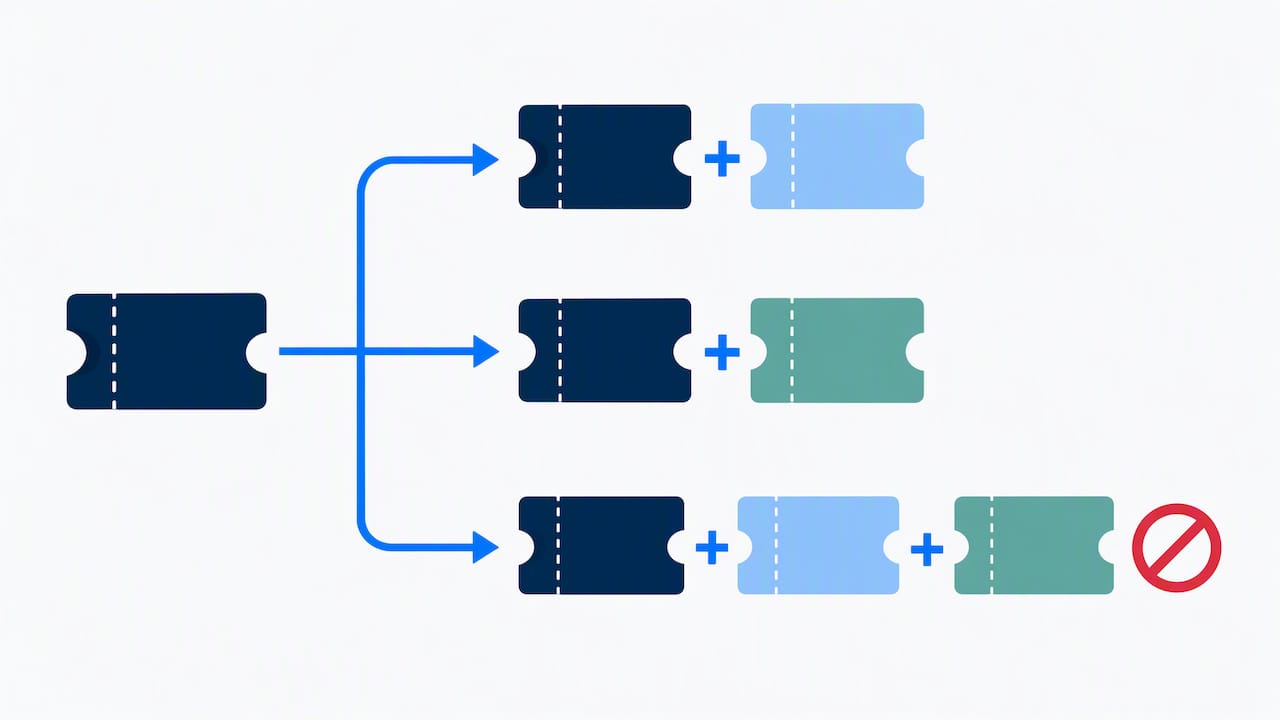
The dominant pattern across large retailers is simple: one manufacturer coupon plus one store coupon per item, with a cap on how many identical coupons a household can redeem in a single day or transaction. Retailers enforce this to prevent one coupon type from canceling out another on the same product line.
Target’s coupon policy allows one manufacturer coupon (paper or digital), one Target category offer, and one Target item-level offer to be combined per item. Identical coupons are capped at a limited number per household per day, a limit built specifically to stop bulk coupon redemption.
CVS permits one manufacturer coupon plus one CVS coupon on the same item, and the retailer reserves the right to process coupons in whatever order it chooses, though percent-off discounts are generally applied last. ExtraBucks rewards layer on top as store credit rather than a coupon, so they don’t count against the one-manufacturer-one-store limit.
Dollar General’s coupon policy mirrors this structure, allowing one manufacturer coupon and one Dollar General coupon per item in most situations. Publix’s stacking FAQ confirms a similar rule with a twist: a manufacturer’s coupon can be combined with either a Publix coupon or a competitor’s coupon, but not both at once.
Kohl’s Cash works differently because it’s a loyalty reward rather than a traditional coupon. Kohl’s applies dollar-off coupons, including Kohl’s Cash, before percent-off total-purchase coupons, and redemption is restricted to specific earn-and-redeem windows with stated exclusions.
Some shoppers misunderstand how identical-coupon limits work, assuming a four-per-day cap means four per item rather than four total across a shopping trip.
Here’s how the sequence plays out in practice:
- At Target, buying four bottles of shampoo with four identical manufacturer coupons plus a Target category offer on each bottle is allowed, but a fifth identical coupon that same day is rejected.
- At Kohl’s, a $10 Kohl’s Cash certificate applies to the subtotal first, then a 20% off coupon applies to whatever remains, not the other way around.
Always read the fine print printed on the coupon itself and cross-check it against the store’s published policy before you reach the register. Policies change seasonally, and an outdated printout can cost you the discount entirely.
How Coupon Application Order and Tax Rules Change Your Savings
The order in which discounts apply can change your final total even when the coupons themselves don’t change. The general rule most retailers follow, including Kohl’s, is that dollar-off coupons apply before percent-off coupons, so the percentage calculates against a smaller base.
Here’s the math on a $100 purchase with a $10 dollar-off coupon and a 20% off coupon:
- Dollar-off first: ($100 minus $10) multiplied by 0.80 equals $72.
- Percent-off first: ($100 multiplied by 0.80) minus $10 equals $70.
That $2 gap seems small on a single transaction, but it adds up across repeat shopping trips, and it explains why some shoppers feel shortchanged when a retailer insists on its own processing order rather than the sequence that benefits the customer.
Sales tax adds another wrinkle. TaxJar’s guidance on coupons and sales tax notes that manufacturer coupons often don’t reduce the taxable amount in some states, because the manufacturer, not the retailer, is covering that portion of the price. Store coupons, by contrast, frequently do reduce the taxable base since the retailer is discounting its own revenue. The exact treatment varies by state, so check your state’s tax guidance or ask the retailer directly, particularly on big-ticket items where the tax difference is meaningful.
Stacking Online vs In-Store: How to Enter Multiple Codes Correctly
Online checkout pages usually offer a single promo code field, which makes stacking harder than it is in a physical store. Many e-commerce platforms only accept one code per order, auto-apply loyalty discounts behind the scenes, and silently reject a second manual code without explaining why.
- Online: look for a line labeled “applied discounts” in your cart before you submit payment, since that’s where you’ll see whether a second code actually stacked or got ignored.
- In-store: cashiers scan manufacturer coupons, then store coupons, then digital app-based coupons, and they can tell you on the spot if a combination violates policy.
- Gift cards and OTU coupons: these generally work as a separate layer on top of standard coupons, since a gift card is a payment method and an OTU coupon is a single-use discount, not a second instance of the same coupon type.
Our partner guide on stacking discount codes for electronics walks through testing a cart total before finalizing payment, a habit that catches rejected codes before you’re locked into a sale. Our own post on auto-applying coupons safely covers similar ground for browser extensions that stack gift-card discounts automatically.
If a code doesn’t apply, don’t just abandon the cart. Screenshot the error, review the coupon’s terms for exclusions, and contact the retailer’s support chat before finalizing the order, since some codes fail silently due to excluded categories rather than expiration.
Pro Tip: Screenshot your cart’s “applied discounts” line before paying, so you have proof of what stacked if a dispute comes up later.
Step-by-Step Checklist to Maximize Stacking Responsibly
A little preparation before checkout prevents most stacking failures and keeps your accounts in good standing with retailers who track coupon abuse closely.
- Gather and verify every coupon for expiration dates, single-use wording, and excluded item categories before you start shopping.
- Apply discounts in the merchant’s preferred order, typically manufacturer coupon, then store coupon, then loyalty credit, but confirm the actual sequence on the retailer’s policy page since it varies.
- Layer in discounted gift cards or OTU coupons only where the merchant explicitly allows them as a separate payment or discount method.
- Save your receipt and a screenshot of the final applied discounts immediately after checkout, in case you need to dispute a rejected coupon later.
- Pause and ask staff or support if a coupon gets refused rather than abandoning the discount entirely, since many rejections are fixable errors rather than policy violations.
Our guide on finding working promo codes and our walkthrough of stacking multiple coupon codes both expand on steps one and two if you want more detail on sourcing and sequencing.
Pro Tip: Never reuse a single-use code across multiple orders or misrepresent item quantities to trigger extra discounts; both practices can get your account flagged or restricted.
Expert Perspective: Where Third-Party Platforms Fit Into Stacking
Discounted gift cards and verified one-time-use coupons can genuinely extend your savings, but only when a merchant’s policy treats them as a separate layer rather than a second instance of the same coupon type. The real risk in this space isn’t stacking itself, it’s sourcing codes from opaque or paywalled coupon sites where you can’t verify where the discount actually came from.
Shoppers who stick to transparent, verifiable sources tend to avoid the two most common failures: a code that silently fails at checkout, or a coupon that technically violates a store’s one-per-item rule and triggers an order cancellation. Verifying provenance before you rely on a code matters more than chasing the deepest possible discount.
— Justin
How Checkout Saver Helps You Combine Verified Coupons and Gift Cards
We offer discount gift cards, including with cryptocurrency, plus one-time-use coupons and cashback rewards at thousands of stores, all listed without hiding codes behind a login wall or a premium tier.
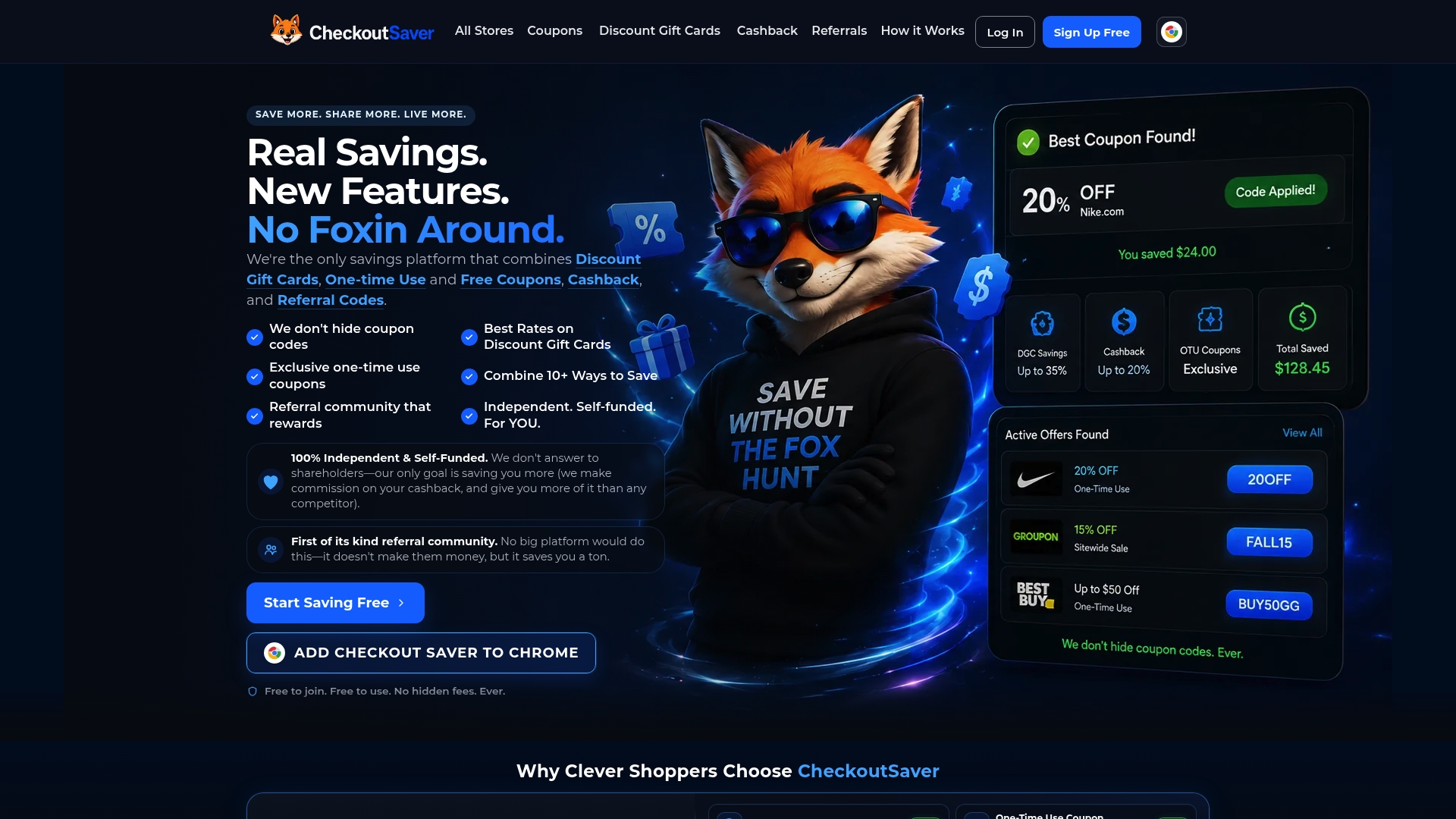
Our community also lets you share and discover codes that aren’t circulating on mainstream coupon sites.
Before you combine anything, confirm the retailer’s own stacking policy covers gift card purchases and OTU coupons the way you expect. Browse our discount gift cards or one-time-use coupons to see what’s available for your next order.
FAQ
Are you allowed to stack coupons?
Yes, most retailers allow coupon stacking within limits, typically one manufacturer coupon plus one store coupon per item. The exact rules vary by retailer, so check the store’s published coupon policy before checkout.
Can you stack multiple coupons at Target?
Target’s policy allows one manufacturer coupon, one Target category offer, and one Target item-level offer per item. Identical coupons are limited to four per household per day, regardless of how many items you’re buying.
Can I stack two manufacturer coupons at CVS?
No, CVS generally allows only one manufacturer coupon per qualifying item, paired with one CVS store coupon on the same item. ExtraBucks rewards apply separately as store credit rather than counting against that coupon limit.
Does Kohl’s allow coupon stacking?
Yes, Kohl’s allows Kohl’s Cash and other dollar-off coupons to combine with percent-off coupons, applying the dollar-off amount before the percentage discount. Redemption windows and exclusions apply, so check the certificate’s terms before you shop.
Does using a manufacturer coupon affect sales tax?
In some states, manufacturer coupons don’t reduce the taxable amount since the manufacturer, not the retailer, funds that discount, according to TaxJar’s guidance. Store coupons more often do reduce the taxable base, but the rule depends on your state, so confirm with the retailer or your state’s tax office on larger purchases.
Sources
- Article : Help : Target
- How Does Kohl’s Cash Work? Earn & Redeem In-Store & Online
- Dollar General Coupon Policy
Recommended
- What are One-Time Coupons? (aka Stop Throwing Away Coupons and Sell Them!)
- Share Coupon Codes Without Getting Banned: Testing and Disclosure
- Promo Codes & Coupon Codes