
Table of Contents
- Before You Trade: What You’ll Need
- Step 1: Choose the Best Coupon Trading Platforms
- Step 2: How to Verify Coupon Codes Before You Trade
- Step 3: Avoiding Coupon Scams and Fraud
- Step 4: List, Ship, and Protect Your Privacy
- Common Mistakes When You Trade Unused Coupons
- Conclusion
- Frequently Asked Questions
Last Updated: September 13, 2026
Before You Trade: What You’ll Need
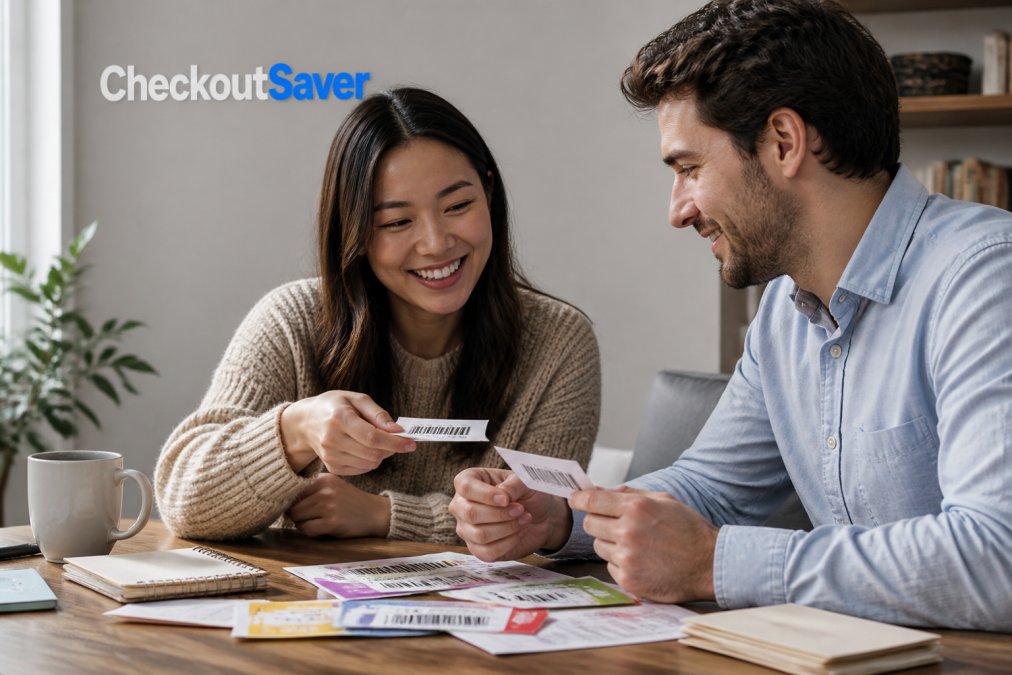
Trading unused coupons is the practice of exchanging a coupon you will not use for one you will, either directly with another shopper or through a marketplace that matches buyers and sellers. At Checkout Saver, we offer a no-hidden-code experience.
Before you list or buy anything, gather four things:
- A photo of the coupon showing the barcode, expiration date, and face value
- The retailer’s current circular or app listing, to confirm the offer is still live
- A dedicated email address for marketplace accounts, not your primary inbox
- A folder or note tracking what you listed, what sold, and what you still hold
The Federal Trade Commission’s guidance on coupons and rebates explains that manufacturers set the terms of their own offers, which is why a coupon that looks identical to another can carry completely different restrictions. Read those restrictions before you list. A coupon you cannot legally transfer is not a coupon you can sell.
Step 1: Choose the Best Coupon Trading Platforms
The best coupon trading platforms are the ones that verify sellers, publish clear resale policies, and hold funds until a code works. Everything else is decoration. What most comparison guides skip is a way to score a platform before you hand over a code or a mailing address, so use the rubric below and write down a number for each row.
Platform safety rubric (score each row 0-2, total out of 12):
| Criteria | 0 points | 1 point | 2 points |
|---|---|---|---|
| Seller verification | None | Email only | Government ID or verified transaction history |
| Resale policy | Silent on transfers | Vague FAQ language | Written policy naming which coupon types may be resold |
| Payment protection | Direct peer-to-peer only | Escrow on orders over a threshold | Funds held until the code is confirmed working |
| Dispute process | Email support only | Ticket system with no published timeline | Published refund window and escalation path |
| Data handling | Asks for your home address in chat | Collects address but no privacy policy | Ships through an in-platform label system that masks both addresses |
| Community moderation | Open posting, no rules | Rules posted but unenforced | Active moderation with public complaint threads |
A platform scoring 9 or higher is worth a first trade. A platform scoring 6 or below is where the horror stories come from. Score the marketplace and any Facebook group or Discord server you are considering, because the same rubric applies, a group with no posted rules and no moderation is a group where a dead code becomes your problem.
The Terms of Service trap. Before you list anything, read the coupon itself. Many manufacturer coupons carry language stating the offer is “non-transferable” or “void if sold, transferred, or auctioned.” Selling a coupon with that language is not just a platform violation, it can expose you to a retailer voiding the code after the buyer redeems it, which means you issue the refund. The Federal Trade Commission’s guidance on coupons and rebates explains that manufacturers set the terms of their own offers, which is why two visually identical coupons can carry completely different transfer restrictions. A coupon you cannot legally transfer is not a coupon you can sell.
Checkout Saver handles one-time use coupon trading directly, with cash back and discounted gift cards in the same account.
The biggest mistake new traders make is listing a coupon on a platform whose terms prohibit resale. If the retailer voids the code after a buyer uses it, you are the one issuing the refund, not the platform.
Step 2: How to Verify Coupon Codes Before You Trade
Verifying a coupon code means confirming three things: that the barcode scans, that the expiration date has not passed, and that the code has not already been redeemed. Skip any one of those and you are trading blind.
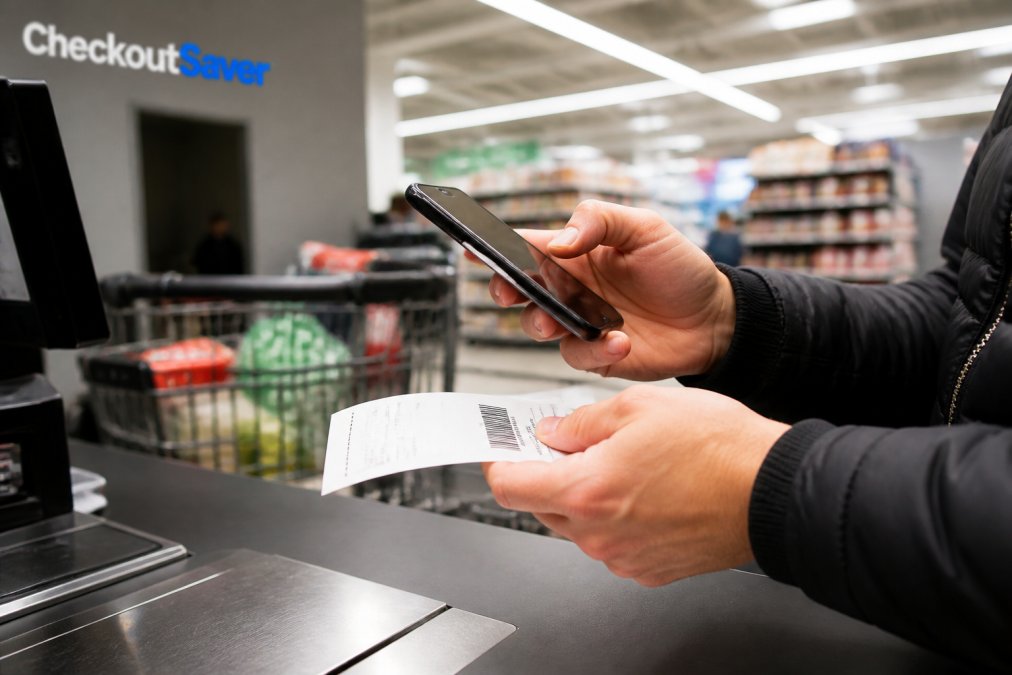
A practical verification sequence:
- Scan the barcode with the retailer’s own app before you list it
- Check the expiration date against the retailer’s current circular
- Confirm the coupon is not a one-time use code already tied to an account
- Screenshot the valid scan as proof for your listing
One-time use codes are the single biggest source of disputes in coupon trading. These codes are generated for a specific account and stop working the moment they are redeemed, which means a seller can hand over a code that was already spent. The Better Business Bureau’s tips on online purchase scams recommends treating any deal that requires you to act before you can verify it as a red flag. Ask the seller for a screenshot showing the code has not been redeemed, and buy only through platforms that hold payment until you confirm it works.
Step 3: Avoiding Coupon Scams and Fraud
Avoiding coupon scams starts with recognizing the four patterns that show up again and again: payment outside the platform, pressure to act fast, codes with no barcode photo, and sellers with no transaction history. But recognizing a pattern is not the same as verifying a partner, so run every new trading partner through the checklist below before money moves. Establishing a consistent habit of verifying store legitimacy serves as the final safeguard against sophisticated fraud attempts that often mimic legitimate retail environments.
Pre-trade verification checklist (run all eight before your first trade with anyone):
- Account age. Created more than 30 days ago, with listings spread over weeks rather than dumped in one day.
- Transaction history. At least a handful of completed trades, not just a star rating with no volume behind it.
- Dispute forum search. Search the username on the platform’s public complaint thread. Three unresolved complaints is a skip.
- Cross-platform footprint. The same username on a second marketplace with a consistent history is a good sign; a username that appears nowhere else is neutral, not disqualifying.
- Barcode photo. Ask for a photo showing the barcode, expiration date, and face value in one frame. A seller who refuses is done.
- Unredeemed proof. For one-time use codes, ask for a screenshot of the code in the retailer’s app showing it has not been applied to an order.
- Payment path. Confirm the payment stays inside the platform. A request to move to a peer-to-peer app is the single strongest scam signal.
- Price sanity. A listing far below face value with no explanation is either counterfeit, already redeemed, or a lure.
The doxxing problem most guides ignore. Coupon trading requires sharing something, a code, an envelope, a username. It does not require sharing your identity. Use a dedicated email address for every marketplace account, never your primary inbox. Never share your loyalty account number with a buyer; loyalty numbers are tied to your purchase history and can be used to reverse-engineer where and when you shop. Redact any personal information visible in listing photos, including return-address labels in the background. For physical inserts, ship only through the platform’s label system so neither party sees the other’s home address. If a platform asks you to type your address into a chat window, that is a platform to skip.
The reputation trap. A seller with a perfect rating and a two-week-old account is not a safe seller, they are an unproven one. Reputation only means something when it has survived a dispute. Look for sellers who have at least one public complaint thread that was resolved, because that tells you the platform’s dispute process actually works.
Fraud prevention is mostly about slowing down. Legitimate sellers expect questions. Scammers expect urgency.
Before your first trade, search the seller’s username on the platform’s dispute forum. Most marketplaces keep public complaint threads, and a seller with three unresolved complaints is a seller you skip.
Print or save the eight-point checklist above. Running it takes about five minutes and eliminates the overwhelming majority of coupon-trading scams, which rely on buyers skipping verification to close a deal faster.
Step 4: List, Ship, and Protect Your Privacy
Digital codes and physical inserts require different handling, and mixing them up is how traders lose money.
For digital codes, deliver through the platform’s messaging system so there is a record. Never send a code by text message or personal email. For physical inserts, ship with tracking and photograph the envelope before it goes out.
Protect your privacy at the same time:
- Use a dedicated email address for all marketplace accounts
- Never share your loyalty account number with a buyer
- Redact any personal information visible in listing photos
- Keep your shipping address inside the platform’s label system
Transaction security depends on keeping every step inside the marketplace. The moment a deal moves to a private channel, you lose the dispute process that protects you. Checkout Saver keeps one-time use codes and gift card listings in one place.
Common Mistakes When You Trade Unused Coupons
The most common mistakes when you trade unused coupons are listing expired offers, ignoring retailer restrictions, and treating a verbal promise as a completed sale.
Here is how to fix each one:
| Mistake | Fix | Impact |
|---|---|---|
| Listing expired coupons | Check expiration dates weekly | Fewer disputes |
| Ignoring resale policy | Read retailer terms first | Avoids voided codes |
| Skipping verification | Scan before listing | Builds seller rating |
| Shipping without tracking | Always use tracked mail | Proof in disputes |
Stacking is where most new traders get overconfident. Combining a manufacturer coupon with a store coupon is often allowed, but combining two manufacturer coupons for the same item usually is not, and a buyer who discovers that after paying will blame you. State clearly in every listing whether a coupon can be stacked.
A second mistake is treating community guidelines as optional. Swap groups and marketplaces remove members who break etiquette rules, and a removal follows your username across platforms. Follow the rules even when a deal would close faster without them.
Conclusion
Trading unused coupons works well when you verify before you list, keep every transaction inside a platform with a real dispute process, and protect your personal information along the way. The traders who lose money are almost always the ones who skipped a verification step to close a deal faster.
Checkout Saver offers one-time use coupon trading, discounted gift cards, and cash back all in one account, with no hidden codes and a free plan to start. Sign up free and turn the coupons sitting in your drawer into savings you actually use.
Frequently Asked Questions
Is it legal to sell or trade manufacturer coupons?
Manufacturer coupons often state ‘void if transferred’ or ‘not for resale.’ Trading them can violate those terms, and retailers may reject them. Store coupons and digital codes are usually treated differently, but always check the fine print. The safest approach is to trade only on platforms that explicitly allow it and follow their community guidelines. When in doubt, don’t trade.
How can I verify if a coupon code is valid before trading?
Ask the seller for a screenshot showing the code and its expiration date. Test the code in a cart without completing the purchase. Use a verified seller badge on a reputable coupon marketplace. For physical inserts, request a photo of the entire insert. Never rely on a text-only code from a stranger. If the seller refuses to provide proof, walk away.
What are the risks of trading coupons on social media?
Social media offers no transaction security, no verified seller identity, and no dispute resolution. Scammers often use stolen codes or expired ones. You also risk exposing personal information. Stick to dedicated coupon trading platforms that offer buyer protection, seller ratings, and clear resale policies. If you must use social media, trade only with people you know and meet in a public place.
How does Checkout Saver ensure safe coupon transactions?
Checkout Saver offers one-time use coupon trading and a no-hidden-code experience. Sign up free to start trading unused coupons.

