Referral programs reliably drive new, high-value customers when you pair a clear two-sided incentive with one-click sharing mechanics and measure results by revenue per referred order rather than signup counts. Industry benchmarks, FTC endorsement rules, and real brand patterns all point the same direction. Start simple: pick one incentive, instrument tracking, and run a short test before scaling budget.
TL;DR:
- Choose one or two reward types based on margins and buying frequency: store credit keeps spending in house, while cash suits high value or infrequent purchases.
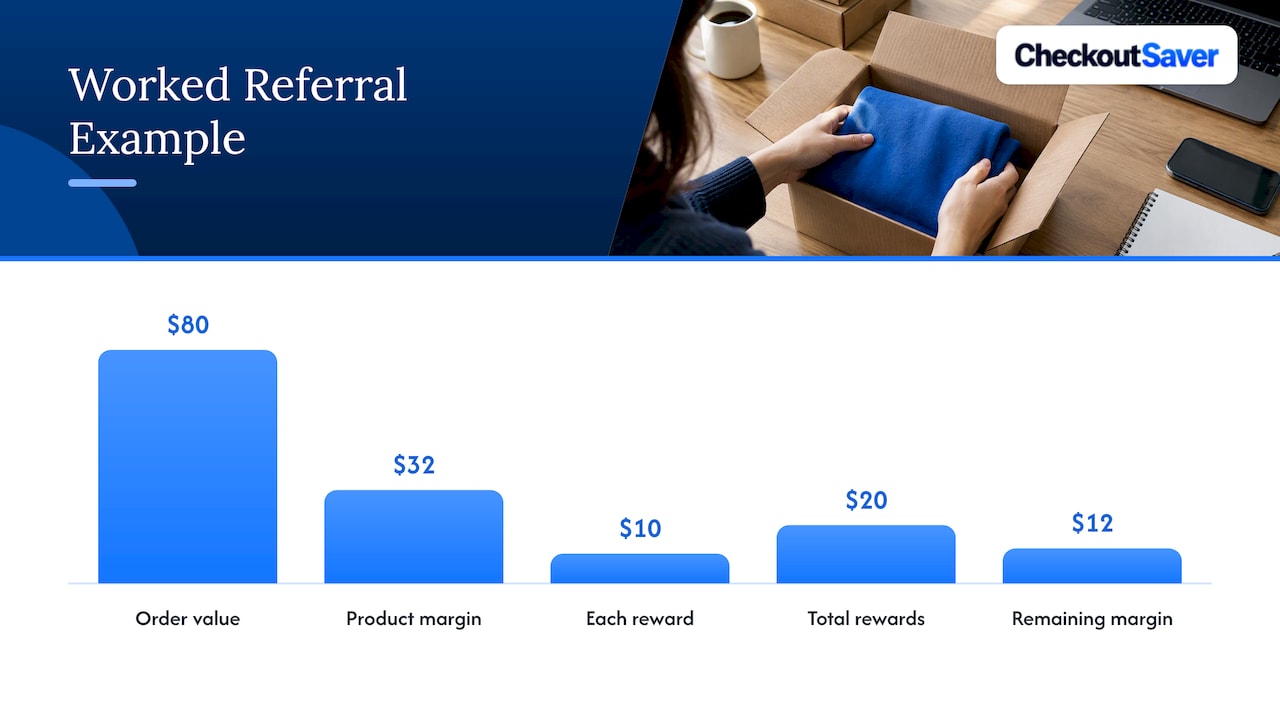
- An $80 referred order at a 40% margin leaves $12 after two $10 rewards, before repeat purchases and acquisition costs.
- Track revenue per referred order, conversion, acquisition cost, and lifetime value by channel; adjust revenue for returns before judging profitability.
- Test one variable at a time, validate mechanics in the first 30 days, and hold payouts 7 to 14 days after purchase for refunds.
- Require ambassadors and referrers to disclose incentives clearly beside each endorsement, using supplied wording they can add directly to posts.
Table of Contents
- Annotated examples: 6 referral program archetypes and why they work
- How to set up a referral program: measurable checklist
- Incentive types and a decision framework to choose one
- Promotion tactics and viral mechanics to scale referrals
- KPIs and reporting: how to judge program success
- Disclosure rules and practical compliance steps (FTC guidance)
- Checkout Saver: first-hand lessons and how our tools support referral incentives
- Author perspective: when referrals should be your priority
- How Checkout Saver can help design and deliver referral-friendly rewards
- FAQ
- Sources
Annotated examples: 6 referral program archetypes and why they work
Most successful shopping referral programs borrow from a small set of proven patterns. Each works because it matches a specific psychological trigger or business constraint, not because it’s novel.
Simple give/give structures reward both the referrer and the referee with the same or similar benefit, usually a flat dollar amount or percentage off. Public program pages across e-commerce brands repeatedly use this pattern because the clarity removes hesitation: the referee knows exactly what they get, and the referrer doesn’t have to explain fine print to a friend. Case examples from successful e-commerce programs show that fixed-dollar discounts for the referee, paired with points or credit for the referrer, consistently improve signup rates when the messaging stays short.
Cashback and commission payouts work best for higher-ticket purchases or when you want to activate power promoters rather than casual sharers. Cash feels more valuable than a discount to someone who already buys from you regularly, and it scales well for categories like electronics, travel, or furniture where a single referred sale can justify a meaningful payout.
Points and loyalty integration ties referral rewards into an existing loyalty structure instead of creating a parallel incentive. This approach tends to boost repeat purchases because the referral reward isn’t a one-time transaction. It’s a deposit into a system the customer already checks regularly, which keeps them engaged long after the initial referral.
Gift-card and store-credit rewards keep the referral payout inside your own ecosystem. Unlike cash, a gift card guarantees the reward converts into another purchase, which protects margin and supports retention at the same time. This structure works particularly well for retailers with healthy repeat-purchase rates, since the “cost” of the referral often returns as revenue within the same funnear year.
Two-sided plus milestone bonuses stack a base reward with an escalating bonus once a referrer hits a threshold, such as five successful referrals. This structure compounds virality because it gives your most active advocates a reason to keep sharing past the first conversion, rather than stopping after one friend signs up.
Ambassador and community programs ask more of participants, think content creation, social posts, or ongoing promotion, in exchange for higher-value rewards or recurring commissions. These programs require more operational oversight but produce the highest-lift advocates, since ambassadors often bring an audience rather than a single referral.
A few patterns show up across nearly every successful program:
- Two-sided rewards consistently outperform one-sided rewards because they lower resistance on both ends of the referral.
- Simple, fixed rewards convert better than tiered or percentage-based rewards when the audience is unfamiliar with the brand.
- Programs that integrate with an existing loyalty or points system tend to retain referred customers longer than standalone cash programs.
- Milestone structures work best for brands with a visible, engaged customer base willing to share repeatedly.
Pick one or two archetypes that fit your margin structure and purchase frequency before building anything. Trying to run all six at once dilutes the message and makes measurement harder.
How to set up a referral program: measurable checklist
A referral program is only as good as the measurement behind it. Before writing a single line of program copy, define what success looks like in numbers you can track.
- Set your goal and KPIs first. Decide whether you’re optimizing for new customer volume, revenue per referred order, or cost per acquired customer (CPAC), since each goal changes how you structure the reward.
- Choose your mechanics. Decide between unique referral links and coupon codes, whether codes are single-use or multi-use, and how long the attribution window stays open after a referral click.
- Select your fulfillment method. Automatic account credits, gift cards, or points each carry different operational overhead; automatic credits are simplest, while gift cards require inventory or a vendor relationship.
- Integrate with checkout and accounts. Referral codes need to apply cleanly at checkout and sync with customer account dashboards so referrers can track their own progress without contacting support.
- Build operational rules before launch. Decide how you’ll handle fraud prevention, returns-adjusted payouts (so a refunded order doesn’t still trigger a reward), and eligibility rules like minimum order values or one reward per household.
- Design a launch test matrix. Test one variable at a time, reward amount, message copy, or share channel, using a 30/60/90-day checklist: validate mechanics in the first 30 days, optimize messaging in the next 30, and scale budget in the final 30 once CPAC targets are met.
Pro Tip: Hold payouts for 7 to 14 days after a referred purchase so refunds and chargebacks settle before you pay out the reward.
Retail programs commonly add anti-fraud conditions directly into their terms: unique referral links tied to a single account, a ban on self-referrals, minimum order thresholds, and a post-purchase validation window before a reward is released. Anker’s referral program, for example, uses a 30-day validation window before rewards are paid, which gives the system time to catch returns or canceled orders.
For teams building this for the first time, a conservative approach works better than a complex one. Small-business referral guidance from Salesforce recommends starting with a single, simple reward structure and changing only one variable at a time, which keeps your test results clean enough to act on with confidence.
Incentive types and a decision framework to choose one
The right incentive depends on your margin, how often customers buy from you, and what behavior you want to reward. Here’s how the common options stack up:
- Discounts suit businesses with healthy margins and frequent repeat purchases, since the cost is absorbed into a future sale rather than paid out in cash.
- Cash and commission payouts work best for high-ticket or infrequent-purchase categories where a single referral is worth a direct payout.
- Store credit and gift cards protect margin by keeping the reward inside your ecosystem, making them a strong default for most retailers.
- Points fit brands that already run a loyalty program, since they reinforce an existing habit rather than introducing a new mechanic.
Two-sided rewards tend to produce faster referral velocity than one-sided rewards, particularly in direct-to-consumer retail, when the referee’s benefit is immediate and the referrer’s reward unlocks quickly, often as soon as the referee’s first order ships. Academic research on referral economics also suggests tying rewards to the referred customer’s expected lifetime value, rather than a flat amount per signup, produces better program return over time, since it naturally rewards advocates who bring in higher-spending customers.
Protecting margin requires a few guardrails: minimum order thresholds before a reward activates, expiration dates on unused credit, caps on how many times a single customer can redeem a reward, and clear rules on whether referral rewards stack with other promotions.
A simple worked example: say a referred order averages $80 and your product margin is 40%, or $32. A $10 two-sided reward (referee discount plus referrer credit) costs $20 total per successful referral, leaving $12 of margin after the incentive, before accounting for the new customer’s future repeat purchases. That remaining margin is what justifies scaling the program once your CPAC comes in under that number.
Promotion tactics and viral mechanics to scale referrals
A referral program only grows if sharing is effortless. The highest-performing placements put the referral offer directly in front of customers at moments when they’re already thinking positively about your brand.
- Post-purchase confirmation pages and order emails catch customers at peak satisfaction, right after they’ve committed to buy, which is the easiest moment to ask them to share.
- In-account dashboards give repeat customers a persistent reminder of their referral status and progress toward milestone bonuses.
- Prewritten share messages and deep links remove friction: a customer who has to write their own pitch is far less likely to share than one who can copy and paste in one click.
- Social share buttons embedded directly in the referral flow let customers post to the channels they already use without leaving your site.
Partner strategies extend reach beyond your existing customer base. Loyalty partners, coupon partners, and influencers can each fund different stages of the customer journey, provided you credit each channel accurately rather than double-counting a conversion across multiple partners. Industry benchmark data on affiliate spend shows loyalty and rewards partners captured half of all transactions in 2025, while voucher and coupon partners accounted for 10% of spend, underscoring why both channel types deserve a place in a referral strategy rather than just one.
Activation nudges keep momentum going after launch: milestone bonuses for repeat referrers, limited-time reward boosts tied to seasonal campaigns, and referral streak incentives that reward customers for referring multiple friends over consecutive months.
Pro Tip: Place your referral prompt on the order confirmation page, not just in a follow-up email, since that’s the single moment customers are most likely to act immediately.
KPIs and reporting: how to judge program success
Raw signup counts tell you almost nothing about whether a referral program is working. The metrics that matter connect referrals directly to revenue.
- Referral conversion rate measures what share of referred visitors actually complete a purchase, not just click a link.
- Revenue per referred order shows the average order value generated through referrals, which matters more than transaction count when partners vary widely in audience quality.
- Cost per acquired customer (CPAC) compares total referral payout against the number of new customers actually acquired, giving you a number to compare against paid acquisition channels.
- Referral lifetime value (LTV) tracks whether referred customers stick around and spend more over time compared to customers acquired through other channels.
Attribution windows change reported performance significantly: a short window undercounts referrals from slower-moving customers, while a long window can inflate numbers by crediting referrals that would have converted anyway. Benchmark data from 2025 recommends judging partners and channels by revenue per order instead of raw transaction volume, since the partners who drive the most clicks aren’t always the ones driving the most valuable conversions.
Segment performance by channel and reward type so you can see which combinations actually produce profitable customers, and always adjust reported revenue for refunds and returns before calculating your real cost per acquisition. A monthly reporting cadence works for most programs, with a deeper quarterly review to catch slower-moving trends in referral LTV.
Disclosure rules and practical compliance steps (FTC guidance)
Referral and ambassador programs involve paid or incentivized endorsements, which means disclosure isn’t optional. The FTC’s endorsement guidance requires that any material connection, money, discounts, or perks, be disclosed clearly and conspicuously whenever someone shares a referral link or promotes a product.
Key compliance points for a referral program:
- Disclosures must sit next to the endorsement itself, not buried in a bio or linked separately, so the connection is unavoidable to see.
- Paid or incentivized rankings and reviews can be considered deceptive if the payment isn’t disclosed, according to federal endorsement regulations.
- Provide ambassadors with a simple, prewritten disclosure template (for example, “I earn a reward if you use my link”) they can paste directly into posts.
- Monitor ambassador and referrer content periodically, and have a process for removing posts that violate disclosure rules or platform terms.
Building these controls into your coupon-sharing guidelines from day one is far less costly than cleaning up violations after a program has scaled.
Checkout Saver: first-hand lessons and how our tools support referral incentives
Our referral community lets shoppers share codes openly instead of hiding them behind a paywall, which is the same transparency principle we apply across every coupon and cashback listing on our platform. We’ve found that discounted gift cards and one-time-use coupons package cleanly into referral rewards: a merchant can issue a gift-card-based reward instead of a generic discount, which keeps the referred purchase inside a closed loop.
Coupon codes are not gated behind subscription paywalls in our approach, and browser extensions can apply savings automatically at checkout rather than requiring customers to hunt for a code. That operational choice shapes how we think about referral mechanics generally: the fewer steps between an offer and its redemption, the higher the conversion.
Transparency in how a reward is earned and redeemed matters as much as the size of the reward itself.
Author perspective: when referrals should be your priority
Referrals deserve real budget once you’ve validated a small test and know your revenue per referred order beats your CPAC target. Before that, paid acquisition is often the faster lever. Scale referral spend only after small tests confirm the math, then blend it with loyalty and voucher programs rather than treating referrals as a standalone channel.
— Justin
How Checkout Saver can help design and deliver referral-friendly rewards
If you’re building referral incentives, our discount gift cards and one-time-use coupons give you ready-made reward formats without building a payout system from scratch. A merchant can issue a gift-card-based referral reward through our marketplace, keeping the incentive inside a trusted redemption flow.
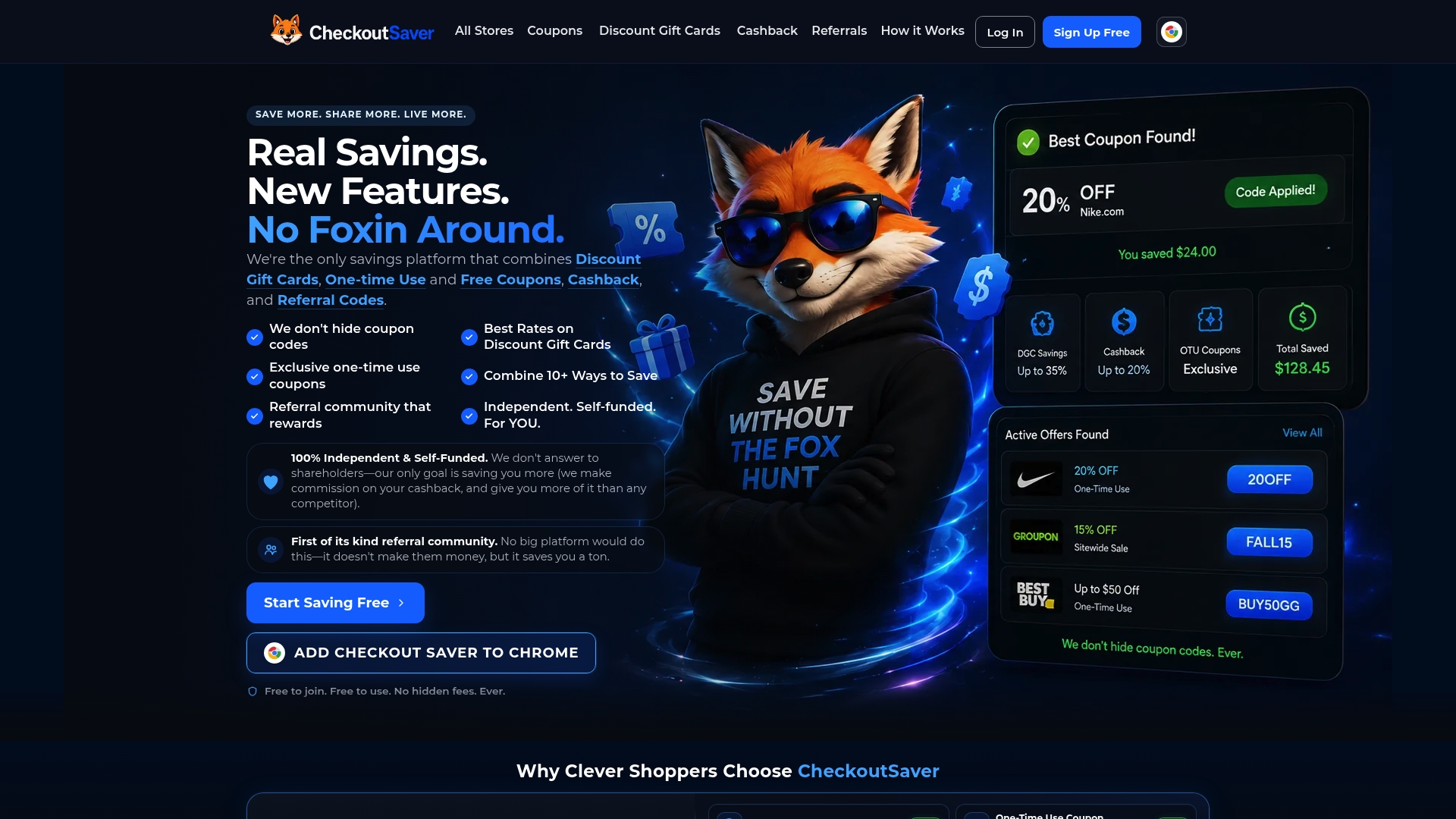
Browse our gift card options to see what fits your referral structure today.
FAQ
Who has the best referral program?
There’s no single “best” referral program since performance depends on margin, purchase frequency, and audience, but the strongest public examples share two-sided rewards and simple, immediate payouts. Patterns across successful e-commerce referral programs show that simplicity and speed of reward matter more than reward size.
What are some good affiliate programs for shopping?
Affiliate programs for shopping typically pay a commission on completed sales, and the strongest ones evaluate partners by revenue per order rather than click volume. 2025 affiliate benchmark data found loyalty and rewards partners drove half of all tracked transactions, making them a useful model for structuring shopping affiliate incentives.
Which app gives $100 per referral?
Reward amounts vary widely by brand and category, as do flat payout amounts across referral programs. High-ticket categories like finance, travel, or electronics are more likely to offer larger flat payouts, while retail programs typically use smaller discounts or store credit.
What are the best paying referral programs?
The highest-paying referral programs tend to be in high-margin, high-ticket categories where a single referred sale justifies a larger cash or commission payout. Lower-ticket retail programs usually pay less per referral but convert more often because the combined discount feels accessible to both parties.
How do I prevent fraud in a referral program?
Common anti-fraud controls include requiring unique referral links tied to individual accounts, banning self-referrals, setting minimum order values, and holding payouts for a short window after purchase to catch refunds. Public referral program terms often include a validation period, such as 30 days, before a reward is released.
Sources
- FTC’s Endorsement Guides: What People Are Asking
- PART 255—Guides concerning use of endorsements and testimonials in advertising
- 5 successful ecommerce referral programs and why they work
Recommended
- Cashback vs Discounts for Shoppers & Marketers: 8 Factors + Hybrid
- The Ultimate Guide to Building Customer Loyalty Programs