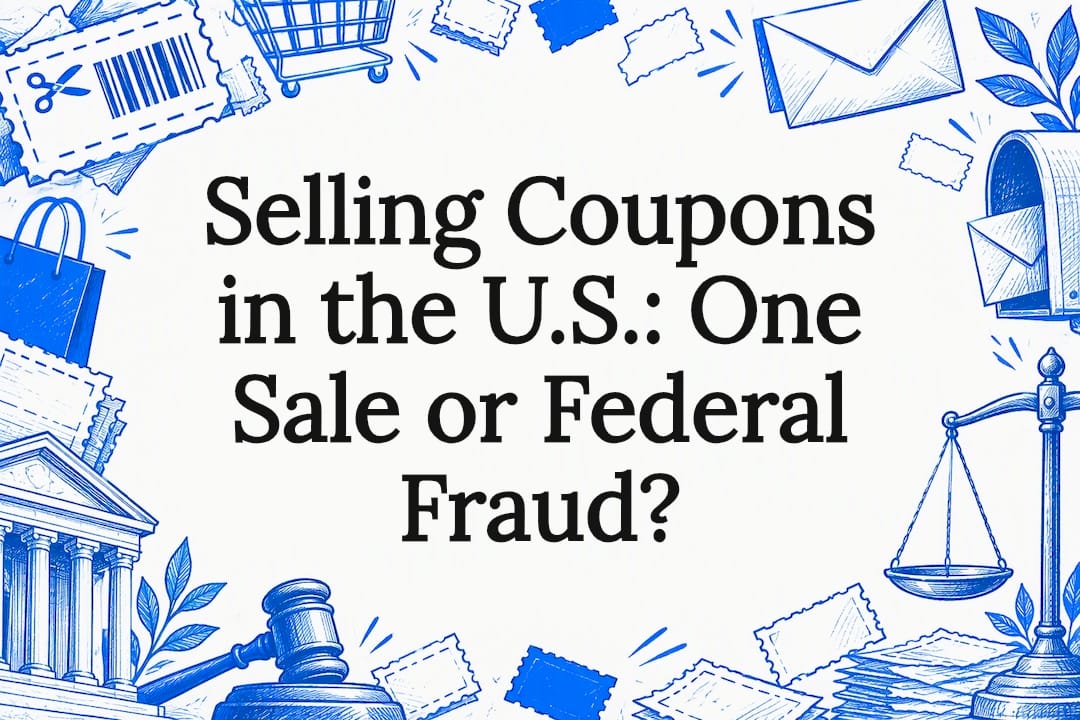
Selling manufacturer coupons is usually against the coupon’s own terms and can expose sellers to civil consequences, and in organized cases, federal fraud liability. The short answer: there is no single federal law banning a casual sale of a legitimate coupon, but manufacturer contracts, the FTC’s guidance, and mail and wire fraud statutes make unauthorized resale risky. Read on for the nuance and safer options.
TL;DR:
- Most manufacturer coupons are marked nontransferable, so retailers can reject them, shoppers may owe full price, and stores can lose reimbursement.
- Mail or wire fraud exposure rises when resale involves counterfeit coupons, altered barcodes, or high volume operations using postal or electronic channels to deceive retailers.
- Manufacturers may pursue civil claims against sellers operating at volume, while marketplaces can ban accounts and state consumer protection enforcement varies by location.
- Share extra coupons free with friends or family, and use transfer or donation programs only when a manufacturer or retailer explicitly authorizes them.
- Treat upfront access fees, guaranteed income promises, and pitches focused on recruitment as scam warnings; verify codes and avoid large batches from unknown sellers.
Table of Contents
- What manufacturer coupon policies say about transferring and selling
- When does coupon resale become a federal crime?
- Civil and retailer risks that come before any criminal exposure
- Common coupon scams and what the FTC has warned about
- Safer, lower-risk ways to use or convert extra coupons
- Our take on balancing savings and legal risk
- A vetted marketplace for your unused coupon codes
- FAQ
- Sources
What manufacturer coupon policies say about transferring and selling
Most manufacturer coupons carry fine print that spells out exactly how they can be used, and selling almost never fits inside those boundaries. The standard language declares a coupon “non-transferable” and “void if sold, purchased, traded, auctioned, or transferred” to another party. Manufacturers write this clause for a practical reason: promotions are priced and budgeted around a single intended redemption, by a single shopper, for a single purchase.
Nestlé’s coupon policy follows this pattern, reserving the right to declare a coupon void when it has been altered, copied, sold, or transferred outside the terms printed on the offer. That single clause gives the manufacturer leverage at every point in the chain, from the shopper at checkout to the clearinghouse that processes retailer reimbursement.
In practice, “void” means a few concrete things:
- A cashier or self-checkout system can decline the coupon outright if it looks resold, altered, or mismatched to the product.
- A retailer that accepts a void coupon can later be denied reimbursement by the manufacturer or clearinghouse, which creates pressure to refuse suspicious coupons upfront.
- A shopper caught using a transferred coupon can be asked to pay full price on the spot, even after the item has been bagged.
The non-transferability clause is not a formality. It is the contractual hook manufacturers and clearinghouses use to unwind a transaction after the fact.
When does coupon resale become a federal crime?
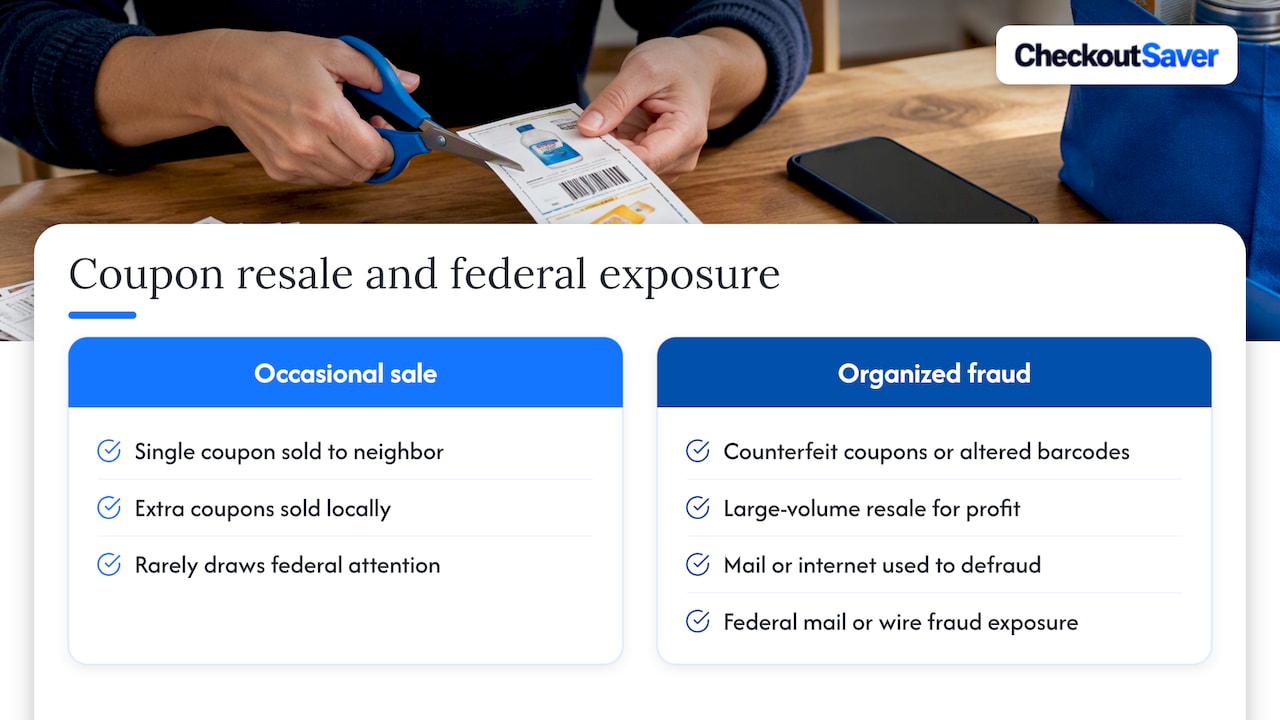
Selling a single coupon to a neighbor rarely draws federal attention, but organized coupon fraud is a different story. The mail fraud statute, 18 U.S.C. § 1341, and its wire fraud counterpart criminalize schemes to defraud that use the postal service, private carriers, or electronic communications.
Mail and wire fraud convictions can carry severe penalties including imprisonment for many years and substantial fines, according to the federal fraud statute.
The conduct that tends to trigger these charges includes manufacturing counterfeit coupons, manipulating barcodes to misrepresent a product or value, and running organized mailing or reselling operations that move large volumes of coupons for profit. A single person selling a stack of extra coupons on a local resale group is unlikely to face prosecution. Once the activity scales into a business, involves counterfeiting, or uses the mail or internet to defraud manufacturers and retailers, the legal exposure shifts from theoretical to real.
Civil and retailer risks that come before any criminal exposure
Long before federal prosecutors get involved, ordinary commercial and contract consequences can hit a coupon seller or buyer. Retailers and the clearinghouses that process manufacturer reimbursements enforce non-transferability clauses as a matter of routine business, not law enforcement.
- A retailer can refuse to honor a coupon it believes was purchased, auctioned, or otherwise transferred outside the terms.
- A clearinghouse can deny reimbursement to the retailer, which often leads stores to tighten acceptance policies or train staff to spot resold coupons.
- A manufacturer can pursue a civil claim against a seller operating at volume, treating the conduct as a breach of the coupon’s terms or as unfair competition under state law.
- A marketplace or payment platform can ban an account that repeatedly lists coupons flagged as void or unauthorized.
State consumer-protection statutes add another layer, since enforcement of deceptive or unfair trade practices varies by state and can be more aggressive in some jurisdictions than others, according to the U.S. Chamber of Commerce. None of this requires a criminal charge to hurt a seller financially: a voided coupon, a denied reimbursement, and a banned account are common outcomes that happen entirely through private enforcement.
Common coupon scams and what the FTC has warned about
Plenty of “coupon business” pitches online are built to separate hopeful sellers from their money rather than help them earn any. The warning signs tend to repeat across schemes:
- A program asks for an upfront fee to “join” a coupon clipping or reselling service.
- A seller promises guaranteed income from reselling coupon booklets or certificates.
- A listing offers coupons at prices that only make sense if the codes are counterfeit or stolen.
- A pitch pressures buyers to recruit others rather than focusing on the coupons themselves.
The FTC has previously documented fraud tied to internet coupon offers and work-at-home coupon schemes, noting that coupons are meant to be clipped and redeemed by consumers directly rather than purchased through third-party “businesses.” Buying coupons from unverified sellers also raises counterfeit risk, since there is no way to confirm a code’s authenticity before it fails at checkout.
Pro Tip: Treat any coupon offer that charges a fee for access as a red flag, since legitimate manufacturer coupons are free to the original recipient.
Safer, lower-risk ways to use or convert extra coupons
Most of the legal and financial risk around coupons comes from scale, deception, or unverified provenance, not from the simple fact of sharing a deal. A few practices keep things on solid ground.
- Share extra coupons directly with friends or family at no charge, which is widely tolerated and rarely scrutinized.
- Look for retailer or manufacturer programs that explicitly allow coupon transfer or donation, since some brands run authorized channels for this.
- If selling codes, verify the coupon is genuinely one-time-use, disclose its origin honestly, and keep records of each transaction in case a buyer or platform asks questions later.
- Keep volume modest. A handful of personal sales reads very differently from a business model built around reselling coupons at scale.
- Walk away from any service that demands upfront fees, guarantees earnings, or asks for a large batch of coupons forwarded in advance.
Our own guide on selling coupon codes safely walks through recordkeeping and tax considerations for anyone weighing this more seriously, including when a seller’s activity might cross into 1099-K reporting territory.
Pro Tip: If you are building any kind of repeat business around coupon resale rather than an occasional sale, a quick conversation with a lawyer is cheaper than finding out the hard way where the line sits.
Our take on balancing savings and legal risk
The coupon world rewards caution more than hustle. Readers who stick to authorized redemption, honest disclosure, and modest scale rarely run into trouble, while the people who get burned are almost always chasing a “coupon business” pitch that promised more than it could deliver. A legitimate marketplace that verifies codes and keeps transactions transparent protects both buyers and sellers far better than an anonymous listing ever could. We built our platform with that gap in mind.
— Justin
A vetted marketplace for your unused coupon codes
There are marketplaces designed specifically for shoppers who want to turn unused one-time-use coupon codes into cash without guessing at the rules. Codes listed through certain platforms may go through verification before they change hands, with fees published upfront and support available if a transaction needs a second look. Selling through a dedicated platform can mean skipping the anonymous listings and certificate-booklet pitches that tend to attract scrutiny, and instead working through a flow built for exactly this purpose.
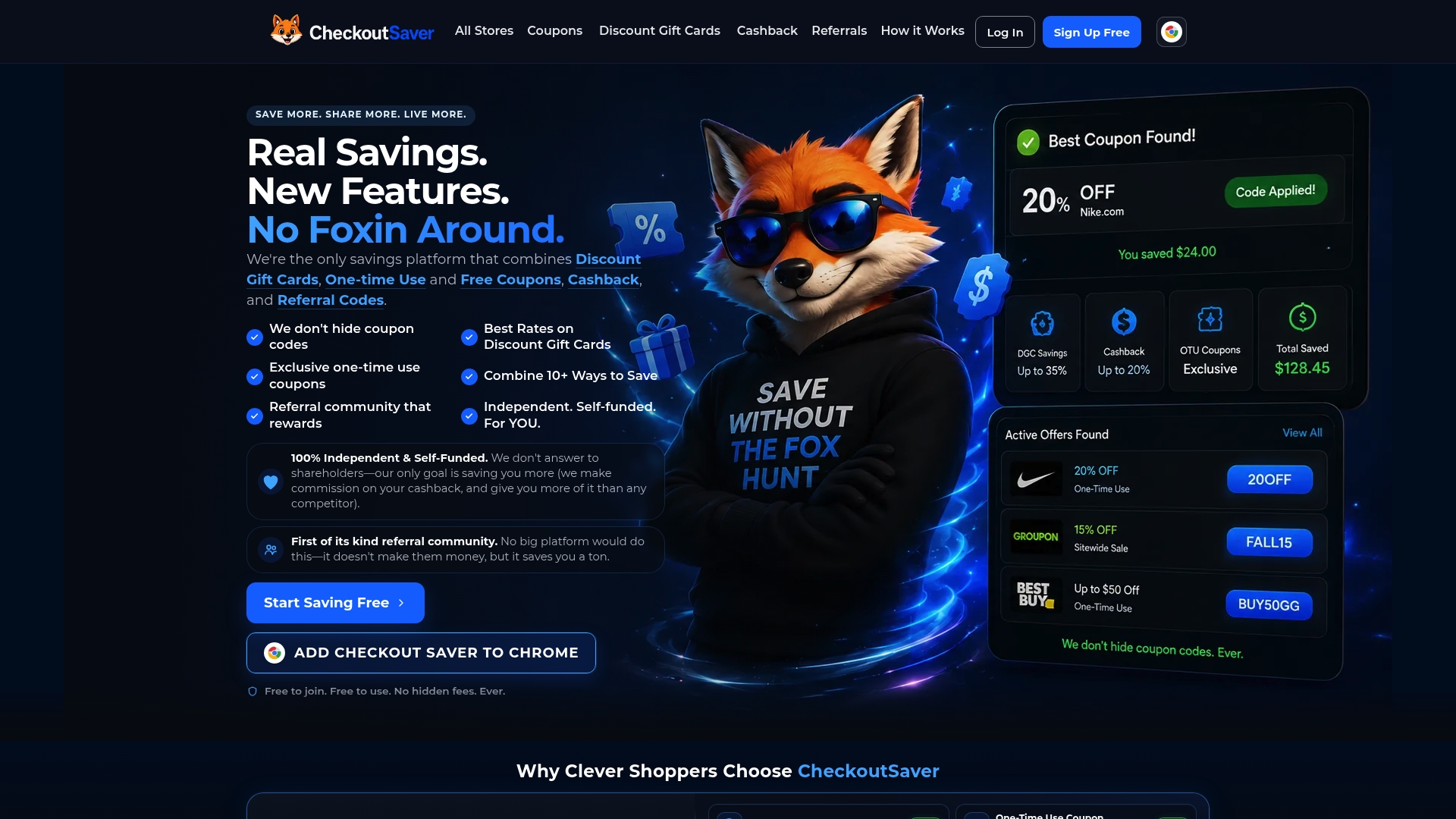
If you have codes sitting unused, our sell unused coupon codes page walks you through listing them, and our submit a coupon flow handles the verification step before anything goes live.
This article is general information, not a substitute for advice from a qualified lawyer. Consult a qualified legal professional about your own circumstances before acting on anything here.
FAQ
Can you legally sell coupons?
Selling a manufacturer coupon typically violates the coupon’s own non-transferability terms, which can lead to a voided coupon or denied reimbursement rather than automatic criminal liability. Organized schemes involving counterfeiting or large-scale resale can trigger mail or wire fraud charges, while small, occasional personal sales carry mostly civil and contractual risk.
Is couponing still a thing in 2026?
Couponing remains a common way for U.S. shoppers to save on everyday purchases, with manufacturers and retailers continuing to issue both paper and digital offers. The underlying rules around transferability and redemption have not changed, so the same legal considerations around sharing or selling coupons still apply.
Is reselling couponed items legal?
Reselling an item you purchased with a coupon is generally legal, since the transaction concerns the product itself rather than the coupon’s terms. The coupon’s non-transferability clause governs the coupon, not what you do with the item afterward, though high-volume resale schemes can still draw separate scrutiny under consumer-protection laws.
Where are coupons restricted by law?
There is no single nationwide ban on coupon resale, but consumer-protection enforcement around deceptive promotions and unfair trade practices varies by state, with some states pursuing these cases more aggressively than others, according to the U.S. Chamber of Commerce. Manufacturer policies, rather than state statutes, are usually the first line of restriction a seller encounters.
Sources
- 18 U.S.C. § 1341 (wire/mail fraud statutory text)
- “Coupon Surf Day” finds fraud on the Internet: Advertisers targeted for warning messages | FTC
Recommended
- Sell Coupon Codes Safely: 8 Steps to Avoid Fraud and 1099-K Risk
- Sell Your Coupons for Cash
- What are One-Time Coupons? (aka Stop Throwing Away Coupons and Sell Them!)
- Share Coupon Codes Without Getting Banned: Testing and Disclosure